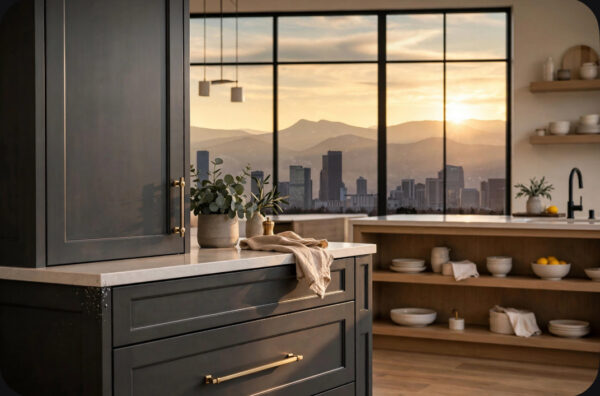
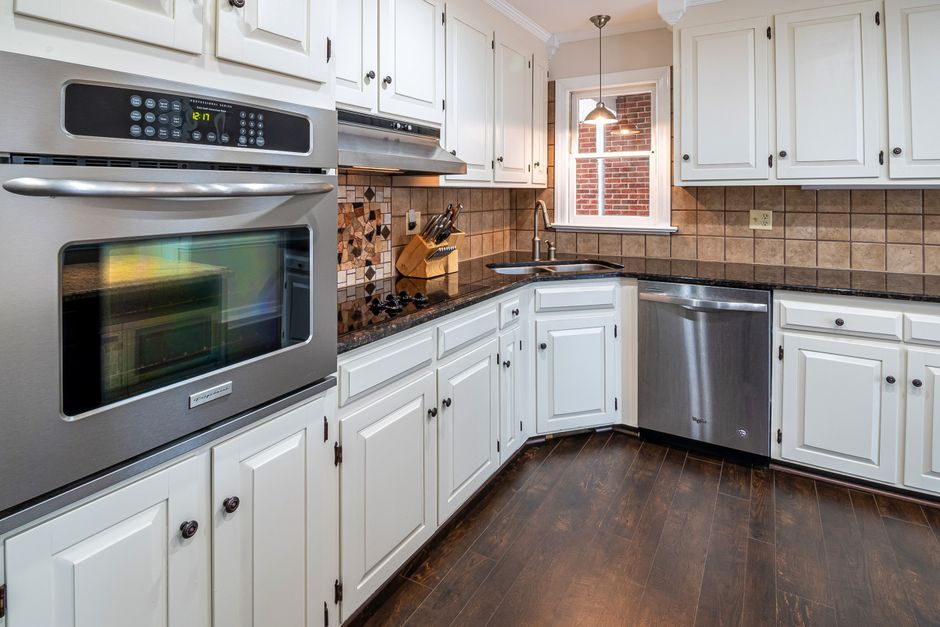
If you have been staring at tired, chipped, or honey-oak cabinets and wondering whether to replace them entirely, there is a faster, smarter alternative that delivers a showroom look without the gut-renovation price tag. Spray finish kitchen cabinet painting Denver has become the go-to solution for homeowners who want a flawless, factory-smooth surface that lasts a decade or more. Unlike the brush-and-roller approach a general house painter might use, a true spray finish atomizes the coating into a fine mist, eliminating brush strokes, roller stipple, and that telltale “painted” texture. The result is a surface so smooth it looks like it came straight from a high-end cabinet manufacturer. And in Denver’s unique high-altitude climate, where dry air can cause standard paints to flash off too quickly or trap dust in the finish, professional spray equipment and technique make the difference between a durable transformation and a peeling disappointment.
Table of Contents
- Why Choose a Spray Finish Over Brush or Roller?
- The Real Cost of Spray Painting Cabinets in Denver (2026 Pricing)
- What to Expect: The 5-Step Spray Process
- Choosing the Right Finish: Sheens, Colors, and Materials
- Spray Finish vs. Cabinet Replacement: Which Is Right for You?
- How to Choose a Professional Cabinet Painter in Denver
- Frequently Asked Questions
- Conclusion and Next Steps
Why Choose a Spray Finish Over Brush or Roller?
The phrase “factory finish” gets thrown around a lot in the cabinet refinishing world, but it refers to something very specific. When cabinets are manufactured, the coating is applied in a controlled environment using high-volume, low-pressure spray systems that atomize the lacquer into microscopic droplets. These droplets flow together on the surface to create a glass-smooth film with zero texture. A brush, by contrast, leaves behind ridges and furrows. A roller leaves a dimpled, orange-peel stipple. Both trap grease, cooking oils, and grime in their microscopic valleys, which makes cleaning harder and accelerates wear.
A professional spray application replicates that factory process. The coating self-levels as it cures, producing a uniform sheen across the entire surface, including intricate profiles on raised-panel doors and detailed molding. This is not merely an aesthetic preference. The smooth surface is functionally superior in a kitchen, where cabinets endure steam, splatter, and daily handling. Fewer texture irregularities mean fewer places for moisture and dirt to collect, which directly extends the life of the finish.
Durability is where the spray method truly separates itself from the alternatives. Generalist house painters often use latex or acrylic wall paints on cabinets, applying them with brushes or mini rollers. Those products are formulated for vertical drywall, not the horizontal, high-contact surfaces of cabinet doors and drawer fronts. In Denver’s dry climate, latex can become brittle over time, losing adhesion at the edges where fingers repeatedly pull drawers open. It is not uncommon for brush-applied cabinet paint to begin chipping within six to twelve months, especially around knobs and pulls. Professionally sprayed, catalyzed lacquers, on the other hand, cure into a hard, chemically bonded film that resists chipping, scratching, and moisture penetration for ten years or more when properly maintained.
The prep work also differs dramatically. Spraying demands a surgically clean, properly abraded surface. Any residual grease, silicone, or hand oil will cause fisheyes and adhesion failure in the finish. Professional cabinet painters spend a significant portion of the project timeline degreasing, sanding, and priming before a single drop of topcoat leaves the gun. This rigorous preparation, combined with Denver’s low-humidity environment, means coatings cure predictably and bond tenaciously, provided the applicator understands how to adjust for altitude. Thinner air affects fluid viscosity and drying times. A shop that specializes exclusively in cabinets will have dialed in its material formulations and spray pressures to account for these local conditions, something a generalist painter working at 5,280 feet may never consider.
The Real Cost of Spray Painting Cabinets in Denver (2026 Pricing)
One of the most common questions homeowners ask is straightforward: what does this actually cost? Search results for cabinet painting costs are often cluttered with national averages or, worse, pricing data from overseas markets that have no relevance to a Denver homeowner. In 2026, the realistic range for a professional spray finish on a standard Denver kitchen falls between $3,500 and $7,500. This is not a handyman special or a side-job price. It reflects the labor, materials, and specialized equipment required to produce a finish that will last a decade.
To put that number in context, a full cabinet replacement for the same kitchen typically runs between $20,000 and $45,000, depending on cabinet grade, layout complexity, and material selection. That means choosing a professional spray finish over replacement saves homeowners somewhere between $15,000 and $30,000. Even at the upper end of the painting range, you are still spending a fraction of what new cabinetry costs, and you are preserving a layout that already works for your household. That savings can be redirected toward new countertops, a tile backsplash, or upgraded appliances, effectively funding a whole-kitchen refresh for the price of cabinets alone.
Several variables move the quote within that $3,500 to $7,500 window. The total number of doors and drawer fronts is the primary driver. A kitchen with twenty-five door and drawer faces requires more labor and material than one with fifteen. The complexity of the door profile matters as well. Flat slab doors spray quickly and require less coating to achieve full coverage. Raised-panel or Shaker-style doors with detailed inner profiles demand more careful gun work and additional material to avoid runs in the recessed areas. The condition of the existing cabinet boxes also influences price. Boxes that have absorbed years of cooking grease or that have peeling laminate edges need extra preparation before they can accept primer.
Finish selection plays a role too. Higher gloss levels reveal every surface imperfection, so they require more meticulous sanding and polishing between coats. A matte or satin sheen is more forgiving and typically falls on the lower end of the pricing spectrum. Two-tone color schemes, where the island is painted one color and the perimeter cabinets another, add labor because the painter must mask off sections and clean equipment between color changes. Finally, a written warranty adds tangible value to the quote. A company that stands behind its work with a three-year warranty against peeling and chipping is pricing that confidence into the job, and that protection is something no DIY approach or cut-rate painter can match.
Pricing Breakdown by Kitchen Size
Small kitchens with fewer than ten cabinet doors and drawers, common in Denver condos, bungalows, and galley-style layouts, generally land between $3,500 and $4,500. These projects move quickly because there are simply fewer surfaces to prep and spray.
Medium kitchens, the kind found in most suburban homes across Aurora, Lakewood, and Centennial, typically have ten to twenty cabinet faces and represent the bulk of professional quotes. Expect to invest between $4,500 and $6,000 for a standard layout with a single color and a satin sheen.
Large kitchens with more than twenty doors and drawers, expansive islands, butler pantries, or ceiling-height cabinetry push the investment to $6,000 and above, often reaching $7,500 or slightly higher for complex jobs. Two-tone finishes and high-gloss sheens in these larger spaces add meaningful labor hours and material volume, which is reflected in the final price.
What to Expect: The 5-Step Spray Process
Understanding how the work unfolds helps set realistic expectations for the disruption to your daily routine. A professional spray finish project in Denver typically follows five distinct phases and wraps up within three to five days, though larger or more complex kitchens may extend to seven.
Step one is prep and takedown. The crew removes every door, drawer front, and piece of removable hardware. Each hinge, screw, and pull is labeled and catalogued so that every component returns to its exact original position. Countertops, floors, appliances, and adjacent walls are masked off with plastic sheeting and painter’s tape. In many cases, the team erects zippered dust barriers to isolate the kitchen from the rest of the home.
Step two is cleaning and sanding. This is the unglamorous phase that determines whether the finish will last. Cabinet boxes, especially those flanking the range, accumulate a film of polymerized grease that resists paint adhesion. The crew degreases every surface with specialized cleaning agents, then sands all faces and frames to create a mechanical bond for the primer. Doors and drawer fronts receive the same treatment, often in a dedicated shop space where dust can be fully controlled.
Step three is priming and spraying. A high-bond primer is applied first to seal the surface and block any tannins or stains from bleeding through. Once the primer cures, the topcoat goes on. Reputable Denver specialists use low-VOC, precatalyzed lacquers sprayed through HVLP or air-assisted airless equipment. The hybrid approach many top shops employ involves spraying the cabinet boxes on-site while transporting doors and drawer fronts to a dust-free spray booth. This eliminates the risk of airborne dust settling into the wet finish on the most visible surfaces.
Step four is curing and reinstallation. Lacquers dry to the touch quickly, but full chemical cure takes longer. The crew allows adequate flash time between coats and a final cure period before handling. Doors are re-hung with careful attention to alignment and reveal spacing. Drawer fronts are reattached, and hardware is installed with fresh, clean fasteners.
The timeline from takedown to final walkthrough spans three to five days for most kitchens. During that window, the kitchen is partially out of commission, but the containment measures mean the rest of the house remains livable. Some firms offer expedited schedules for an additional fee, but the standard pace allows proper drying between coats, which is essential for long-term durability.
Choosing the Right Finish: Sheens, Colors, and Materials
Selecting the sheen level for your cabinets is a decision that affects both aesthetics and daily maintenance. Matte finishes offer a soft, velvety look that hides fingerprints well and suits modern and transitional kitchens. However, matte surfaces can be more difficult to scrub when they do get soiled. Semi-gloss delivers high reflectivity and maximum washability, but it also highlights every imperfection in the underlying surface and shows smudges more readily. Satin sits in the sweet spot for most Denver families. It has enough luster to feel rich and cleanable, but it does not broadcast every fingerprint from a distance. For high-traffic kitchens where children and pets are part of the daily equation, satin is the practical choice.
Color trends in 2026 continue to move away from the stark, all-white kitchens that dominated the previous decade. Warm greiges, taupe, and putty tones are gaining ground, offering neutrality without coldness. Deep forest greens and muted navy blues are appearing on islands and base cabinets, often paired with lighter uppers to keep the room feeling open. Classic white remains popular but is increasingly specified in creamier, warmer variants rather than bright, cool whites. The beauty of a professional spray finish is that the color possibilities are essentially limitless. Any color a paint manufacturer produces can be mixed into the lacquer system, which means you are not constrained to a handful of stock options.
Material versatility is another reason spraying has become the preferred method. Solid wood cabinets, including the oak that populates so many 1990s Denver homes, take a sprayed finish beautifully once the grain is properly filled or a high-build primer is applied. But spraying is equally effective on surfaces that are notoriously difficult to paint by hand. Melamine and thermofoil cabinets, which have slick, non-porous faces, require aggressive scuffing and a bonding primer, but once prepped, they accept sprayed lacquer without issue. Laminate cabinets benefit from the same approach. The atomized spray lays down a consistent film thickness that bridges minor surface variations, creating a uniform appearance across mixed-material kitchens.
For homeowners seeking something beyond a solid color, several specialty options exist. Glazing adds a hand-rubbed, antiqued effect that settles into the recesses of door profiles, creating depth and an Old World character. Wood toning or shading allows the underlying grain to remain visible while shifting the color warmer or cooler. These are premium services that add cost and time but produce a truly custom result that cannot be replicated with off-the-shelf replacement doors.
Spray Finish vs. Cabinet Replacement: Which Is Right for You?
Cabinetry typically consumes thirty to forty percent of a total kitchen remodel budget, which makes it the single largest line item in most renovations. Spray painting slashes that expense dramatically while preserving the existing footprint. But cost is not the only factor. The decision between painting and replacing hinges on the condition of your current cabinets and your functional needs.
Painting is the clear winner when the cabinet boxes are structurally sound. If the face frames are solid, the doors hang square, and the drawer slides operate smoothly, a spray finish will give those cabinets another decade or more of service. You like your kitchen’s workflow. The sink, range, and refrigerator are in sensible positions. You simply want the room to look updated, clean, and intentional. In that scenario, spending $5,000 on a professional spray finish instead of $30,000 on new cabinets is a financially prudent choice that yields a dramatic visual transformation.
Replacement becomes necessary when the cabinet boxes themselves are failing. Water damage that has swollen the particleboard, delaminating veneers, cracked face frames, or a layout that simply does not function for how you cook and live are all signals that painting cannot fix. If you need to move the sink, add an island, or reconfigure the entire footprint, new cabinets are the only path. But if the bones are good and the layout works, painting preserves everything you already like while fixing everything you do not.
Time is another differentiator. A full cabinet replacement typically requires four to six weeks from demolition to final installation, during which the kitchen is completely unusable. A spray painting project wraps up in under a week, and the containment measures allow you to use other parts of the home normally. For families who cannot afford to move out or eat takeout for a month, the speed of painting is a decisive advantage.
How to Choose a Professional Cabinet Painter in Denver
Not all painting contractors are equipped to deliver a durable spray finish on kitchen cabinets, and choosing the wrong one turns a smart investment into an expensive do-over. The first filter is specialization. Look for a company whose primary business is cabinet refinishing, not interior wall painting. A firm that advertises “we don’t paint houses” is signaling that its equipment, materials, and processes are purpose-built for cabinetry. Generalist painters may be skilled at cutting in ceiling lines, but cabinet work demands a different skill set and a different set of tools.
Ask specifically about materials. The answer you want to hear includes terms like precatalyzed lacquer, conversion varnish, or two-component urethane. These are trade-grade coatings formulated for durability and adhesion on millwork. If the painter mentions latex, acrylic, or any product you can buy off the shelf at a hardware store, keep looking. The same goes for equipment. HVLP turbine systems and air-assisted airless rigs are the standard for professional cabinet work. A contractor who shows up with a handheld Wagner sprayer and a case of house paint is not offering the same service.
A written warranty separates the confident professionals from the uncertain ones. A three-year warranty covering peeling, chipping, and adhesion failure is a reasonable minimum to expect. It tells you the company has done enough jobs to know its finish holds up and is willing to back that claim financially. If a painter hesitates or offers only vague verbal assurances, treat that as a red flag.
Finally, take advantage of modern convenience when gathering quotes. Several top Denver cabinet painting specialists now offer instant pricing via text message. You send a few photos of your kitchen along with the door and drawer count, and they return a ballpark estimate without requiring an in-home visit. This approach saves time and lets you compare pricing across providers before committing to a formal consultation.
Frequently Asked Questions
How long do spray painted cabinets last?
With proper surface preparation and professional-grade materials, spray painted kitchen cabinets last five to ten years or more. The key variables are the quality of the prep work, the type of coating used, and how the cabinets are maintained. A catalyzed lacquer applied over a properly sanded and primed surface will significantly outlast a latex paint applied with minimal prep.
Is spray painting cabinets worth it?
Yes, if you want a durable, factory-like finish that transforms the look of your kitchen without the cost and disruption of a full replacement. The return on investment is especially strong in the Denver market, where the savings over new cabinetry can exceed $20,000.
Can all cabinets be spray painted?
Virtually all cabinet materials can be spray painted, including solid wood, oak, maple, cherry, MDF, melamine, laminate, and thermofoil. The critical factor is surface preparation. Non-porous materials like thermofoil require specialized bonding primers and abrasion techniques to ensure adhesion, but a professional shop will have protocols for each substrate.
Is it safe for my family?
Yes. Professional cabinet painters use low-VOC and HAPS-compliant lacquers that meet current environmental standards. They also employ dust containment barriers and ventilation strategies to isolate the work area from living spaces. Any residual odor dissipates quickly once the finish cures, typically within a day or two of project completion.
Conclusion and Next Steps
A spray finish kitchen cabinet painting Denver project delivers the visual impact of a brand-new kitchen at a fraction of the cost and in a fraction of the time. The combination of atomized application, trade-grade lacquers, and meticulous preparation produces a surface that is smooth, cleanable, and durable enough to withstand a decade of daily use. For Denver homeowners whose cabinet boxes are solid and whose layout works, this approach unlocks tens of thousands of dollars in savings compared to replacement, freeing up budget for other upgrades or simply preserving equity.
If you are ready to explore what a professional spray finish can do for your kitchen, reach out to a local specialist for a free consultation. Many top-rated Denver providers now offer instant pricing by text, simply send a photo of your kitchen along with your door and drawer count, and you will have a ballpark figure within minutes. Serving the entire metro area, including Aurora, Lakewood, Arvada, Centennial, Littleton, and beyond, Denver’s cabinet painting specialists are ready to transform your space without the cost and chaos of a full remodel.