Most homeowners searching for cabinet refinishing Denver cost information run into a gap between the advertised special and the quote that actually shows up. Usually that gap comes from comparing two different services: professional spray refinishing, which pulls components out to a shop, and on-site brush painting dressed up as a factory finish. We’ve worked this market since 1979, and we price on the labor and materials a durable lacquer finish actually takes, not on what it costs to slap on a temporary cosmetic update.
You deserve real numbers before anyone sets foot in your kitchen to quote it. This guide breaks down current 2026 pricing, explains why a legitimate spray shop costs more than a general painter, and helps you tell true value from false economy. Professional refinishing typically runs about a third of full cabinet replacement, with a similar visual result for cabinets that are still structurally sound, but only if the process behind the price tag actually holds up.
Real Cabinet Refinishing Costs in Denver for 2026
Rates for professional spray refinishing have settled after recent material adjustments, but the gap between qualified shops and unlicensed applicators hasn’t closed. We’ve been doing this since 1979, and we’ve refined our spray lacquer process to finish most Denver kitchens in 3 to 5 days, backed by a 3-year warranty against finish failure. Our pricing reflects that experience, not inflated marketing overhead. A legitimate quote accounts for door removal, off-site spraying logistics, and precise reinstallation. It isn’t just a square-footage calculation.
Average Price Ranges by Kitchen Size
Small galley kitchens with fewer than twenty openings sit at the lower end, since fixed setup costs spread across fewer doors and drawers. Medium layouts, typical of Denver ranch homes, need more masking time and shop rack space, which pushes the price toward the middle of the range. Large open-concept kitchens with islands and pantry towers need far more labor for hardware removal and reassembly, and that drives the final number up. Our pricing by kitchen size resource gives specific benchmarks so you can see where your kitchen likely lands.
Per-Opening Pricing vs. Flat Rate Estimates
Reputable shops price by linear foot or opening count, because that’s what actually captures the work: detaching doors, transporting them safely, reinstalling hardware with precision. Flat-rate estimates often bury exclusions that surface later as change orders once work starts. A per-opening model forces someone to say, up front, what’s included, down to hinge replacement and interior shelf edges. For more detail, check our 2026 pricing breakdown and weigh any estimate you get against current local numbers.
Why Spray Lacquer Costs More Than Brush Painting
The premium for a factory-grade finish is real because the process is physically demanding and equipment-heavy in a way brushing isn’t. A true factory finish means pulling doors and drawers to a controlled shop environment; on-site brushing can’t match the smoothness or durability of precatalyzed lacquer. When you compare quotes side by side, you’re often comparing two different products with very different lifespans.
Shop Overhead and Equipment Requirements
A dedicated spray booth, with proper ventilation, climate control, and dust filtration, is fixed overhead that a general house painter simply doesn’t carry. Precatalyzed lacquer needs specialized airless or HVLP spray systems calibrated for viscosity and atomization, plus regular maintenance to keep contamination out. Those costs show up in the finishing line item, but they’re what eliminates the brush marks, drips, and early peeling that plague cheaper jobs. You’re paying for the setup that keeps every door and drawer front consistent.
Labor Intensity of Door Removal and Reinstallation
Pulling hardware without damaging the wood, labeling every component for accurate reassembly, and hauling fragile pieces to a shop takes far more time than taping off cabinet boxes and rolling paint in place. Reinstallation needs the same precision, because a misaligned hinge or a warped panel shows up immediately under fresh lacquer. That logistics work is what factory finish standards actually require to hold up under daily use. Brush jobs skip this phase entirely. That’s why they cost less up front, and why they tend to fail within months.
Refinishing vs. Refacing vs. Replacement: The True Savings
Knowing where refinishing sits against the other options keeps you from overspending on a fix your kitchen doesn’t need. If your cabinet boxes are solid and work fine functionally, paying for new construction or laminate veneers eats into budget that could go toward countertops, flooring, or appliances instead. We treat refinishing as the right call for dated but structurally sound cabinets, not as a lesser option.
Cost Comparison Breakdown
Full replacement means demolition, disposal, new materials, installation labor, and weeks without a working kitchen, easily reaching five figures for an average Denver home. Refacing swaps in new door fronts and veneers the box faces, often costing close to professional painting while adding a laminate surface that can’t be spot-repaired the way lacquer can. Refinishing keeps your existing hardwood or plywood substrate, so there’s no material waste and the labor is just finishing work. The savings add up fast once you factor in the plumbing disconnection, countertop removal, and extended displacement you avoid.
When Refinishing Is the Only Logical Option
Refinishing won’t fix a broken cabinet box, failed drawer slides, or a layout that never worked. It’s a surface renewal for cabinets that already serve you well but look dated. If the real problem is structural or your storage needs a redesign, no amount of lacquer solves that, and replacement becomes the only answer. Short of that, refinishing gets you the look you want without paying for features you don’t need.
Variables That Spike Your Cabinet Painting Quote
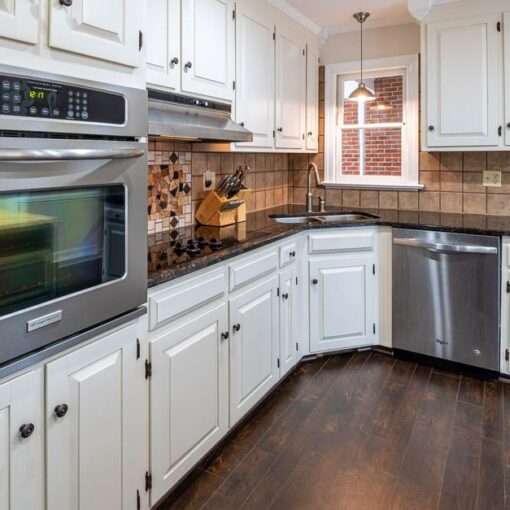
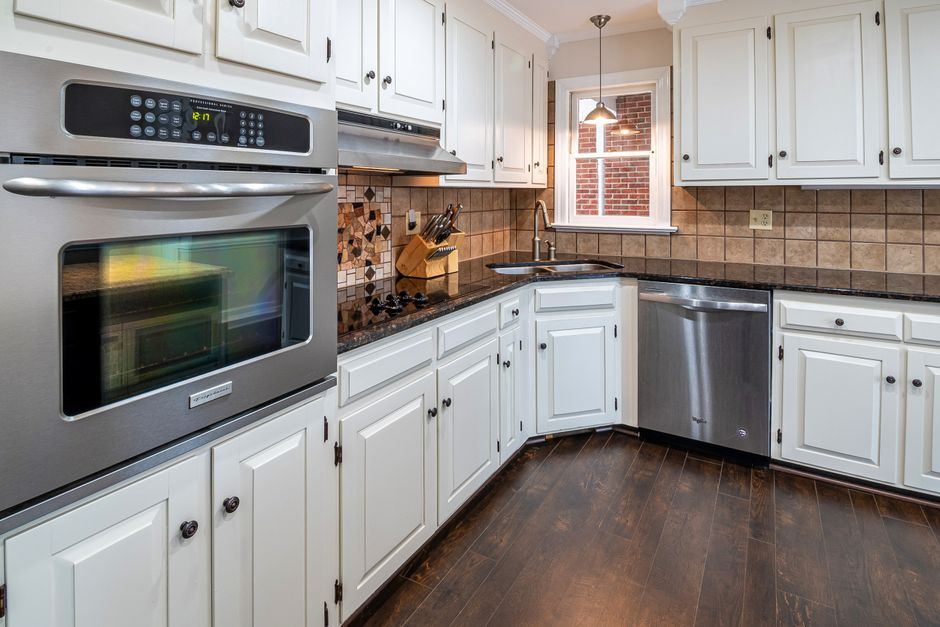
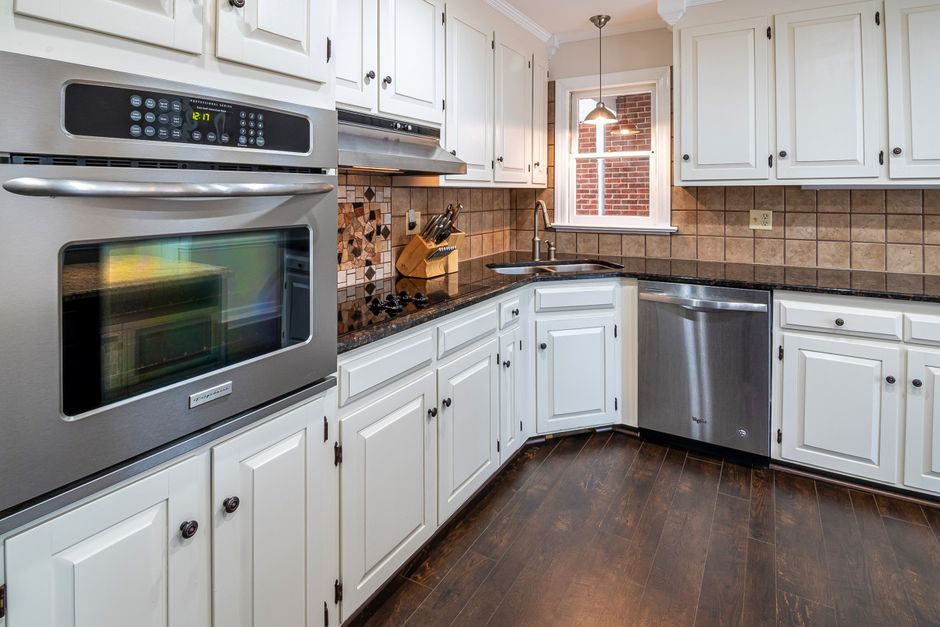
Online calculators and phone estimates consistently miss the site conditions that add real hours to a refinishing job. Golden Oak cabinets from the 1980s and ’90s need extensive grain filling and degreasing before paint goes on, and that’s labor generic online estimators routinely underestimate. Your actual quote comes from what we find once we’re looking at the surfaces up close, not from a square-footage guess.
Condition of Existing Cabinetry
Decades of cooking grease work into the wood pores and create an adhesion barrier that ordinary cleaning won’t remove; that means chemical stripping or aggressive sanding before primer will bond at all. Water damage around sinks and dishwashers can call for wood filler, epoxy consolidation, or partial panel replacement to get back to a uniform surface. A previous DIY paint job using the wrong product has to come off completely rather than get painted over, which doubles prep time. Each of these adds real cost, because skipping any of them just guarantees a callback or a warranty claim later.
Color Changes and Glaze Removal
Going from dark stained oak to light lacquer takes several tinted primer coats to stop bleed-through and keep the color accurate. Decorative glazes, distressing, or antiquing from the original manufacturing process push pigment deep into the grain and resist standard stripping. A drastic color shift also means sanding between coats to keep things smooth, which adds both material and shop time. None of this shows up in a photo-based estimate, but it’s most of the actual labor once the work starts.
Timeline Value: Why Speed Affects Final Price
A shorter project timeline cuts indirect costs that never show up on an invoice but still drain your budget. Restaurant meals for three weeks, a rented kitchenette, storing perishables somewhere else during a long remodel: that adds up to hundreds of dollars in expenses nobody itemizes. A fast schedule depends on crews who do nothing but cabinet refinishing, not general painters splitting time between interior walls, exteriors, and trim. Finishing your kitchen in 3 to 5 days keeps your routine intact and stops that bleed before it starts.
A specialized shop absorbs scheduling risk through volume and repetition, so it can move fast without cutting cure times or coat counts. A general contractor pads the schedule to cover unpredictable variables across all kinds of projects, and that uncertainty lands on you as extra displacement. The faster timeline is itself a cost saving, even on days when the line-item price looks higher than the slower option.
Warranties and Durability as Cost Factors
Long-term value comes down to whether the finish survives daily use without chipping, peeling, or yellowing in the first year. A reputable shop can offer a multi-year warranty because its process produces results predictable enough to stand behind. Brush-applied latex paint typically fails within months from poor adhesion and a soft film, which makes the lower sticker price misleading once you count the redo. You either pay once for a finish that lasts, or pay again for touch-ups and an eventual do-over.
Warranty terms tell you more than the marketing copy does. A three-year guarantee against finish failure means someone invested in proper prep, the right product, and controlled application conditions. No written warranty, or coverage capped at thirty days, tells you the shop already knows the process won’t hold up. The premium on warranted work buys protection against the future expense that an unwarranted job just hands back to you.
Getting an Accurate Estimate Without Hidden Fees
A phone quote or an online form can’t check substrate condition, hardware integrity, or whether the old finish will even take new paint, and those are what actually set the labor. Signing off on an estimate with no in-home inspection invites change orders once the real conditions show up. You protect your budget by insisting on a real assessment before you sign anything, even if that pushes the start date back a few days.
What a Proper In-Home Assessment Covers
A qualified estimator tests surface adhesion, checks grease saturation, and verifies hinge function before pricing out labor hours. They note existing damage, flag color-transition challenges, and confirm whether interior shelves need finishing too. Checking hardware compatibility up front stops mid-project surprises when old screws strip or hinges won’t line up after the refinish. The inspection takes thirty minutes and saves you from thousands in disputed charges down the line. Ready to get accurate numbers for your kitchen? Schedule an in-home assessment and get a firm quote based on your actual cabinets, not assumptions.
Red Flags in Lowball Quotes
A bid well below the market average usually means skipped prep steps, consumer-grade product, or no warranty at all. A vague scope like “paint cabinets,” with no mention of removal, shop finishing, or product used, leaves plenty of room for substitution and cut corners later. A pitch pressuring you to sign today for a discount usually means cash-flow trouble, or a plan to make up the margin through change orders. A legitimate shop hands you a detailed written scope that matches what they told you out loud, and doesn’t flinch when you shop around.
Frequently Asked Questions
How much should it cost to refinish cabinets professionally in Denver?
Professional spray refinishing in Denver typically ranges based on opening count and kitchen complexity, with legitimate shops pricing per opening to account for door removal and off-site lacquer application. Expect quotes significantly higher than handyman brush jobs but roughly one-third the cost of full replacement. Prices vary based on cabinet condition, color transitions, and grain filling requirements specific to your home.
Is it cheaper to refinish cabinets or get new ones?
Refinishing costs approximately one-third of full cabinet replacement when existing boxes are structurally sound and functionally adequate. Replacement adds demolition, disposal, new materials, installation labor, and weeks of kitchen downtime that refinishing avoids entirely. Refinishing only makes sense if your current layout works; otherwise, replacement addresses functional issues that paint cannot fix.
What is the average cost to reface a 10×10 kitchen cabinet?
Refacing a medium kitchen often approaches the cost of professional spray refinishing while introducing laminate veneers that cannot be spot-repaired like lacquer. Refacing replaces door fronts and applies veneer to box faces but retains existing interior surfaces and hardware limitations. Many homeowners find refinishing delivers comparable visual updates at lower cost without adding non-repairable laminate surfaces.
Why do factory-finish quotes cost more than handyman painting estimates?
Factory finishes require removing doors to a controlled spray booth, using precatalyzed lacquer, and maintaining specialized equipment that general painters do not carry. Handyman brush jobs skip door removal, use consumer-grade paints, and lack the infrastructure to produce smooth, durable results. The price difference reflects fundamentally different processes with vastly different lifespans and warranty eligibility.