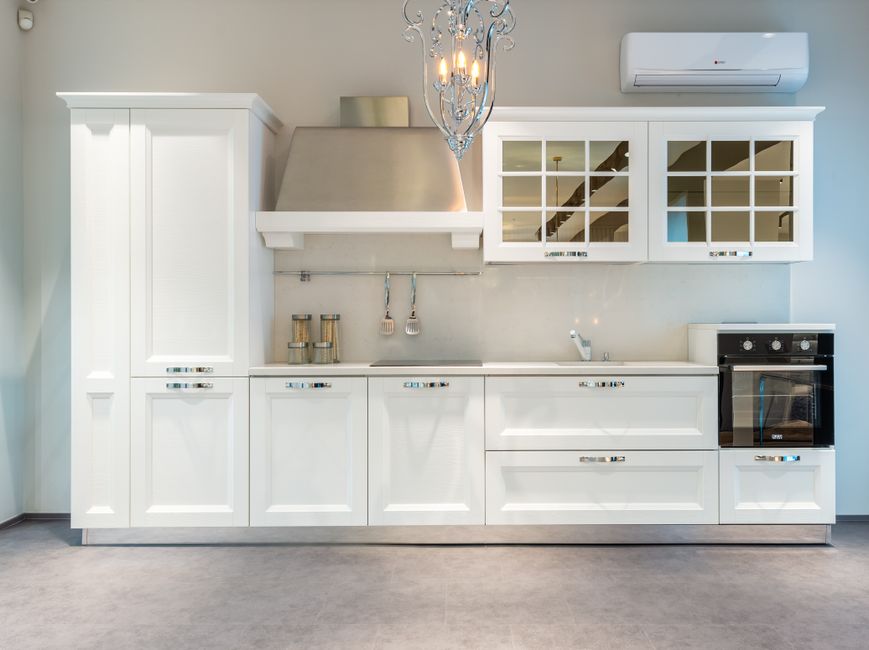
Kitchen cabinets take more abuse than any other painted surface in a house. Doors get opened with sticky hands, drawers get bumped shut, steam rolls out of the dishwasher, and afternoon sun lands straight on the finish. In Denver, add dry air, wide seasonal temperature swings, and intense high-altitude sunlight to the list. That combination is why so many homeowners now ask for a 2K polyurethane cabinet finish instead of a standard brushed-on paint job.
2K polyurethane is not a brand and it is not a phrase invented for kitchen remodels. It is a specific category of coating, and the gap between it and ordinary cabinet paint is real. Here is what 2K polyurethane is, why it holds up, and what to ask before you book.
What a 2K Polyurethane Cabinet Finish Actually Is
The “2K” stands for two components. A 2K polyurethane coating is a two-component catalyzed product: a urethane resin plus a hardener, also called the catalyst, that chemically cross-link as they cure. That reaction is the entire point of the technology.
Conventional paint mostly dries by losing water or solvent and forming a film. A catalyzed coating does something stronger. Cross-linking builds a denser, harder film that resists chemicals, moisture, and scuffing far better than ordinary film-forming paint. Manufacturers build these products specifically for cabinets and furniture, which are exactly the surfaces that get touched, wiped, and slammed every day.
Waterborne versions exist and are widely used in residential work. One major brand describes its clear 2K polyurethane as a durable, water-based finish designed for easy application and fast production, made for interior and exterior projects such as cabinets. Another manufacturer markets a water-based urethane topcoat built for interior wood surfaces like cabinets and furniture. So when a Denver cabinet painter says they spray 2K poly, it may well be a waterborne system rather than an older solvent-heavy one.
Why Durability Matters More in a Denver Kitchen
Denver homes put finishes through a specific set of stresses. The air here is dry for much of the year, which pulls moisture out of wood and can move joints and seams. Then the kitchen adds moisture back in through cooking, boiling water, and the dishwasher. Sunlight arrives at altitude with more intensity than most homeowners expect, and it lands directly on cabinet faces beside windows.
A finish that handles only one of those pressures will show its limits. It needs to resist moisture without swelling or staining, resist UV without fading or yellowing, and stay hard enough that rings, keys, and toy trucks do not leave marks. That is the exact profile 2K polyurethane is built for.
The Durability Advantages of 2K Polyurethane
Product literature for 2K polyurethane topcoats points to the same strengths again and again: excellent chemical resistance, moisture resistance, and UV resistance, along with superior protection against scuffing. In a working kitchen, that translates into practical wins.
| Kitchen stress | Where it shows up | How a 2K finish responds |
|---|---|---|
| Moisture | Steam, splashes near the sink, dishwasher heat | Strong moisture resistance helps keep the film from swelling or spotting |
| Chemicals | Spray cleaners, grease cutters, everyday spills | Excellent chemical resistance stands up to routine cleaning |
| Sunlight | Cabinet faces beside windows and glass doors | UV resistance helps prevent fading and yellowing |
| Daily contact | Hands, rings, keys, pet claws, drawer edges | Superior scuff protection holds the surface longer |
Waterborne 2K systems offer one more benefit that matters in an occupied home: they are designed for spray application and faster production than older high-solvent products. That does not mean the finish is dry the moment the spray gun stops, only that a shop can move cabinets through the process on a predictable schedule.
Primer, Topcoat, or Both?
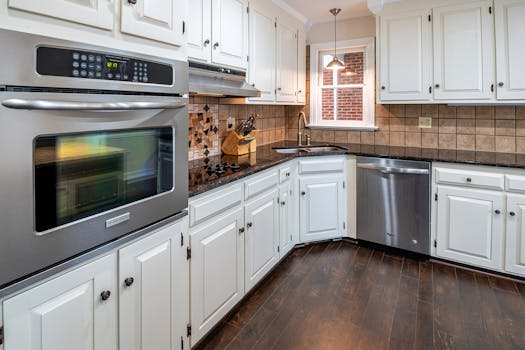
Among painters who spray 2K products, one of the most common debates is whether durability comes from a 2K primer, a 2K topcoat, or the combination of both. The practical answer is that the system matters more than any single can. The topcoat provides the wear layer you touch and clean, while the primer layer controls adhesion and seals the surface underneath.
Skip the primer and a beautiful topcoat can fail from below. Use a primer that is incompatible with the topcoat and you can get the same result. Ask the shop to explain the full system they intend to spray, not just the brand of topcoat.
The Cure Timeline Is Not Instant
One recurring theme among finishers is that 2K takes longer to reach sandable and fully cured states than some older conversion varnish products. A finisher working with both reported that conversion varnish dried in 15 minutes and sanded in 40, while 2K dried in 40 and sanded in 70. Those are one shop’s numbers, but the takeaway holds: 2K rewards patience.
For a homeowner, that means cabinets should not be reinstalled and loaded the moment they look dry. A sprayed finish keeps hardening after it stops feeling tacky, and the first days back in the kitchen are when careless use does the most damage to a film that has not fully settled.
Preparation Decides the Outcome
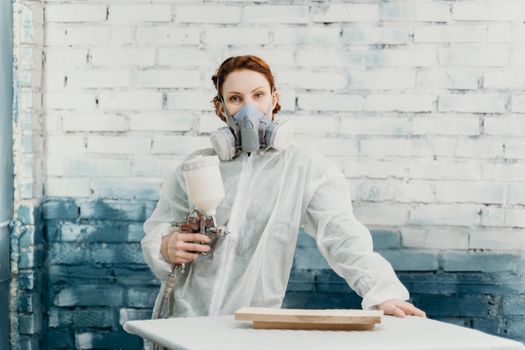
The best coating available cannot rescue a surface that was not prepped. Cabinet doors and boxes collect years of cooking grease, furniture polish, and hand oils, and those residues stay invisible until a finish starts peeling off in sheets. Proper preparation includes degreasing, sanding or scuffing, and controlling dust so it never lands in the wet film.
Oak cabinets bring an extra step. Open grain like white oak and golden oak drinks finish and shows texture through a sprayed coat, so grain filling becomes part of the job when a smooth, factory-like surface is the goal. That is detail work, and it is one of the clearest differences between a specialist cabinet shop and a general house painter.
Why Spraying Beats Brushing for This Product
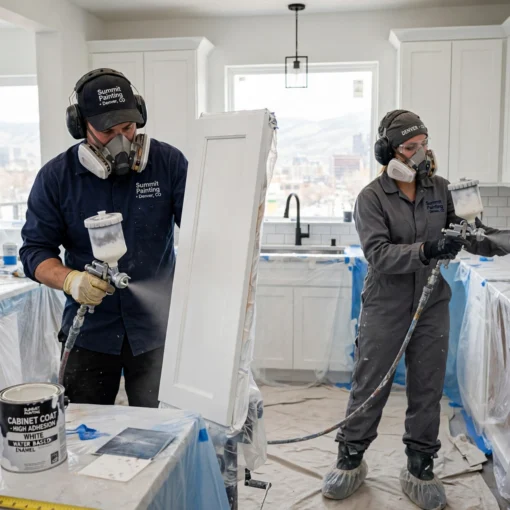
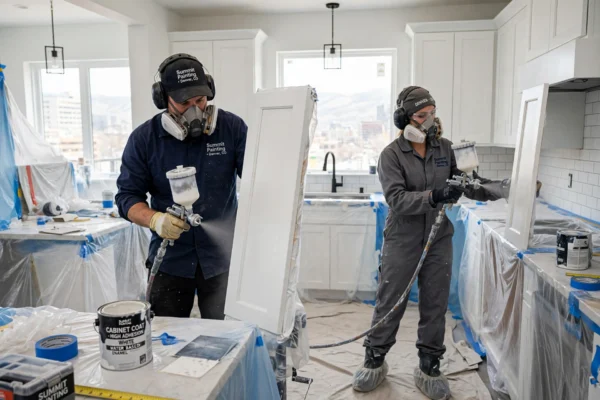
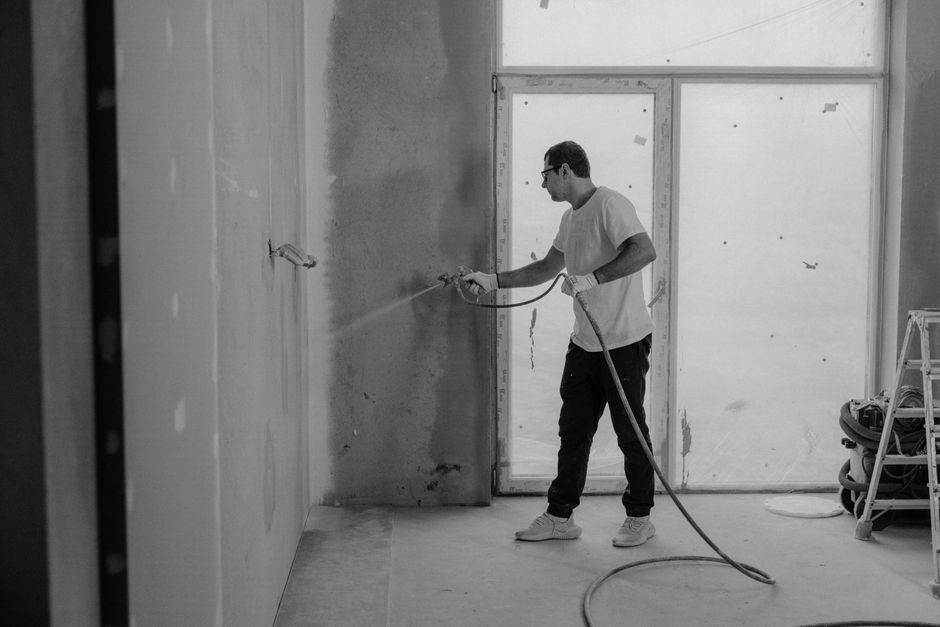
2K polyurethane is designed around spray application. Brushing or rolling a catalyzed coating leaves lap marks, texture, and uneven film thickness, and thin spots are where wear shows up first. A sprayer lays down a consistent coat across flat door faces and into the profiles of a raised-panel door.
Spraying also requires a controlled space. Overspray from a catalyzed product needs containment, airflow affects finish quality, and dust is the enemy of a smooth film. That is why a shop-based process with dustless preparation produces a different result than a painter working on site with a brush and a roller.
What to Ask a Denver Cabinet Painter Before You Book
You do not need to become a coating chemist to make a good decision. You need a few direct questions, and you need to listen for how specific the answers are.
- Which exact product system do you spray, including primer and topcoat?
- Is it a waterborne 2K polyurethane or a precatalyzed lacquer, and why that choice for my cabinets?
- How do you degrease and prepare doors and boxes before spraying?
- Do you grain fill open oak, or will the texture stay visible?
- Where are doors sprayed, and how do you control dust and overspray?
- How long do cabinets need to cure before we load them with dishes?
- What does the workmanship warranty cover, and for how long?
A specialist cabinet painting company should answer all of those without hesitation. Local operations across the Denver metro, including Aurora, Lakewood, Littleton, Arvada, and Boulder, typically offer free estimates and a multi-year workmanship warranty, and many finish a standard kitchen in about five to seven days because spraying is faster than hand-painting once the process is dialed in.
Caring for a 2K Finish Once It Is Cured
Once cured, a 2K polyurethane finish is a low-maintenance surface. Wipe cabinet faces with a soft cloth and a mild cleaner rather than an abrasive pad or a strong solvent. Do not hang damp towels over door fronts, and close doors and drawers with a hand instead of a hip. In a sink-base cabinet, a liner mat keeps standing moisture off the finish entirely.
Touch-ups are possible but rarely invisible, because a sprayed catalyzed finish cures into a hard film that a brush cannot blend perfectly. If a door is damaged, the cleanest fix is usually to have that single door resprayed rather than dabbed with a brush.
Frequently Asked Questions
What does 2K mean in 2K polyurethane?
It refers to two components. A 2K polyurethane coating is made of a urethane resin plus a hardener, or catalyst, that are mixed before spraying. Once combined, the parts chemically cross-link as they cure, creating a denser and harder film than a coating that simply dries.
Is waterborne 2K polyurethane durable enough for kitchen cabinets?
Yes. Waterborne versions are sold specifically as durable finishes for cabinets and furniture, and manufacturers describe them as offering strong chemical, moisture, and UV resistance along with protection against scuffing. Many professional cabinet shops now spray waterborne 2K systems as their standard topcoat for residential kitchens.
Does 2K polyurethane dry fast?
Not as fast as some older finishes. Finishers who work with both conversion varnish and 2K report that conversion varnish dried in about 15 minutes and sanded in 40, while 2K dried in about 40 minutes and sanded in 70. Expect cabinets to need curing time after spraying before normal kitchen use.
Should my cabinets get a 2K primer, a 2K topcoat, or both?
Painters debate this regularly, and the practical answer is that the whole system matters. The topcoat is the wear layer you touch and clean, while the primer controls adhesion and seals what sits underneath. Ask your painter to name the complete primer and topcoat system they plan to use, and explain why.
How long does a 2K polyurethane cabinet finish last?
There is no single number, because lifespan depends on the product system, preparation quality, kitchen humidity, sunlight exposure, and how the cabinets are cleaned. Manufacturer data sheets are the most reliable place to check expectations for a specific product. Ask your painter for the product name and literature before you approve the job.