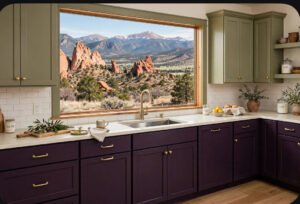
If you are planning a kitchen refresh in 2026, you have probably noticed a shift in how homeowners think about cabinet refinishing. The days of choosing between a durable finish and a healthy home are over. Eco-friendly cabinet painting using low VOC lacquer finishes has emerged as the clear frontrunner for anyone who wants factory-grade durability without filling their kitchen with toxic fumes. This guide explains why lacquer, not standard paint, is the professional choice, how to identify genuinely safe products, and what to expect whether you tackle the project yourself or hire a contractor in Colorado.
Table of Contents
-
What Are VOCs and Why Do They Matter for Your Kitchen Cabinets?
-
The Professional Advantage: Why DIY Low-VOC Lacquer Is Tricky
-
Sustainability Beyond VOCs: Is Low-VOC Lacquer Truly “Eco-Friendly”?
-
Frequently Asked Questions About Eco-Friendly Cabinet Lacquer
-
Conclusion: Making the Right Choice for Your Home and Health
What Are VOCs and Why Do They Matter for Your Kitchen Cabinets?
Volatile Organic Compounds, or VOCs, are carbon-based chemicals that evaporate into the air at room temperature. In the context of cabinet finishing, the most common offenders include benzene, formaldehyde, xylene, toluene, and ethylene glycol. These compounds are not just industrial abstractions. They are present in many conventional paints, primers, and lacquers, and they release gas into your home long after the finish feels dry to the touch.
The Environmental Protection Agency has documented that indoor VOC concentrations are consistently two to five times higher than outdoor levels. During active painting or stripping projects, those concentrations can spike to one thousand times normal background levels. That is not a minor inconvenience. Short-term exposure can trigger headaches, dizziness, and throat irritation. Long-term exposure poses more serious risks, particularly for children, pregnant women, elderly family members, and pets who spend more time close to floor level where heavier VOCs settle.
Regulatory thresholds add another layer of complexity. The EPA defines low-VOC latex paint as containing less than 250 grams per liter, and low-VOC oil-based paint as less than 380 grams per liter. However, the Green Seal certification standard is far stricter, requiring latex paints to stay under 50 grams per liter. When you are evaluating products for your kitchen cabinets, the gap between “legally low-VOC” and “genuinely low-impact” can be enormous. Understanding that gap is the first step toward making an informed decision.
Why Lacquer Is the Gold Standard for Cabinet Finishes
Walk into any high-end kitchen showroom and run your hand across the cabinet doors. That smooth, glass-like surface is almost certainly a lacquer finish. Industry professionals have long maintained that lacquer is the only truly approved method for cabinetry, and the reasoning is straightforward. Standard wall paint is formulated for vertical surfaces that see minimal physical contact. It lacks the hardness, adhesion, and moisture resistance required for kitchen cabinets, which endure daily handling, splattering grease, steam from cooktops, and frequent cleaning.
Lacquer solves these problems through its chemical composition. It dries by solvent evaporation, forming a hard, continuous film that bonds tightly to the substrate. The result is a surface that resists scratching, chipping, and yellowing far better than latex or acrylic paint. When applied with professional spray equipment, lacquer also self-levels to eliminate brush marks, creating the factory-like finish that is nearly impossible to replicate with a roller or brush.
The introduction of low-VOC lacquer finishes has closed the final gap in the argument. For years, the trade-off was real: you could have a durable lacquer finish that off-gassed aggressively, or a safer water-based paint that wore poorly on cabinets. Today, water-based low-VOC lacquers deliver the hardness and longevity of traditional solvent-based products while meeting the strictest indoor air quality standards. That intersection of durability and safety is why eco-friendly cabinet painting using low VOC lacquer finishes has become the preferred specification for health-conscious homeowners and professional painters alike.
Low-VOC Lacquer vs. Low-VOC Paint: Key Differences
The distinction between low-VOC lacquer and low-VOC paint matters more on cabinets than on any other surface in your home. First, consider durability. Lacquer cures to a harder film than latex or acrylic paint, which means it stands up better to the daily wear of cabinet doors being opened, closed, and cleaned. Paint, even high-quality trim paint, remains relatively soft and can develop tackiness in humid kitchen environments.
Application method is the second major difference. Lacquer is designed to be sprayed, typically through HVLP or airless systems, which atomizes the finish into a fine mist that settles evenly across the surface. Paint can be brushed or rolled, but on cabinets, brush marks and stippling are almost unavoidable. The difference in final appearance is dramatic.
Off-gassing profiles also diverge. Water-based low-VOC lacquers cure rapidly, with the majority of volatile compounds dissipating within 24 to 48 hours. Conventional oil-based paints and solvent-based lacquers can continue off-gassing for weeks or even months after application. Finally, repairability favors lacquer. If a lacquered cabinet door gets chipped, a professional can spot-repair and blend the affected area. Paint touch-ups, by contrast, often require repainting the entire door panel to avoid visible flashing.
Top Low-VOC Lacquer Products for Kitchen Cabinets in 2026
The market for non-toxic cabinet finishes has expanded significantly, but not all products are created equal. AFM Safecoat Ecolacq stands out as a product line developed with input from building biologists and healthy home specialists. It is formulated specifically for cabinetry and millwork, offering a hard, moisture-resistant finish without the exempt VOCs that some competitors quietly include in their formulas.
ECOS Paint offers another compelling option, with coverage of 560 square feet per gallon that exceeds most traditional paint products. Their catalog includes over 1,300 colors, and pricing starts at approximately $89 per gallon. For homeowners who want maximum color flexibility without compromising on air quality, ECOS has become a go-to recommendation.
Benjamin Moore’s Eco Spec line uses a zero-VOC colorant system, which addresses a common pitfall in the industry: a base paint may be low-VOC, but the tint added at the store can introduce significant VOCs. Eco Spec eliminates that concern. C2 Paint with PolyWhey technology is another alternative worth investigating. PolyWhey uses a whey protein binder rather than petroleum-based resins, reducing the overall chemical load while maintaining strong adhesion and durability.
For those searching for a direct answer to the question “What cabinet paint has no VOC,” the most accurate response is that truly zero-VOC products do exist, but they are rare. AFM Safecoat Ecolacq and ECOS Paint come closest, with VOC levels at or near zero grams per liter in their base formulations.
Always verify the specific product data sheet rather than relying on marketing claims.
What to Look for in a Truly Non-Toxic Lacquer
Reading a product label is not enough. Start by requesting the Material Safety Data Sheet, or MSDS, for the exact product and sheen your contractor plans to use. The MSDS will list VOC content in grams per liter, which is a more reliable figure than any front-of-can marketing language. Look for third-party certifications: Green Seal, GREENGUARD Gold, and MPI ratings all indicate that the product has been independently tested against established health and performance standards.
Pay close attention to the issue of exempt VOCs. Under current EPA regulations, certain chemicals like methylene chloride and perchloroethylene are legally excluded from VOC calculations despite being known health hazards. Some manufacturers exploit this loophole, marketing their products as low-VOC while still including these exempt compounds. Reputable brands in the non-toxic space explicitly state that their formulas contain no exempt VOCs.
Finally, choose water-based lacquers over solvent-based whenever possible. Water-based formulations use water as the primary carrier, which dramatically reduces the overall toxicity of the product during application and curing. They also clean up with soap and water, eliminating the need for harsh solvents during the project.
The Professional Advantage: Why DIY Low-VOC Lacquer Is Tricky
Watching a professional spray cabinets can make the process look effortless, but the reality behind that smooth finish is considerably more complex. Lacquer application demands specialized equipment. An HVLP turbine system or airless sprayer with the correct tip size is non-negotiable for achieving an even coat. Rental equipment is available, but dialing in the settings for a particular product takes experience.
Surface preparation is equally demanding. Kitchen cabinets accumulate years of cooking grease, hand oils, and cleaning product residue. Every surface must be thoroughly degreased, sanded to the correct profile, and primed with a compatible product. Shellac-based primers are often necessary to block tannin bleed from wood or to seal old stain, and they come with their own VOC considerations. Skipping or shortchanging prep work is the most common reason DIY cabinet projects fail.
The cost equation is worth examining honestly. A DIY approach requires purchasing the lacquer, primer, sanding supplies, spray equipment rental, and personal protective equipment including a respirator rated for organic vapors. For a typical kitchen, materials alone can run between $400 and $800. Professional services cost more upfront but include the labor, equipment, and often a warranty on the finish. In the Denver market, where a minor kitchen remodel yields a 113 percent return on investment, the quality of the cabinet finish directly impacts resale value. A professional low-VOC lacquer job protects that investment in a way that a DIY paint job cannot match.
Questions to Ask a Professional Cabinet Painter About Eco-Friendly Finishes
Before signing a contract, ask your painter specific questions that reveal whether they truly understand low-VOC lacquer systems. Start with the basics: “Do you use water-based low-VOC lacquer, and what is the exact VOC level in grams per liter for the product you recommend?” A knowledgeable professional will have that figure ready.
Request the MSDS or third-party certification documentation for the finish they plan to use. If they hesitate or cannot produce it, consider that a red flag. Ask about their containment and ventilation procedures. Proper masking, plastic sheeting, and negative air pressure setups minimize the spread of any residual emissions to the rest of the house.
Finally, ask about curing time and re-entry protocols.
My Review of Graco FFLP Tips for Spraying Cabinets
A responsible contractor will give you a clear timeline for when the kitchen is safe to use again, with specific guidance for households with children, pets, or chemically sensitive individuals. If they dismiss these concerns or cannot provide a concrete answer, keep looking.
Sustainability Beyond VOCs: Is Low-VOC Lacquer Truly “Eco-Friendly”?
The question of whether low-VOC paint is sustainable deserves a more nuanced answer than a simple yes or no. VOC content is the most visible environmental metric, but it is only one piece of a larger picture. Manufacturing footprint matters. Water-based lacquers generally require less energy to produce and generate fewer hazardous byproducts than their solvent-based counterparts. The raw material supply chain, packaging, and transportation all factor into the full environmental calculation.
Coverage efficiency is another underappreciated variable. A product like ECOS Paint that covers 560 square feet per gallon reduces the total volume of material needed for a project. Less material means less manufacturing impact, less packaging waste, and fewer gallons shipped. Longevity is perhaps the most important sustainability factor of all. A low-VOC lacquer finish that lasts 10 to 15 years eliminates the need for multiple repaints over the life of the cabinets. Each avoided repaint saves materials, energy, and labor.
Disposal and cleanup present the final sustainability advantage. Water-based low-VOC lacquers clean up with soap and water, which means no hazardous solvents go down the drain or into the landfill. Leftover product can often be disposed of through regular household hazardous waste programs rather than requiring special handling. When you weigh all these factors together, a high-quality low-VOC lacquer finish is among the most environmentally responsible choices available for kitchen cabinetry.
Frequently Asked Questions About Eco-Friendly Cabinet Lacquer
Can low-VOC lacquer be applied over existing painted cabinets? Yes, in most cases it can. The existing surface must be thoroughly sanded to create a mechanical bond, and a compatible primer must be applied to ensure adhesion. If your cabinets are laminate or thermofoil, a professional assessment is strongly recommended, as these surfaces present unique bonding challenges that may require specialized primers or alternative approaches.
How long does low-VOC lacquer off-gas after application? Most water-based low-VOC lacquers complete the majority of their off-gassing within 24 to 48 hours under normal temperature and humidity conditions. Full curing, where the finish reaches its maximum hardness and chemical resistance, typically takes 7 to 14 days. Solvent-based lacquers, even those labeled low-VOC, can continue off-gassing for several weeks.
Is low-VOC lacquer safe for homes with chemically sensitive individuals? Products with GREENGUARD Gold certification are specifically tested for use in sensitive environments, including schools and healthcare facilities, and are generally considered safe for chemically sensitive individuals. It is still wise to test a small, inconspicuous area and ensure proper ventilation during the application period. Some homeowners with extreme sensitivities choose to stay elsewhere for the first 48 hours after application as a precaution.
Where can I buy low-VOC lacquer for cabinets in Colorado? Specialty paint retailers, including authorized AFM Safecoat dealers, carry dedicated low-VOC lacquer lines. Select Sherwin-Williams locations stock water-based lacquers suitable for cabinetry, though availability varies by store. Your contractor is often the best resource for sourcing, as professional painters typically have established relationships with suppliers and can access products that are not available to retail customers.
Conclusion: Making the Right Choice for Your Home and Health
Eco-friendly cabinet painting using low VOC lacquer finishes represents the point where performance, health, and environmental responsibility converge. The technology has matured to the point where choosing a safe, low-emission product no longer means sacrificing the hard, beautiful finish that kitchen cabinets demand. Water-based low-VOC lacquers now rival or exceed the durability of traditional solvent-based products while protecting your indoor air quality from the moment application begins.
Professional application remains the surest path to a factory-quality result that will last for a decade or more. The equipment, preparation, and technique required to spray lacquer correctly are not trivial, and the cost of a professional job is offset by the longevity of the finish and the value it adds to your home. In 2026, eco-friendly cabinet painting is not a compromise or a niche preference. It is the standard that informed homeowners expect, and it is available right now for your next kitchen project.