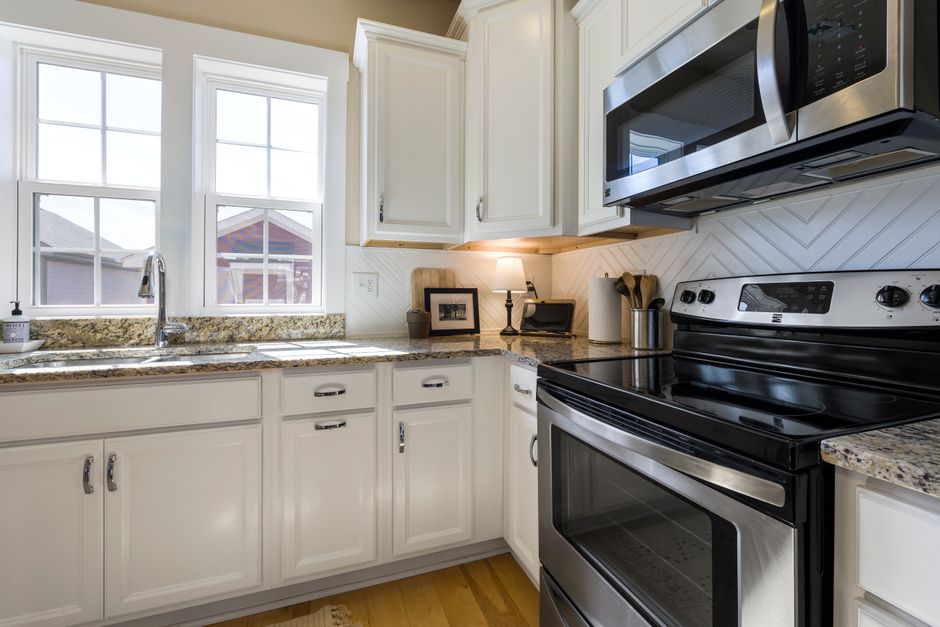
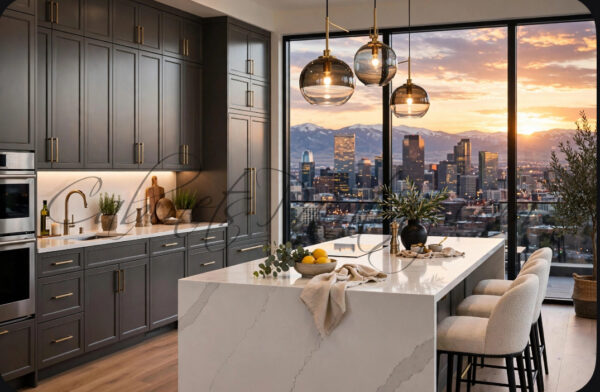
Denver’s real estate market remains one of the most competitive in the country, and homeowners are constantly looking for ways to build equity without draining their savings on full-scale renovations. A full kitchen cabinet replacement in the metro area routinely exceeds $15,000, a figure that pushes the project out of reach for many families. Painting those same cabinets costs a fraction of that price while delivering a dramatic visual transformation. If you are searching for a reliable cabinet painting company in Denver Colorado, you are likely weighing questions about cost, durability, timeline, and whether the investment actually pays off when it is time to sell.
Table of Contents
- Why Professional Cabinet Painting Beats DIY in Denver
- How Much Does Cabinet Painting Cost in Denver? (2026 Pricing Guide)
- What to Look for in a Cabinet Painting Company in Denver Colorado
- The Step-by-Step Process: What to Expect
- Which Paint Brands Deliver the Best Results for Denver Cabinets?
- Cabinet Painting vs. Refinishing vs. Refacing: What Is the Difference?
- Does Cabinet Painting Increase Home Value? Denver ROI Data
- Frequently Asked Questions
- Your Next Step for a Denver Kitchen Upgrade
This guide cuts through the marketing claims and gives you the data, process insights, and local context you need to make an informed decision in 2026. We will examine why DIY cabinet painting fails at an alarming rate, what professional technologies like N-Hance’s Lightspeed Nano Curing System bring to the table, how much you should expect to pay, and which paint brands actually hold up in a busy kitchen. By the end, you will know exactly what separates a mediocre paint job from a factory-quality finish that lasts a decade or more.
Why Professional Cabinet Painting Beats DIY in Denver
The appeal of a DIY cabinet painting project is easy to understand. A few gallons of paint, some sandpaper, and a free weekend sound like a bargain compared to hiring a pro. The reality is far less forgiving. Industry data cited by local Denver painting services shows that roughly 60 percent of DIY cabinet painting projects show visible signs of failure within the first year. Peeling, chipping, streaking, and uneven coverage are the most common complaints.
Denver’s climate introduces challenges that many weekend warriors overlook. The combination of high altitude and low humidity affects how paint cures and adheres to surfaces. Waterborne paints dry too fast in arid conditions, leading to poor leveling and visible brush marks. Oil-based paints, meanwhile, can remain tacky for days when overnight temperatures drop. Professional painters understand these variables and adjust their materials and techniques accordingly.
The equipment gap is another decisive factor. A brush and roller simply cannot replicate the atomized mist of a professional HVLP or airless spray system. Spray application produces a smooth, factory-grade finish free of brush strokes, stippling, and the orange-peel texture that plagues rolled surfaces. Professionals also have access to commercial-grade primers and catalyzed topcoats that are not sold at big-box hardware stores. These products bond to cabinet surfaces at a chemical level, creating a shell that resists moisture, grease, and daily wear.
Time is the hidden cost of DIY. Most homeowners underestimate a cabinet painting project by two to three weeks. Removing doors, cleaning, sanding, priming, painting, and reassembling a kitchen is not a weekend task. It consumes evenings, disrupts meal preparation, and leaves the kitchen in a state of chaos. Professional crews complete the entire job in five to seven business days, with some Denver companies finishing in as few as five days from start to finish. When you factor in the value of your time and the cost of redoing a failed DIY job, the professional route almost always comes out ahead.
How Much Does Cabinet Painting Cost in Denver? (2026 Pricing Guide)
Pricing transparency is rare in the cabinet painting industry. Most companies avoid publishing rates online, preferring to generate leads for free estimates instead. After analyzing multiple Denver-area providers and typical project scopes, a realistic price range for professional cabinet painting in 2026 falls between $1,500 and $5,000, with most mid-sized kitchens landing in the $2,500 to $3,500 zone.
Several variables determine where your project falls on that spectrum. The total linear footage of cabinet boxes and the number of doors and drawer fronts are the primary cost drivers. A standard 10-by-10 kitchen with 20 to 25 doors and drawers will cost less than a sprawling open-concept kitchen with an island, pantry cabinets, and custom trim. The complexity of the door profile matters too: flat-panel Shaker doors are faster to prep and paint than ornate raised-panel designs with deep grooves and crevices.
Material composition also affects pricing. Solid wood cabinets accept paint readily and require less specialized preparation. MDF doors with a factory-applied thermofoil coating demand extra steps, including chemical etching or specialty bonding primers, to ensure the paint adheres properly. Laminate cabinets are the most challenging and may carry a surcharge. Any reputable cabinet painting company in Denver Colorado will inspect your cabinets during the estimate and adjust the quote based on what they find.
Compared to replacement, painting delivers substantial savings. In the Denver market, professional cabinet painting typically costs 50 to 70 percent less than tearing out and installing new cabinetry. A $3,000 paint job can achieve a transformation comparable to a $12,000 replacement, freeing up budget for other upgrades like countertops, backsplash, or new hardware. Nearly every established Denver company, including N-Hance of Denver and Colorado Cabinet Painting, offers free written estimates as a standard practice. Expect the estimate to include a detailed scope of work, a timeline, and a breakdown of the materials and finishes included.
What to Look for in a Cabinet Painting Company in Denver Colorado
Not all cabinet painting services are created equal. The difference between a finish that lasts two years and one that lasts fifteen comes down to technology, process, and experience. Here is what separates the top-tier providers from the rest.
Technology and Process: The N-Hance Differentiator
One of the most significant innovations in the Denver cabinet painting market is the Lightspeed Nano Curing System, a proprietary technology used by N-Hance of Denver. Traditional cabinet painting relies on air-dried finishes that can take 24 hours or more to cure between coats. During that time, dust settles on the wet surface, insects land, and humidity fluctuations interfere with the chemical hardening process. The Lightspeed system uses ultraviolet light to cure the finish instantly at a molecular level. The result is a hardened, durable shell in seconds rather than days.
This technology eliminates the need for sanding between coats, which reduces airborne dust and shortens the project timeline dramatically. It also produces fewer volatile organic compounds than conventional solvent-based finishes, making it a healthier choice for households with children, pets, or respiratory concerns. Cabinets finished with the Lightspeed system can be used immediately after the final coat cures, with no waiting period for the finish to harden.
Another process distinction worth understanding is off-site door finishing. N-Hance transports doors and drawer fronts to a dedicated facility equipped with professional spray booths and negative air scrubbers that capture overspray and dust particles. The cabinet frames are refinished on-site using the same materials and techniques. This hybrid approach ensures that every visible surface receives a dust-free, spray-applied finish while minimizing disruption inside the home. Most competitors paint everything on-site, which increases the risk of dust contamination and extends the time your kitchen is out of commission.
Experience and Local Reputation
Longevity in the Denver market is a strong indicator of quality. N-Hance of Denver has been locally owned and operated since 1989, giving it more than three decades of experience with the specific challenges of Front Range homes. A company that has survived multiple economic cycles and built a reputation over 30-plus years has a track record you can verify.
Customer reviews are your best window into what working with a company is actually like. Beyond the curated testimonials on company websites, look at aggregated review platforms and community forums. The Denver subreddit contains referral threads where real homeowners share unfiltered experiences, including warnings about contractors who underbid jobs and then deliver subpar results. One recurring theme in these discussions is the frustration with low-cost providers who struggle with communication and fail to show up on schedule. Paying slightly more for a company with consistent five-star reviews and responsive customer service is almost always worth the premium.
Service area coverage is another practical consideration. The Denver metro area sprawls across multiple counties, and not every company serves every suburb. Verify that your location is within the provider’s standard service area. Most established companies cover Denver, Aurora, Lakewood, Wheat Ridge, Castle Pines, Parker, Littleton, Broomfield, Arvada, Centennial, Westminster, Thornton, and Brighton. If you live in a farther-flung community like Evergreen or Conifer, confirm availability before getting too far into the process.
The Step-by-Step Process: What to Expect
Understanding the workflow helps you plan around the disruption and set realistic expectations. While minor variations exist between companies, the core process follows a consistent sequence.
The project begins with an on-site consultation and estimate. A project manager visits your home, measures the cabinets, discusses color options, and assesses the condition of the existing surfaces. This is the time to ask about materials, timeline, and warranty coverage. You should receive a written quote that itemizes the scope of work and the total cost before any commitment is made.
Preparation is the most labor-intensive phase and the one that most determines the final result. The crew removes all doors, drawers, and hardware, labeling each piece so it returns to its original location. Cabinet boxes and face frames are cleaned and degreased to remove years of cooking residue, which would otherwise prevent paint adhesion. Light sanding or chemical etching follows, creating a profile that helps the primer bond. For laminate surfaces, a specialty bonding primer is applied to ensure the topcoat does not peel.
The finishing stage involves multiple spray-applied coats. Most professionals apply at least one coat of primer and two coats of a urethane or acrylic enamel topcoat. Each coat is applied in a controlled environment, whether that is an off-site spray booth or a carefully masked on-site workspace. For companies using the Lightspeed system, each coat is cured instantly under UV light before the next is applied.
Reassembly and inspection complete the project. Hardware is reinstalled, doors are aligned, and the crew performs a final walkthrough to catch any touch-up needs. The standard timeline for a typical kitchen is five to seven business days. More complex refinishing projects, such as those involving stain-grade wood restoration, may extend to seven to ten business days.
Which Paint Brands Deliver the Best Results for Denver Cabinets?
One of the most common questions homeowners ask is which paint brand performs best on kitchen cabinets. The answer depends on whether you are buying retail paint or working with a professional who uses commercial-grade products.
For retail-available options, Sherwin-Williams Emerald Urethane Trim Enamel and Benjamin Moore Advance are the two standout choices. Emerald Urethane is a waterborne alkyd that cures to a hard, furniture-grade finish with excellent block resistance, meaning cabinet doors will not stick together after curing. It self-levels beautifully when sprayed and resists yellowing over time. Benjamin Moore Advance is another waterborne alkyd with a slightly longer open time, which allows it to flow out and eliminate brush marks even when applied by hand. Both products dramatically outperform standard wall paint, which lacks the hardness and chemical resistance needed in a kitchen environment.
The reason wall paint fails on cabinets comes down to chemistry. Standard latex paints remain relatively soft after curing, making them vulnerable to scratches, chips, and stains. They also react poorly to heat and moisture, which are abundant in any kitchen. Professional cabinet painters use catalyzed finishes that cross-link at a molecular level as they cure. These products, including conversion varnishes and two-component urethanes, form a shell that is closer to a factory-applied finish than a conventional paint film.
Proprietary systems like N-Hance’s Lightspeed finish represent another tier of performance. Because the finish is cured instantly with UV light rather than air-dried over hours or days, the chemical cross-linking is more complete and uniform. The result is a finish that resists scratches, moisture, and household chemicals at a level that even the best retail paints cannot match. If you are hiring a professional, ask what specific products they use and whether they offer a catalyzed or UV-cured finish option.
Cabinet Painting vs. Refinishing vs. Refacing: What Is the Difference?
The terminology around cabinet upgrades can be confusing, and many homeowners use these terms interchangeably when they actually refer to distinct processes with different costs and outcomes.
Cabinet painting involves applying a solid-color finish over the existing cabinet surfaces. This is the most common choice for homeowners who want to change the color of their kitchen, cover outdated wood tones, or refresh laminate cabinets that cannot be stained. Painting works on virtually any cabinet material, provided the proper preparation and primers are used.
Cabinet refinishing is a different process focused on restoring the natural wood grain. The existing finish is stripped away, the raw wood is sanded, and a new stain and clear topcoat are applied. Refinishing is ideal for high-quality solid wood cabinets where the grain pattern is worth preserving. It is generally more labor-intensive than painting and costs more, but it maintains the warmth and character of natural wood.
Cabinet refacing replaces only the doors and drawer fronts while keeping the existing cabinet boxes. The boxes are covered with a veneer that matches the new doors. Refacing is the most expensive option short of full replacement and is typically chosen when the cabinet layout works well but the doors are damaged or hopelessly dated.
Most Denver cabinet painting companies offer both painting and refinishing services. N-Hance, for example, built its reputation on wood refinishing before expanding into painted finishes. For 2026, painted cabinets remain the dominant trend, with white, cream, navy, and sage green leading color preferences in Denver homes.
Does Cabinet Painting Increase Home Value? Denver ROI Data
The financial case for cabinet painting extends beyond the upfront savings compared to replacement. Real estate professionals in the Denver metro area report that a professionally painted kitchen can return 70 to 80 percent of the project cost at resale, making it one of the most efficient home improvement investments available.
This return compares favorably to other kitchen upgrades. A minor kitchen remodel, which might include new countertops, a backsplash, and updated fixtures, typically returns 70 to 75 percent nationally. Cabinet painting delivers a similar visual impact at a much lower absolute cost, which means less capital is at risk. For homeowners planning to sell within two to three years, painting cabinets is often the single highest-leverage improvement they can make.
The buyer psychology behind this is straightforward. Outdated oak or honey-stained cabinets are among the most common objections cited by Denver homebuyers. They signal deferred maintenance and an impending renovation expense. Painted cabinets in a current color, by contrast, make the kitchen feel move-in ready. In a market where multiple-offer situations are still common, that perception can translate into faster sales and higher offers. A kitchen that photographs well attracts more showings, and more showings lead to more competition among buyers.
Frequently Asked Questions
How much does it cost to have cabinets painted in Denver?
Most projects fall between $1,500 and $5,000, with the average mid-sized kitchen costing $2,500 to $3,500. The final price depends on kitchen size, door count, material type, and finish complexity.
Is professional cabinet painting worth it?
Yes. The 60 percent failure rate of DIY projects, combined with the five- to seven-day professional timeline and decade-long durability of a factory-grade finish, makes professional painting a strong value proposition.
What is the best paint for kitchen cabinets?
For retail products, Sherwin-Williams Emerald Urethane Trim Enamel and Benjamin Moore Advance are the top performers. Professional catalyzed finishes, including UV-cured systems like Lightspeed, offer even greater durability and chemical resistance.
Can you paint laminate cabinets?
Yes, but it requires specialty bonding primers and careful preparation. Not all painting companies have the expertise to handle laminate properly, so verify this capability during the estimate process.
Your Next Step for a Denver Kitchen Upgrade
A kitchen transformation does not require a six-figure renovation or months of construction. Professional cabinet painting delivers the visual impact of a new kitchen at a fraction of the cost, with most projects wrapping up in a single workweek. The key is choosing a provider with the right technology, experience, and local reputation to deliver a finish that lasts.
Contact a trusted cabinet painting company in Denver Colorado today for a free, no-obligation estimate. Walk through your kitchen with a professional, explore color options, and get a written quote that spells out exactly what to expect. In 2026, building home equity does not have to mean breaking the bank. Sometimes the smartest investment is the one that works with what you already have.