If you have spent even an afternoon scrolling through local listings, you already know the challenge. Finding a truly licensed cabinet painter Denver Colorado homeowners can trust requires more than a quick Google search and a prayer. The Front Range is packed with painters, handymen, and general contractors who claim they can refinish a kitchen, but the gap between a weekend warrior with a brush and a licensed professional with a spray booth is measured in years of durability and thousands of dollars in home value. This guide is built for the Denver homeowner who wants to understand exactly what separates a professional cabinet refinishing job from a costly mistake. We will walk through licensing realities, the local climate factors that make Denver a unique market, the step-by-step process a legitimate pro follows, and how to budget for a transformation that costs a fraction of a full replacement. Whether you live in a Victorian in Baker, a mid-century ranch in Lakewood, or new construction in Parker, the criteria for hiring the right painter remain the same.
Table of Contents
- Why "Licensed" Matters More in Denver Than Anywhere Else
- The Denver Difference: Climate, Materials, and Your Kitchen
- The Professional Process: What a Licensed Painter Does Differently
- Cost vs. Value: Budgeting for Your Cabinet Project in 2026
- Spray vs. Brush: The Great Debate (And What You Should Choose)
- How to Find "The One": Local Search and Referral Strategies
- Conclusion and Next Steps
Why "Licensed" Matters More in Denver Than Anywhere Else
The word "licensed" gets thrown around freely in home services, but in Colorado, it carries a specific meaning that many homeowners misunderstand until something goes wrong. Colorado does not issue a statewide "painter's license" the way it does for electricians or plumbers. What a legitimate cabinet painting company holds instead is a combination of a city or county business license, a general contractor license where required by local jurisdiction, and critically, full insurance coverage. When a company advertises as a licensed cabinet painter Denver Colorado residents can verify, they are telling you they operate above the table, pay into the workers' compensation system, and carry general liability insurance.
This distinction matters because cabinet painting is not a casual trade. A professional crew removes doors, operates commercial spray equipment, and works inside your home for several days. If an uninsured worker falls off a ladder in your kitchen or damages a wall with an errant spray gun, you are personally liable for medical bills and repairs. Workers' compensation insurance is not a luxury add-on. It is the single most important document you can ask to see before anyone sets foot on your property. A licensed pro will provide a certificate of insurance without hesitation, and their contract will spell out exactly what happens if something goes wrong.
The local conversation reflects this anxiety. Search any Denver neighborhood forum or Reddit thread, and you will find homeowners pleading for "good, reasonable cabinet painters" who will not ghost mid-project or leave brush strokes on their oak cabinets. The demand for vetted professionals is high precisely because the market is crowded with unlicensed operators offering low bids. Those low bids almost never include the prep work, insurance, and warranty that turn a paint job into a lasting finish.
Before you sign a contract, run through this quick vetting checklist. Ask for proof of general liability insurance and workers' compensation, and call the carrier to confirm the policy is active. Request a written contract that specifies the number of coats, the brand of primer and paint, and the timeline. Ask about the warranty: reputable Denver companies offer five-year coverage against peeling and cracking. Finally, ask for local references from the last six months, not from three years ago. A company that has been serving the Front Range for decades will have recent clients happy to show off their kitchens.
The Denver Difference: Climate, Materials, and Your Kitchen
Painting cabinets in Denver is not the same as painting them in Atlanta or Seattle. The Mile High City sits at 5,280 feet, and that altitude combined with low relative humidity changes how paint behaves during application and curing. A professional who has worked in this market for years understands that high-altitude painting requires adjustments to solvent ratios, application speed, and dry times. Without those adjustments, you get "blushing," a cloudy white haze that forms when moisture gets trapped in the curing film, or "dry spray," where atomized paint particles land on the surface already half-dried, creating a gritty texture instead of a smooth finish.
A licensed cabinet painter Denver Colorado homeowners hire will also know how to read the substrate. Many older Denver homes feature solid oak cabinets with pronounced grain and high tannin content. Oak is beautiful, but it bleeds tannins through water-based primers, leaving yellow-brown stains that ruin a white or light-gray finish. A professional reaches for a shellac-based or high-solids bonding primer to seal those tannins permanently. Newer homes in Stapleton or Green Valley Ranch often have MDF or thermofoil doors, which require entirely different adhesion strategies. Thermofoil, in particular, demands aggressive scuffing and a bonding primer rated for plastics. A handyman who treats every cabinet the same way is gambling with your kitchen.
Then there is the practical reality of living through the project. A full kitchen remodel can displace a family for weeks or months. Professional cabinet painting, by contrast, is designed around the fact that you still need to make coffee in the morning and dinner at night. The industry standard among top Denver providers is a five-to-seven-business-day timeline, with only two or three of those days involving active work inside the home. Doors and drawer fronts are removed on day one and transported to a controlled shop environment. The cabinet boxes are prepped and painted on-site, typically over two visits. By the end of the week, your kitchen is fully reassembled and functional. One local company frames the no-doors period with humor: you will quickly discover where everything lives without opening a cabinet, and the temporary chaos is a small price for a permanent upgrade.
The Professional Process: What a Licensed Painter Does Differently
The difference between a professional cabinet refinish and a disappointing paint job lives in the prep work. A licensed pro allocates roughly eighty percent of the total project hours to preparation, and that ratio is what produces a finish that lasts a decade or more. Understanding the four-phase process helps you evaluate bids and ask the right questions during consultations.
The first phase is door and hardware removal. Every door, drawer front, hinge, and pull comes off the boxes. The hardware gets bagged and labeled so every piece returns to its original location. This is also the moment when a skilled painter identifies opportunities for upgrades. If you have always wanted soft-close hinges, now is the time to install them. If your existing hardware placement feels dated, a pro can fill the old screw holes with wood filler or Bondo, sand them smooth, and drill new holes for modern pulls. These small interventions cost little in labor during an active project but transform the feel of the finished kitchen.
The second phase is surface preparation, and this is where the real work happens. Cabinet boxes are cleaned with a degreaser to remove years of cooking oil, hand oils, and general grime that would repel paint. Doors are inspected for dents, deep scratches, and water damage. A professional uses automotive-grade body filler, not spackle, to repair imperfections. Every surface is sanded to create a mechanical bond for the primer. The sanding is done between coats as well, knocking down any raised grain or dust nibs so the final coat lays flat and smooth.
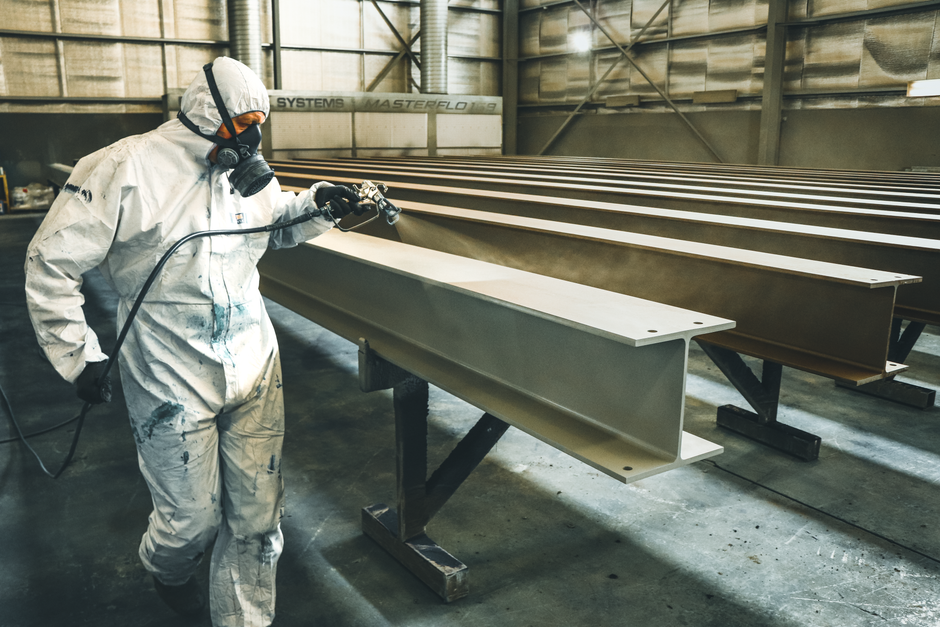
The third phase is the coating application itself, and the method matters enormously. Doors and drawer fronts are transported to a climate-controlled spray shop where they receive one coat of primer and two coats of finish paint, front and back, with sanding between each coat. Spraying in a dedicated booth eliminates dust, pet hair, and overspray from the equation. The result is a factory-quality finish that cannot be replicated with a brush. Meanwhile, the cabinet boxes are brush-and-rolled on-site. A skilled painter uses high-density foam rollers and angled sash brushes to lay down a finish that is nearly as smooth as a sprayed surface, but with a thicker film build that stands up to daily abuse.
The fourth phase is reassembly and inspection. Doors are re-hung, drawers are reinstalled, and every hinge is adjusted for perfect alignment. A reputable company walks through the kitchen with you, pointing out the details and addressing any concerns before the final payment. They also provide a written warranty. In the Denver market, a five-year warranty against peeling, cracking, or adhesion failure is the benchmark. If a company will not stand behind their work for at least that long, keep looking.
Cost vs. Value: Budgeting for Your Cabinet Project in 2026
Kitchen renovations are expensive, and cabinetry is the single largest line item. Industry data consistently shows that cabinets account for thirty to forty percent of a total kitchen remodel budget. When you replace cabinets entirely, you are not just paying for boxes and doors. You are paying for demolition, dumpster rental, new cabinet installation, and often new countertops to fit the new layout. That path can easily run into five figures before you pick a backsplash tile.
Professional cabinet painting flips that math on its head. While every kitchen is different and a precise quote requires an in-home measurement, the savings relative to replacement are measured in thousands of dollars, not hundreds. For the cost of a mid-range appliance upgrade, you can completely transform the visual centerpiece of your kitchen. The paint does not change the footprint, so your countertops, flooring, and backsplash remain untouched. The project is cosmetic in the best sense: maximum visual impact with zero structural disruption.
There is also a middle path worth considering. Some Denver homes have cabinet boxes that are structurally sound but doors that are hopelessly dated or damaged. In those cases, a hybrid approach makes sense. A licensed painter can refinish the cabinet frames on-site while you order new shaker or slab doors from a supplier. The painter then finishes the new doors to match the frames before installation. This hybrid model costs more than painting alone but significantly less than a full tear-out, and it gives you the exact door style you want without sacrificing the existing layout.
Most licensed cabinet painters in the Denver metro area offer free, no-obligation estimates. A consultant visits your home, measures the kitchen, assesses the condition of the cabinets, and discusses your goals for color and sheen. You receive a written quote that breaks down the scope of work, the materials, and the timeline. Scheduling these consultations early in the year is wise. Spring and summer slots fill quickly across the Front Range, and if you are planning a 2026 project, the companies with the strongest reputations book weeks or months in advance.
Spray vs. Brush: The Great Debate (And What You Should Choose)
Homeowners researching cabinet painting inevitably encounter the spray-versus-brush debate, and the internet offers passionate arguments on both sides. The truth is that both methods have a place in a professional job, and understanding the strengths of each helps you evaluate the proposals you receive.
Spraying produces the smoothest possible finish. A high-volume, low-pressure spray gun atomizes the paint into a fine mist that settles onto the surface and levels out to a glass-like film. There are no brush strokes, no roller stipple, and no lap marks. The finish looks like it came from a factory, which is exactly what you want on your cabinet doors and drawer fronts. The catch is that spraying inside an occupied home is a bad idea. Even with plastic sheeting and ventilation, fine paint mist travels farther than you think and settles on floors, countertops, and furniture. The professional solution is to spray doors off-site in a dedicated booth, which is what every reputable Denver cabinet painter does.
Brushing and rolling, by contrast, are the right tools for the cabinet boxes. The frames are fixed in place, and masking off an entire kitchen for spraying is time-consuming and imperfect. A high-quality brush and a dense foam roller apply a thicker coat of paint than a spray gun, which matters on surfaces that see constant contact. The key is technique. A professional painter knows how to lay off the paint with long, even strokes that self-level as they cure. The result on a well-prepped box is a finish that looks sprayed to the untrained eye but wears better over time.
The professional verdict is not one or the other. It is a hybrid: sprayed doors and drawer fronts, brush-and-rolled boxes. This combination gives you the showroom finish where it matters most and the durability where it counts. Any company that insists on spraying everything on-site or brushing everything by hand is cutting corners.
This discussion also explains why DIY cabinet painting so often disappoints. A homeowner can buy high-quality paint and the best brushes on the market, but without a spray booth, commercial sanding equipment, and years of experience reading how paint behaves at altitude, the result rarely matches the vision. The cost of renting or buying professional-grade spray equipment, combined with the risk of ruining cabinets that would cost thousands to replace, makes professional hiring the more cost-effective path for most Denver homeowners.
How to Find "The One": Local Search and Referral Strategies
The search for a reputable cabinet painter in the Denver metro area starts online, but it should not end there. Platforms like Thumbtack and Yelp surface highly-rated providers, and a 5.0 rating with a hundred or more reviews is a strong signal. Colorado Cabinet Painting, for example, holds a perfect five-star rating across more than a hundred reviews on Thumbtack, with a track record of over a hundred completed hires. Those numbers tell you the company shows up, finishes the job, and leaves happy clients behind. But ratings are a starting point, not the final word.
Dig into the portfolio. A legitimate local company will have photos of actual Denver kitchens, not stock images of model homes. Look at the edges of the doors and the inside of the cabinet boxes. A consistent, smooth finish in those hard-to-reach areas signals attention to detail. Look for kitchens that resemble yours in style and era. If you have honey-oak cabinets from the 1990s and the portfolio is all white shaker on new construction, ask to see a project closer to your scope.
Check the service area list before you call. The Denver metro spreads wide, from Castle Pines in the south to Broomfield and Thornton in the north, and from Aurora in the east to Wheat Ridge and Lakewood in the west. Not every company serves every suburb, and confirming coverage early saves time. A company that lists your specific town or neighborhood on their website is already familiar with the housing stock and the drive times involved.
Watch for red flags during the consultation. A painter who proposes spraying doors while they are still attached to the frames is copying a television shortcut that produces drips, poor adhesion, and paint on your hinges. This is a common criticism among professional painters who have spent years undoing the damage caused by HGTV-inspired hacks. A good consultant asks about your household. Do you have young children or pets? How do you use the kitchen? What colors and sheens appeal to you? They should offer specific guidance on sheen selection based on Denver's high-altitude light, which can make high-gloss finishes look harsh and amplify imperfections. They should bring physical color samples, not just a link to a website.
The final test is the estimate itself. A professional quote is detailed and transparent. It specifies the number of coats, the brand and product line of the primer and paint, the timeline, and the warranty terms. If the quote is a single number scrawled on a business card, you are not dealing with a licensed professional.
Conclusion and Next Steps
Hiring a licensed cabinet painter in Denver is an investment in how your home looks and how you feel living in it. The right professional brings insurance, a climate-controlled spray shop, decades of experience with local substrates, and a warranty that backs up the work. The wrong hire brings stress, delays, and a finish that starts peeling before the year is out.
If you are planning a kitchen refresh in 2026, the calendar is your most underrated asset. The best painters in the Denver metro area book their spring and summer schedules early, and a consultation now locks in your spot before the rush. Check the service area to confirm coverage for your neighborhood, review the portfolio for kitchens that look like yours, and schedule a free, no-obligation estimate. A five-day transformation that saves thousands over replacement is closer than you think, and it starts with a single phone call.