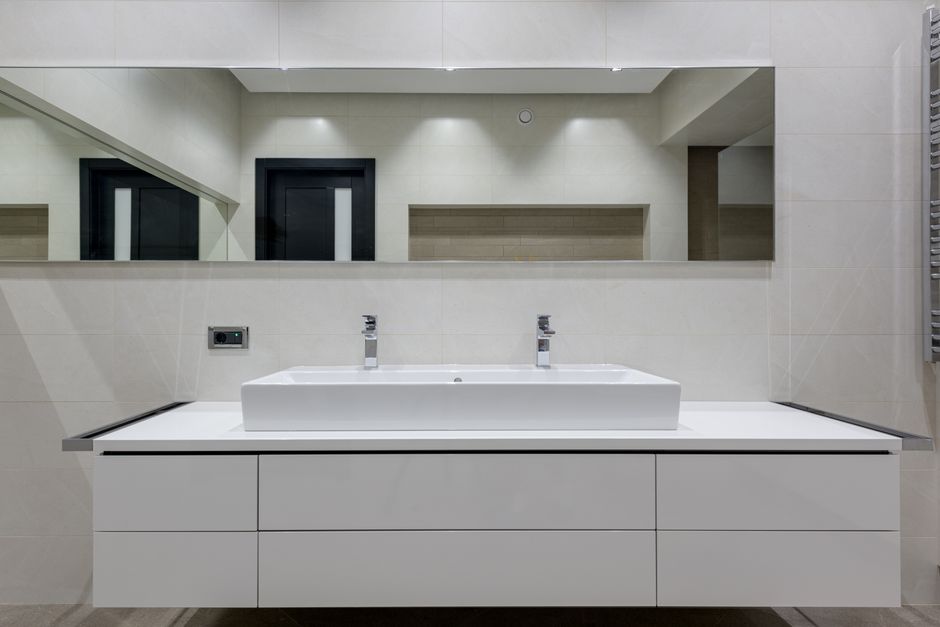
A dated bathroom vanity is one of the most visible surfaces in a home, and in Denver’s older housing stock it is often the last oak-toned holdout after the kitchen has already been updated. Replacing a vanity means paying for a new cabinet box, a new countertop, plumbing labor, and frequently a tile repair where the old cabinet met the floor. Painting keeps the box and doors that already fit the room and changes only the finish, which is why so many Denver homeowners treat vanity painting as the practical middle path between living with the old look and starting over.
The tradeoff is that a bathroom is a harder environment for a finish than a kitchen. Steam, splashing, daily towel traffic, and cleaning products all test the surface. That makes the method matter as much as the color. This guide covers what vanity painting costs in the Denver market in 2026, what a professional sprayed process actually involves, and how long a properly applied finish is expected to hold up.
Why Denver Homeowners Paint Vanities Instead of Replacing Them
Bathroom cabinetry is a small footprint with a large visual impact. A single vanity might be three to six doors and a couple of drawer fronts, which is a fraction of the surface area of a full kitchen. Because of that, painting a vanity is one of the fastest and least expensive ways to change the look of a bathroom, and it can usually be done without touching the countertop, the plumbing rough-in, or the flooring.
Cost is only part of the reasoning. Replacement cabinets rarely match the exact dimensions of the old box, so a swap often cascades into new counters, a new backsplash, and patched tile. Painting sidesteps that chain of dependencies entirely. The original cabinet was built for that wall and that plumbing layout, and painting preserves that fit while discarding the dated color.
Denver’s housing stock also plays a role. A large share of metro-area homes were built with golden oak vanities that read as warm and heavy under bathroom lighting. Grain-filled and sprayed in a lighter or more neutral color, those same cabinets can carry a modern bathroom without a single new cabinet being cut.
What Bathroom Vanity Painting Costs in Denver in 2026
Reported pricing for bathroom cabinet painting in the Denver area typically runs about $175 per door and about $400 for the frame. Those figures describe the common work of refinishing a normal vanity, not the whole job. Larger projects that involve extensive preparation work and premium finishes can reach roughly $12,000, which reflects a substantial amount of cabinetry rather than a single bathroom vanity.
| Project element | Typical Denver range | What it covers |
|---|---|---|
| Per door | About $175 | Individual door removal, prep, spray, and reinstall |
| Frame and cabinet box | About $400 | Face frame, end panels, and interior edges of the vanity |
| Large, prep-heavy jobs | Up to roughly $12,000 | Extensive prep work, premium finishes, and high door counts |
Those numbers move depending on a handful of variables that a good estimate will spell out before any work begins:
- How many doors, drawer fronts, and end panels the vanity has
- Whether the existing finish is failing, peeling, or intact
- Whether the wood grain needs to be filled before spraying
- How dramatic the color change is, especially going from a dark stain to white
- Whether the vanity has exposed sides that are visible from the room
- Whether other cabinetry, such as a laundry room or built-ins, is included in the same visit
Because the local market varies by scope and season, the reliable approach is to request a free estimate and compare written quotes line by line rather than trusting a single per-door figure. Ask what is included in preparation, what finish is being sprayed, and what happens if the vanity turns out to need more work than expected.
What the Painting Process Actually Looks Like
The difference between a finish that survives a bathroom and one that peels within a year is almost entirely in the preparation and the application method. Here is how a professional cabinet-painting job generally runs.
Preparation and Dust Control
Doors and drawer fronts come off and get labeled so they go back on the same openings. Hardware is removed. The remaining frame and box are cleaned to strip away soap film, hairspray residue, and body oils, all of which will repel paint if left behind. Surfaces are then abraded and sanded, and this is the stage where dust control matters most in a finished bathroom. Dustless HEPA-sanded preparation keeps fine sanding dust out of the air and off countertops and tile instead of letting it settle across the room. Any chipped or damaged areas get filled and sanded flush before a primer goes on.
Spraying Versus Brushing
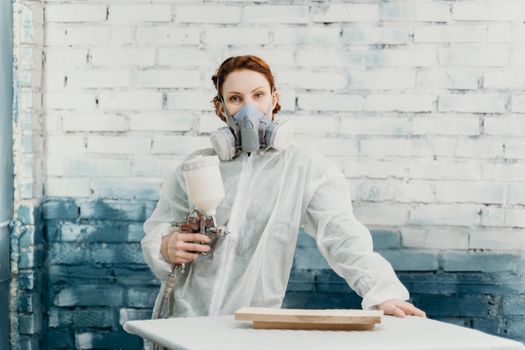
A sprayed finish is applied with professional spray equipment rather than a brush and roller. Spraying produces a uniform film with no brush marks, no lap lines, and no thicker and thinner patches along the edges. Denver cabinet specialists who spray use factory-grade coatings such as a two-component polyurethane or a precatalyzed lacquer, which cure harder and more evenly than standard wall paint. For oak vanities, grain filling can be built into this stage so the surface reads smooth rather than showing the heavy cathedral grain that dates the cabinet.
Cure Time and Reassembly
After spraying, the finish needs time to cure before it is exposed to water and handling. A typical Denver cabinet-painting project takes roughly five to seven days from start to finish, which includes removal, prep, spray sessions, cure time, and reassembly of doors, drawers, and hardware. Homeowners are usually without a fully functioning vanity for part of that window, so plan the schedule around that.
How Durable Is a Painted Bathroom Vanity?
Durability depends on three things: the coating, the preparation under it, and the conditions it lives in. A cured sprayed lacquer or polyurethane film is harder and more uniform than brushed-on paint, and a uniform film has fewer thin spots where moisture can get a foothold. That matters more in a bathroom than in most rooms, because the vanity sits directly in the splash zone of a sink and inside the humidity plume of a shower.
Preparation is the other half of the equation. A finish sprayed over a glossy, contaminated, or unprimed surface will eventually lift, no matter how good the coating is. When sanding, cleaning, priming, and grain filling are done properly, the new finish bonds to the substrate rather than sitting on top of it.
Look for a written workmanship warranty when comparing providers so the durability claim is backed by something. A three-year workmanship warranty is a reasonable benchmark for a specialist cabinet painter, and it signals that the company expects the finish to stay put. Companies in the Denver market also advertise being licensed and insured, which is worth confirming directly because it determines who carries liability if something goes wrong.
Realistic expectations still matter. A painted vanity will not be indestructible. Standing water left on the finish, abrasive cleansers, and repeated heavy impacts around the sink edges will shorten its life. Normal wiping with mild soap and water preserves it.
Painting, Staining, or Replacing: A Denver Comparison
| Option | What it involves | Best suited for | Main consideration |
|---|---|---|---|
| Painting | Prepping and spraying the existing cabinet and doors in a new color | Solid, structurally sound vanities with a dated finish | Prep and coating quality determine how long it lasts |
| Staining or refinishing to a wood tone | Removing the old finish and applying a stain and clear coat | Vanities with wood grain worth showing | Darker stains can make a small bathroom feel heavier |
| Replacing cabinets | New cabinet box and doors, often new counters and plumbing work | Cabinets that are water-damaged, warped, or falling apart | Highest cost and the most disruption to the room |
If the cabinet box is soft, swollen, or crumbling from a long-running leak, painting is the wrong answer and replacement is the right one. If the box is solid and only the color is the problem, painting delivers most of the visual change for a fraction of the cost.
Choosing a Cabinet Painter in Denver
Denver has no shortage of painters, and the range of quality is wide. Some providers handle cabinet refinishing as one service among many, while specialists focus exclusively on cabinetry and built-ins, including kitchen cabinets, bathroom vanities, laundry rooms, and other residential cabinetry. That focus usually shows in the finish.
Questions worth asking before signing:
- Will the doors and frames be sprayed or brushed?
- What specific coating is being used?
- How is dust controlled in an occupied bathroom?
- Is grain filling included for oak cabinets?
- Is the company licensed and insured?
- What does the workmanship warranty cover, and for how long?
- What is the full timeline from start to reassembly?
Local cabinet painters serve Denver and the surrounding metro, including Aurora, Lakewood, Littleton, Arvada, and Boulder. Scheduling a free estimate is the simplest way to get a real number for your specific vanity instead of applying a generic per-door rate to a cabinet that may need grain filling, repairs, or a dramatic color change.
Frequently Asked Questions
How much does it cost to have a bathroom vanity painted in Denver?
Reported Denver pricing typically runs about $175 per door and about $400 for the frame, with large prep-heavy jobs reaching roughly $12,000. A single vanity with a handful of doors usually lands well below those upper figures. Because scope varies so much, request a free written estimate rather than relying on a generic rate, and ask what preparation and coating are included.
Is it better to paint or stain a bathroom vanity?
It depends on the wood and the room. Staining preserves visible grain, which suits vanities with attractive wood. Painting covers grain and works better when the goal is a light, modern color or when the existing finish is too worn to refinish evenly. Oak vanities can also be grain-filled and sprayed for a smooth painted surface that hides the older grain pattern.
Can I repaint my bathroom vanity?
Yes, as long as the cabinet box is structurally sound. A previously painted vanity can be repainted, provided the old coating is cleaned, abraded, and primed so the new finish bonds properly. If the existing paint is peeling, blistering, or hiding water damage, those areas need to be repaired and stabilized first or the new finish will fail in the same spots.
Can I paint a vanity without sanding?
Sanding or abrading is a normal part of professional preparation because it gives the coating something to grip. Skipping it entirely, or painting over a glossy or greasy surface, is a common reason DIY vanity paint jobs peel within a year. Deglossing, cleaning, and priming are what let a sprayed finish stay bonded in a humid bathroom.
How long does bathroom vanity painting take?
A typical professional cabinet painting project runs about five to seven days from start to finish, covering removal of doors and drawers, dustless HEPA-sanded preparation, spraying, cure time, and reassembly. That is considerably faster than ordering and installing new cabinetry, but plan for a few days without full use of the vanity while the finish cures.