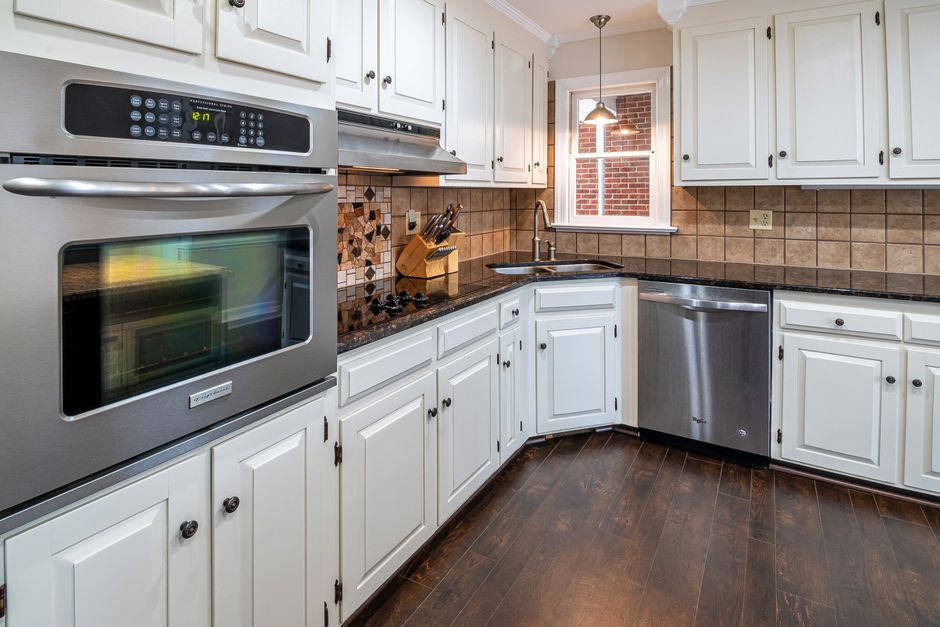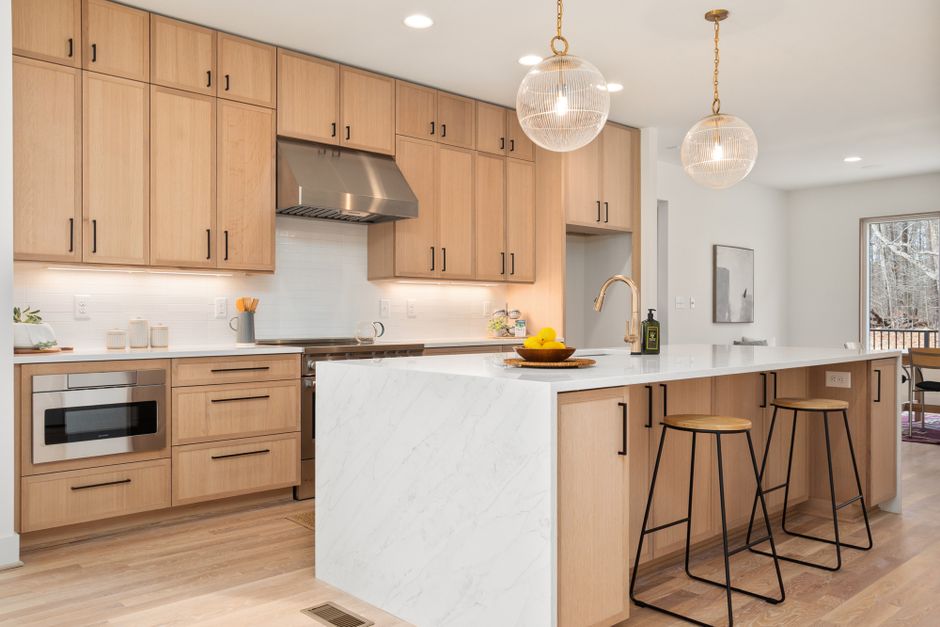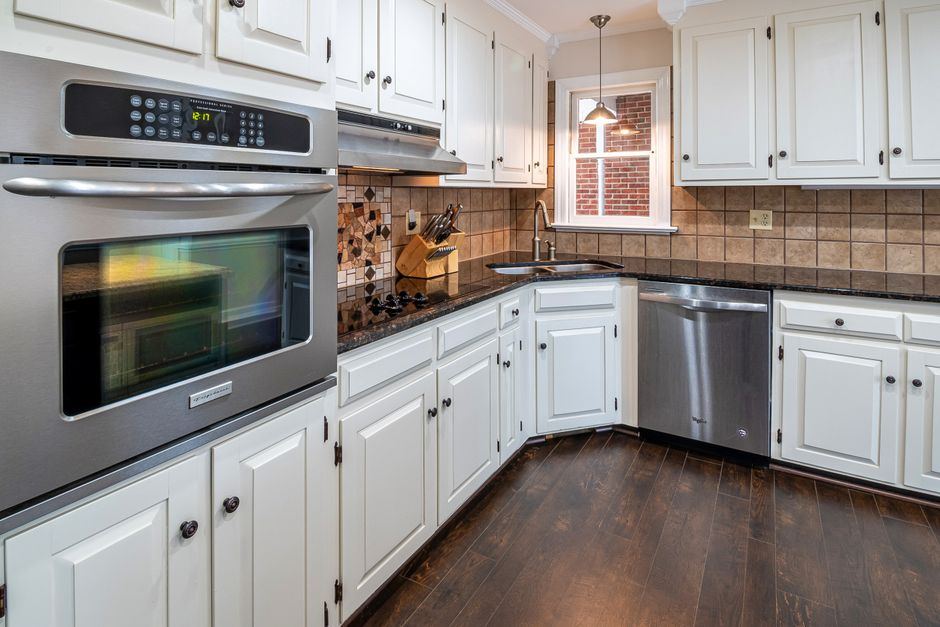
Denver homeowners ask the same question in almost the same words every week: what is this actually going to cost? After more than 50 years of spraying cabinets in this city as a family-owned business, we can answer it without hedging. Most Denver kitchens land between $3,500 and $7,500 for a sprayed factory-grade finish. Replacing those same cabinets runs $20,000 to $45,000.
That gap is the reason cabinet painting Denver homeowners choose has become the default kitchen update here. But the range is wide, and the difference between a $3,500 job and a $7,500 job is almost never the paint itself. It is the number of doors, the profile of those doors, the species of wood underneath, and how much preparation the existing finish demands before a single coat goes on.
Average cabinet painting cost in Denver in 2026
Most Denver kitchens cost $3,500 to $7,500 to spray with factory lacquer, compared with $20,000 to $45,000 to replace the cabinets outright. That is the honest headline number for 2026, and it has not moved dramatically because the work behind it has not changed: labor, masking, sanding, priming, spraying and reassembly.
Where a specific kitchen lands inside that band comes down to size and complexity. A compact kitchen with a modest door count and a single color sits near the low end. A large open-plan kitchen with tall pantry doors, deep drawer banks, glass fronts or a two-tone layout pushes toward the top. Bathroom vanities are smaller jobs than kitchens, but the process is the same.
A legitimate Denver quote should include the whole job, not just the spraying:
- Removal and labeling of every door and drawer front
- Dustless HEPA sanding and degreasing of doors, frames and boxes
- Bonding primer over the existing finish
- A sprayed 2K polyurethane or precatalyzed lacquer topcoat
- Controlled drying so doors cure before they are rehung
- Hardware reinstallation and final touch-up
- A written workmanship warranty
When a bid comes in far below that range, the missing money is usually hiding in one of those lines. Brushed paint instead of a sprayed finish, no primer, or doors sprayed on the face only are the most common shortcuts. Those shortcuts are exactly what produces peeling cabinet paint two winters later.
Cost breakdown: doors, boxes, drawers, primer, 2K topcoat, hardware
Cabinet painting is priced by surface area and by how much of that area needs repair. Every item below moves the number, and understanding them makes it much easier to compare quotes that look wildly different on paper.
| Cost driver | Why it changes the price |
|---|---|
| Door and drawer front count | Each front is sanded, primed and sprayed on both sides, then cured. More fronts means more of every step plus more drying rack space. |
| Door profile | A flat slab or basic shaker face is fast to sand and spray. Raised panel doors have deep profiles and recessed edges that take more time and more finish. |
| Wood species: oak versus maple | Golden oak and white oak have open grain that needs filling before spraying. Maple is dense and tight, so it needs careful scuffing to give the primer something to bite. |
| Grain filling | Filling the pores of oak for a smooth painted surface adds a full labor step before primer, which is why oak kitchens are quoted higher than maple. |
| Primer | A bonding primer is what actually holds the new finish to the old one. Skipping it is the single most common cause of paint failure on cabinets. |
| 2K topcoat | Two-component polyurethane and precatalyzed lacquer cure hard and resist kitchen grease and cleaning. They cost more than wall paint and behave completely differently. |
| Hardware | Removing and reinstalling existing hardware is part of the job. New hardware means filling old holes, drilling new ones and touching in the repair. |
| Grease, water damage and worn edges | Cabinet doors near a range hold years of cooking residue. Heavy cleaning, sanding and edge repair add hours. |
| Two-tone layouts | Two colors means two spray sessions and additional masking, which adds both time and material. |
| Cabinet interiors | Painting inside the boxes adds significant surface area. Most Denver homeowners keep interiors as they are, which keeps the price down. |
The topcoat deserves its own note. Wall paint and trim enamel are built for walls and trim. Cabinets get touched hundreds of times a month, wiped with cleaners, and exposed to steam and grease. A 2K polyurethane or precatalyzed lacquer sprays on thin, levels flat and cures to a hard film that feels like a factory cabinet. That chemistry is the main reason a professional spray job outlasts anything rolled on by hand.
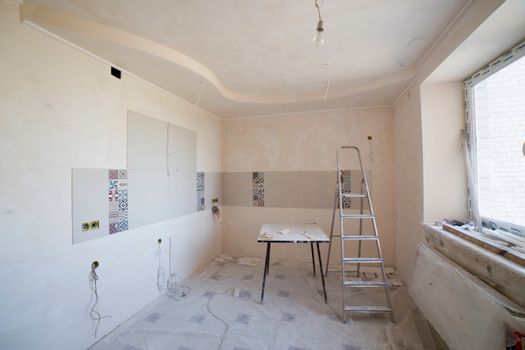
Why Denver homes are different: dry climate, altitude, cure time, oak versus maple
Finish behaves differently here than it does at sea level, and anyone spraying cabinets in Denver without accounting for that will produce inconsistent results. Denver’s air is dry and the altitude is high, and both facts change how a coating dries, flows and cures.
Low humidity pulls solvent out of a wet film quickly. That sounds helpful, and it partly is, because a sprayed door can be handled sooner. It also creates the risk of the surface skinning over before the coating underneath has released its solvent, which traps material and leads to a film that looks fine on day three and shows problems weeks later. Altitude adds another variable because air pressure affects how a spray gun atomizes finish. A gun setting that works in a humid, low-elevation city will not lay the same pattern here. This is why we adjust pressure, tip size and reducer to the conditions on the day of the spray, not to a chart.
Dry and cured are two different states. A cabinet door can be dry to the touch and still be crosslinking for days. Hang it and slam it while the film is still soft and you get marks at the corners and edges that never come out. That is the real reason a sprayed kitchen takes 5 to 7 days rather than two, and it is time we spend on purpose.
Wood species matter just as much. Denver’s older housing stock is full of golden oak cabinets from the 1970s through the 1990s, and oak is an open-pore wood with tannins that can bleed through a coating if it is not sealed properly. Painting oak without grain filling leaves a textured, dimpled look that reads as painted wood rather than a smooth factory finish. Maple is the opposite problem. It is dense and tight-grained, and primer struggles to grip a slick, factory-finished maple door unless it is scuffed correctly first.
Painting versus refinishing versus refacing versus replacement in Denver
These four words get used loosely, and the confusion costs homeowners money. Cabinet refinishing Denver contractors advertise is often the same clean, sand, prime and spray process as painting, but not always. Ask exactly what a provider means before you compare their number with someone else’s.
| Option | What happens to your cabinets | Denver cost range |
|---|---|---|
| Spray painting with factory-grade lacquer or 2K | You keep your existing boxes, doors and drawer fronts. Everything is cleaned, sanded, primed and sprayed, then reassembled. | $3,500 to $7,500 |
| Spray painting with oak grain filling | The same process with an added pore-filling step so open-grain oak sprays out smooth and flat. | Quoted per kitchen; ask for an itemized estimate |
| Cabinet refinishing | Terms vary by provider. Some use it for the full spray process, others for a lighter surface refresh over the existing finish. | Quoted per project; confirm scope in writing |
| Refacing | Boxes stay in place while doors and drawer fronts are replaced and the visible frame is covered with new material. | Quoted per project; ask for a written breakdown |
| Full replacement | Old cabinets come out, new boxes and doors go in, and countertops, sinks and plumbing are often disturbed in the process. | $20,000 to $45,000 |
One practical point that rarely makes it into the sales conversation: painting keeps your layout. If your kitchen works and the boxes are solid, you are paying to change the color and the finish, not to redesign the room. If the boxes are failing, no finish will fix them.
What 50+ years has taught us about what makes paint last in Colorado
We have sprayed thousands of Denver kitchens, and the failures we get called to inspect almost always trace back to the same handful of causes. None of them are about the color. All of them are about process.
- Prep decides everything. Kitchen grease is invisible and it destroys adhesion. Doors and frames get degreased and sanded before anything else happens.
- Primer is not optional. A bonding primer bridges old finish and new coating. Without it, the topcoat sits on the surface instead of gripping it.
- Spray, do not brush. Brushed and rolled cabinet paint leaves texture, brush marks and thin edges that wear through first.
- Use the right chemistry. A 2K polyurethane or precatalyzed lacquer cures hard. Wall paint stays soft and sticks to itself in humid kitchens.
- Respect cure time. Doors go back on when the film is ready, not when the schedule says so.
- Control the environment. Denver’s dry air and altitude change how finish flows, so spray settings get tuned on site.
- Stand behind the work. We warranty our workmanship for 3 years because a properly prepped and sprayed cabinet finish should not need us back.
That last point matters more than any single technique. A family business that has served Denver for more than 50 years does not survive on rework. We are not the cheapest quote you will collect, and we are comfortable saying so, because the alternative is repainting the same kitchen in three years.
Best cabinet colors that sell homes in Denver
Color is the part of this decision homeowners agonize over most, and it is genuinely easier to get right if you think about resale rather than about a trend you saw this month.
White remains the safest choice in the Denver market and it always has. A clean white kitchen photographs bright, works with almost any countertop and flooring, and does not date the way bolder choices do. Warm whites and soft off-whites tend to read better in older Denver homes than stark bright white, which can look cold against the light coming through original windows.
Greige is the color we get asked about most right now. Greige sits in the narrow space between gray and beige, and that in-between quality is exactly what makes it flexible: it reads warm in afternoon light and cooler in the morning, and it pairs with both white and wood floors. Two-tone kitchens are the other strong pattern, typically white uppers with a deeper color on the lower cabinets or on an island. If you are planning to sell, keep the permanent elements neutral and put the personality in the island or the lowers, where the next owner can repaint without redoing the whole kitchen.

Frequently Asked Questions
How long does kitchen cabinet painting take in Denver?
Most Denver kitchens are finished in 5 to 7 days. Doors and drawer fronts come off early, go through prep and spraying, and cure before they are rehung. A single-color kitchen with standard doors usually finishes at the shorter end. Two-tone layouts, oak grain filling, or heavy grease and damage can add days to the schedule.
Can I live at home while my cabinets are being painted?
Yes, and most Denver homeowners do. You keep your house, your refrigerator and your routine, but the kitchen is out of service for several days while doors are off and finish cures. Plan simple meals, move everyday dishes and small appliances to another room, and stay off the cabinet faces until they are fully cured.
Will low-VOC cabinet finishes still smell?
Any sprayed finish has some odor while it flashes and cures, though Denver’s dry air can shorten that window. Ask your painter which product they use and request the manufacturer’s safety data sheet. Ventilation, fans and time matter more than marketing labels. If anyone in the house is sensitive, schedule the work for a stretch when windows can stay open.
What warranty comes with cabinet painting in Denver?
We back our sprayed finish with a 3-year workmanship warranty, which is unusual in this trade and reflects more than 50 years of doing this work locally. A warranty only means something if the prep behind it was done correctly. Ask any of the cabinet painters Denver homeowners are considering what exactly is covered, and get it in writing before work starts.
How long will painted kitchen cabinets last?
A properly prepped, sprayed factory-grade finish is built to hold up for years, not months. What shortens its life is the same everywhere: skipped primer, a brushed-on coating, abrasive cleaners and standing water around sinks and dishwashers. Wipe with a soft damp cloth, skip scrubbing pads, and touch up chips early before moisture gets under the film.
Free Denver estimate from a family business with 50+ years here
If you want a real number instead of a range, we will come out, count your doors, look at the wood and the condition of the existing finish, and give you a free written estimate with no pressure attached. We are a family-owned Denver company that has been spraying cabinets in this city for more than 50 years, and we have completed thousands of kitchens across the metro area. You can request your free estimate at cabinetspainting.com and get a straight answer about what your kitchen costs to spray, what it costs to replace, and which one your cabinets actually justify.