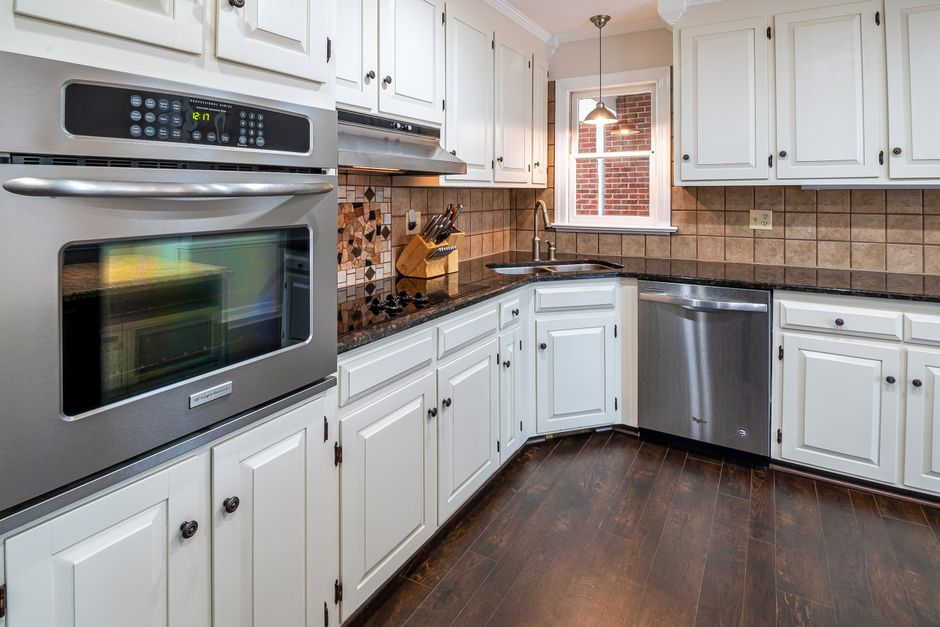
Denver homeowners with golden oak or white oak cabinets face the same decision every year, and 2026 is no different: cover up the old surface, or replace the parts people actually see. Cabinet refacing in Denver lets you keep your existing cabinet boxes while replacing the doors and hardware for a fresh, new look. A DIY refacing kit promises the same result in a box shipped to your door. A professional sprayed finish takes a third path, keeping your doors and boxes and rebuilding the surface itself.
Those three options land in very different places once they are installed in a working kitchen. The gap is not really about color or style. It is about how the surface is attached, how it handles steam and grease, and who is responsible when a door stops closing square two winters from now.
What Cabinet Refacing Means in Denver
Refacing is a well-established category along the Front Range. Colorado Cabinet Refacing describes itself as a local, independent specialist in kitchen refacing, working since 1995 and serving the Denver and Boulder area. Dun-Rite Home Improvements offers custom refacing and resurfacing in Denver, positioning it as an alternative to full replacement that avoids the mess of tearing out cabinetry. Kitchen Tune-Up Denver covers a similar range of work, including wood reconditioning tune-ups, cabinet refacing and redooring, and custom cabinetry, with free in-home consultations.
Refacing specialists typically take care of the parts homeowners find intimidating: fitting new panels to the face frames, hanging doors that align, and matching hardware across a run of cabinets. That labor is the reason refacing is not a low-cost line item. The national average price range for cabinet refinishing sits between $1,500 and $6,000, and Denver refacing providers advertise savings of roughly 50 percent against a full remodel. Local review volume gives some sense of how competitive the market is: Thumbtack lists 17 five-star kitchen cabinet refacers in Denver, Colorado.
What Actually Ships in a DIY Cabinet Refacing Kit
A refacing kit narrows the job down to a set of parts and an instruction sheet. Depending on the brand, you can expect new door and drawer fronts, veneer or peel-and-stick panels sized for your cabinet faces, edge banding for the exposed frame edges, and replacement hinges and pulls. The install itself is a sequence of careful measurements: trim panels to size, apply them flat and bubble-free, then rehang doors so the gaps stay even.
That sounds reasonable on paper. The problem is that the paper assumes your cabinets are square, flat, and perfectly clean, which is rarely true in Colorado homes built in the 1970s through the 1990s.
Where DIY Refacing Kits Tend to Fall Short
Boxes and Frames Are Often Out of Square
Veneer and door fronts are made to tight tolerances. Older cabinet boxes are not. Decades of humidity swings, settling, and past hardware changes leave face frames that are slightly twisted or bowed. A pre-cut panel applied over a bowed frame shows the gap immediately, and there is no adjustment built into the product. Refacing crews deal with this by shimming, planing, and refitting on site, which is exactly the work a kit assumes you can skip.
Adhesive in a Real Kitchen
The area above a stove and the cabinets beside a dishwasher see heat, steam, and cooking grease. Adhesive-backed veneer depends on a clean, sealed substrate to hold. Any residue left on the frame, or any spot where the adhesive does not fully contact, becomes a lifting edge. Once one corner lifts, water and grease get underneath and the panel starts to peel from the inside out.
Denver’s Dry Air and Altitude
Colorado’s low humidity works against thin wood veneer. Wood moves as moisture levels change, and a veneer layer glued to a stable substrate has to move with it or separate. Kit manufacturers sell in every climate, so their instructions rarely account for how quickly material dries here or how much the indoor humidity drops once the furnace runs from October through April.
Door and Drawer Alignment
Even a perfect panel application can look amateur if the doors do not line up. Consistent, even reveals across a run of cabinet doors take practice to achieve. A homeowner installing a kit for the first time usually discovers this after the hinges are already set and the old screw holes are already stripped.
What a Professional Sprayed Finish Involves
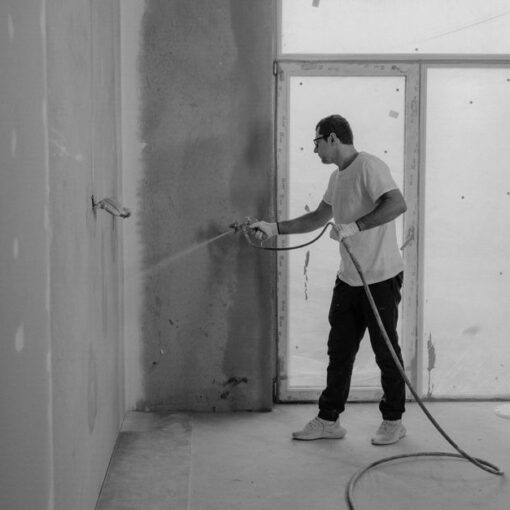
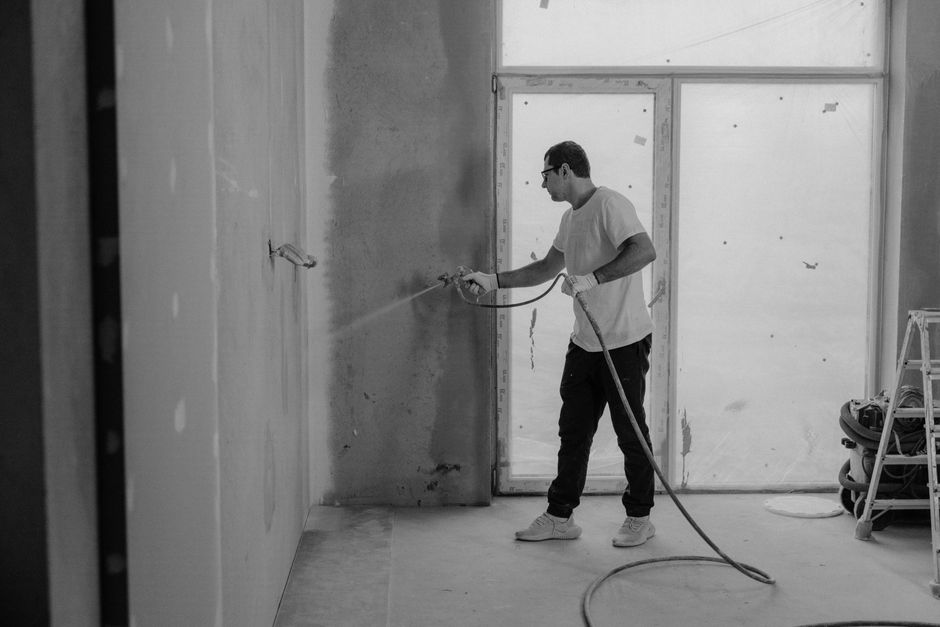
A sprayed cabinet finish skips the veneer question entirely. Instead of covering the old surface, the surface is sanded and rebuilt, then sprayed with a factory-grade coating such as a 2K polyurethane or a precatalyzed lacquer. Spraying produces a smooth, even film without the brush marks and lap lines that come with rolling or brushing paint at home. Preparation is where the durability is won, and it includes dustless HEPA sanding to control the fine dust that cabinet work creates.
Two details matter for Denver homes in particular. First, golden oak and white oak have open grain that telegraphs through thin coatings, so grain filling is part of getting a smooth finish. Second, color does not have to be uniform. Two-tone kitchen cabinet designs, with one color on the uppers and another on the base cabinets, are a common request and are straightforward when cabinets are sprayed rather than panelled.
The practical appeal is time and accountability. A cabinet painting specialist works through a kitchen in roughly a week, from masking and sanding to spraying and reassembly, and backs the work with a three-year workmanship warranty. Free local estimates are available across the Denver metro, including Aurora, Lakewood, Littleton, Arvada, and Boulder.

Comparing the Three Paths Side by Side
| Approach | What changes | Who does the labor | Main risk |
|---|---|---|---|
| DIY refacing kit | New door and drawer fronts, veneer panels, hardware | You | Peeling veneer, uneven doors, out-of-square frames |
| Professional refacing | New doors, panels, and hardware fitted by a crew | Refacing contractor | Higher cost than a kit, and the original boxes stay as they are |
| Pro sprayed finish | The existing doors and boxes, refinished with a sprayed coating | Cabinet painting specialist | Requires the cabinets to be structurally sound |
One thing all three share is that they keep your existing boxes. None of them fixes a cabinet box that is water damaged, delaminating, or sagging.
Cost: What to Compare Beyond the Sticker Price
The national average price range for cabinet refinishing runs between $1,500 and $6,000, which tells you the variable is scope, not the concept. A DIY kit looks cheapest because it excludes labor. The honest comparison adds up the tools you do not own yet, the weekends you spend installing and redoing, and the possibility of paying a professional later to fix what did not hold.
Against a full kitchen remodel, both refacing and spraying look reasonable, and Denver refacing providers advertise savings of about half versus remodeling. The right way to decide is to get a free local estimate for your specific kitchen and compare it against the total kit cost, not the kit price alone. Ask for a written scope that says what is being prepped, what coating is being used, and what happens if something fails.
Which Option Makes Sense in 2026
Choose a DIY kit if your cabinets are genuinely square and flat, the faces are clean and sound, and you are comfortable working methodically over several weekends. Choose professional refacing if you want new doors and hardware and do not mind paying for fitting. Choose a sprayed finish if the doors and boxes are structurally fine but the color and surface are dated, if your cabinets are oak with open grain, or if you want the project finished in about a week with a workmanship warranty behind it.
Before committing to any route, have someone look at the cabinet boxes in person. The condition of the boxes, not the color of the doors, decides which of these three paths will actually last in a Denver home.
Frequently Asked Questions
Can I reface my own kitchen cabinets in Denver?
Yes, DIY cabinet refacing kits are sold for homeowners and the process is within reach if your boxes are square and clean. The catch is that older Denver cabinets are often slightly twisted or bowed after decades of dry winters, and pre-cut panels do not adjust for that. If your frames are uneven, the finished result will show it.
What does cabinet refacing include compared with a sprayed finish?
Refacing replaces the visible parts: new doors, drawer fronts, veneer panels over the face frames, and new hardware. A sprayed finish keeps your existing doors and drawer fronts and rebuilds the coating on them with a sprayed lacquer or polyurethane. One changes the parts, the other changes the surface.
How long does each option take?
A DIY kit is usually measured in weekends, plus drying and cure time between steps. A professional sprayed finish is typically completed in about a week, since preparation, sanding, spraying, and reassembly happen in one continuous sequence. Professional refacing timelines depend on door lead times, so confirm scheduling when you request an estimate.
Is refacing cheaper than replacing cabinets?
Refacing generally costs less than a full replacement because the boxes stay in place. Denver refacing providers advertise savings of roughly 50 percent versus remodeling. The national average for cabinet refinishing falls between $1,500 and $6,000, but your actual number depends on kitchen size, door count, and material choices, so get a written estimate.
Do oak cabinets need special treatment before finishing?
Yes. Golden oak and white oak have open grain that shows through thin coatings, which is why grain filling is part of a quality sprayed finish. Skipping that step leaves a textured surface that never looks smooth, no matter how many coats go on top. Ask any contractor how they handle grain before you hire them.