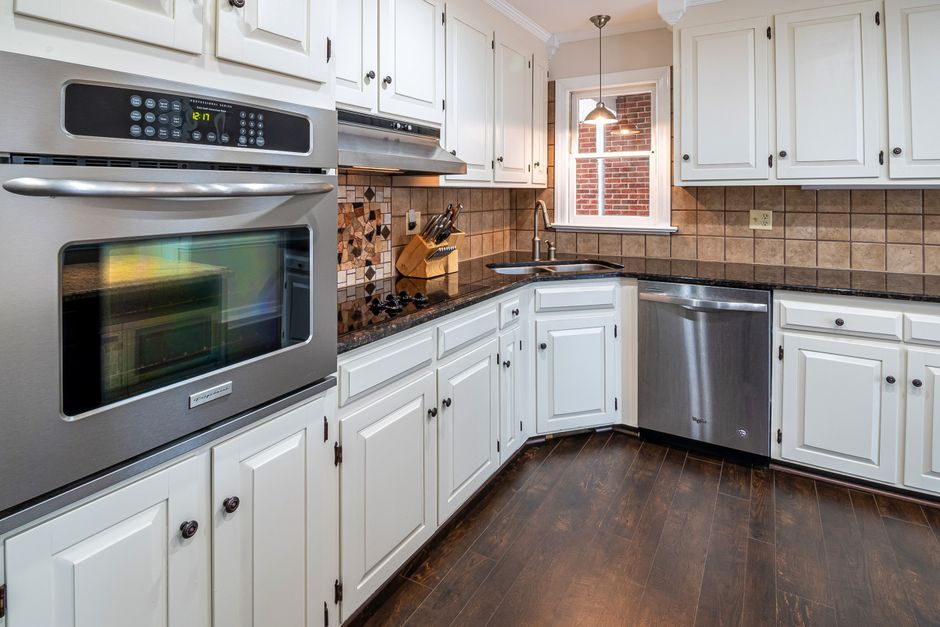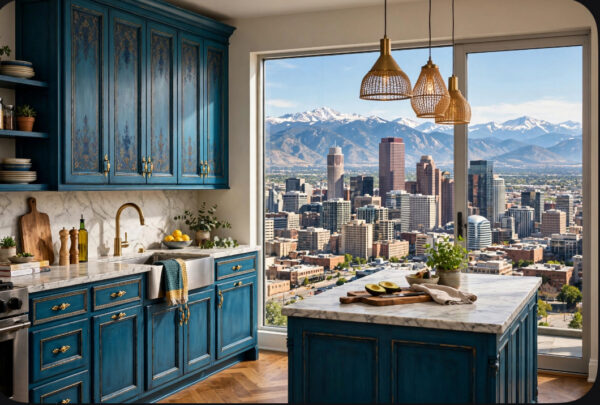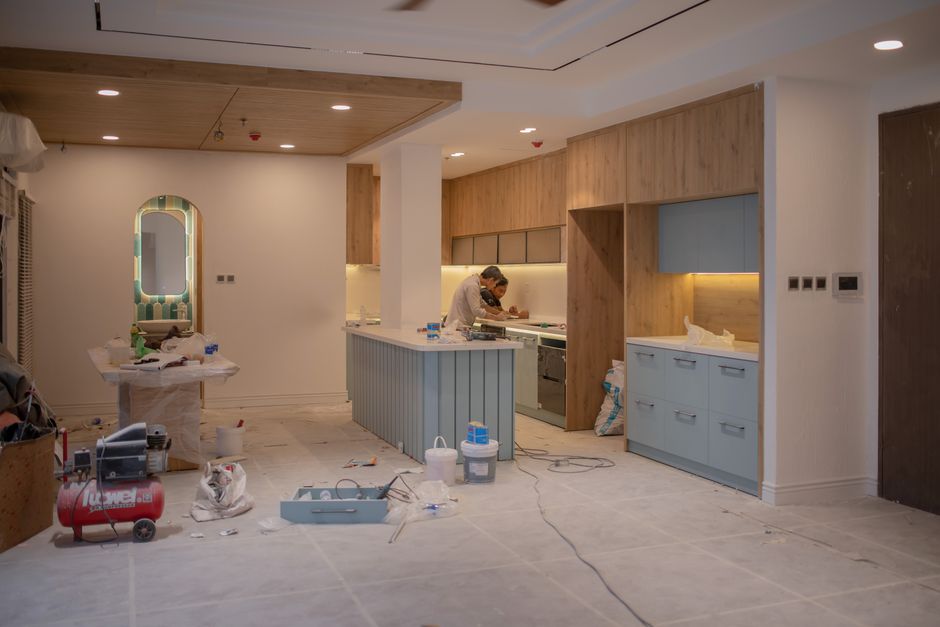
You walk into your kitchen and everything works. The layout still flows, the drawers slide smoothly, and the cabinets are solid. But the finish has gone dull, the color feels stuck in another decade, and the whole room just looks tired. You have probably already searched for a "professional cabinet refinishing and painting company near me" because you sense there is a smarter path than a gut renovation. There is. Professional cabinet refinishing and painting delivers a dramatic, like-new kitchen transformation at a fraction of replacement cost, and this guide will walk you through every consideration: cost, timeline, process, materials, and how to vet the right local provider for your 2026 project.
Table of Contents
- Why Hire a Professional Cabinet Refinishing and Painting Company?
- Professional Cabinet Refinishing vs. Painting vs. Replacement: What's the Difference?
- How Much Does Professional Cabinet Refinishing Cost in 2026?
- The Professional Cabinet Refinishing Process: What to Expect
- Choosing the Right Professional Cabinet Refinishing and Painting Company Near You
- Cabinet Materials and Paint Selection: What Works Best?
- DIY vs. Professional: Why Expertise Matters
- Frequently Asked Questions About Professional Cabinet Refinishing
- Conclusion and Next Steps
Why Hire a Professional Cabinet Refinishing and Painting Company?
The most compelling reason to hire a professional is straightforward economics. Professional cabinet painting typically costs 25 to 50 percent of what full cabinet replacement would run. For a standard kitchen with 10 doors and 5 drawers, refinishing or repainting generally falls in the $3,000 to $6,000 range nationally, while replacing those same cabinets with mid-grade new ones can easily hit $12,000 to $20,000 or more. That is not a small savings; it is a fundamentally different financial decision.
Time is the second major advantage. A professional crew can complete a full cabinet painting project in approximately 7 business days on average. The on-site portion, where your kitchen sees the most activity, is often finished in 2 to 3 days, with doors and drawer fronts receiving workshop-level finishing over about 5 days. Compare that to a full cabinet replacement and remodel, which routinely stretches 2 to 4 weeks and leaves you without a functional kitchen for much of that time. With refinishing, you keep your kitchen operational, your routine intact, and your sanity preserved.
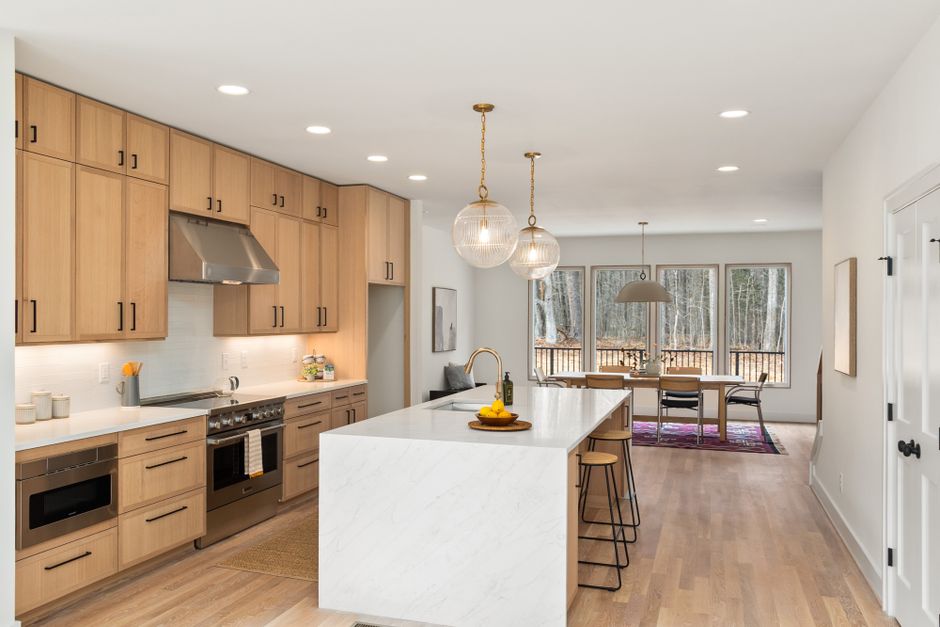
There is also a protective dimension that gets overlooked in conversations that focus purely on aesthetics. Cabinets endure daily assault from cooking grease, steam, and the occasional splash. When the original factory finish wears thin, moisture finds its way into the wood, inviting warping and rot over time. Professional refinishing seals those surfaces with modern, high-durability coatings that actively prevent structural damage. You are not just making your kitchen look better; you are extending the useful life of your cabinetry by 10 to 15 years.
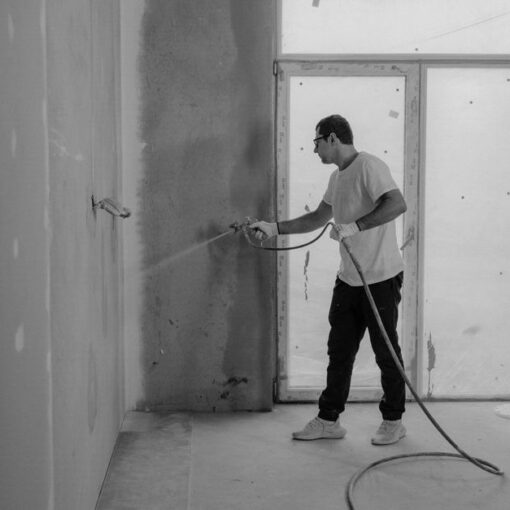
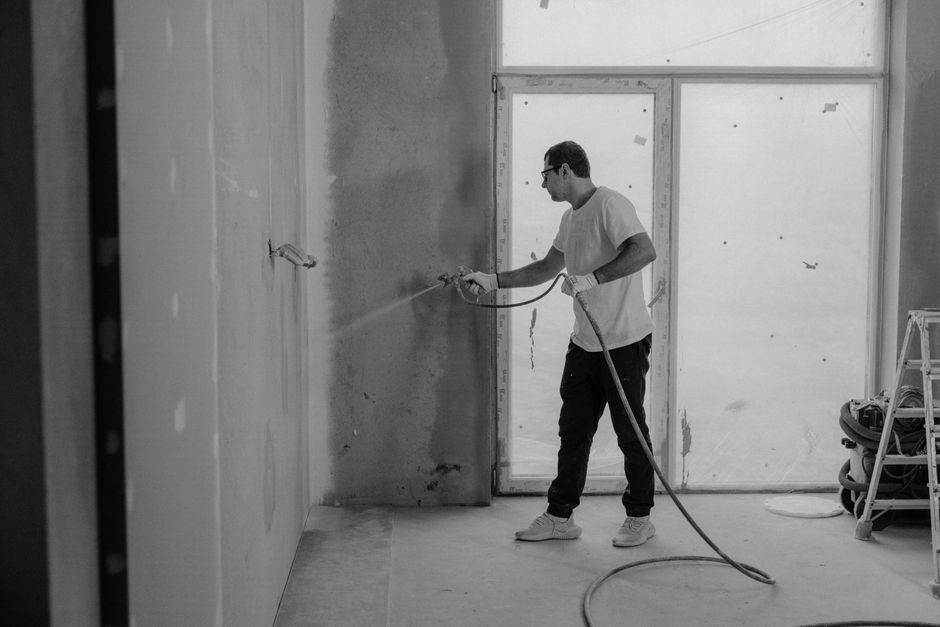
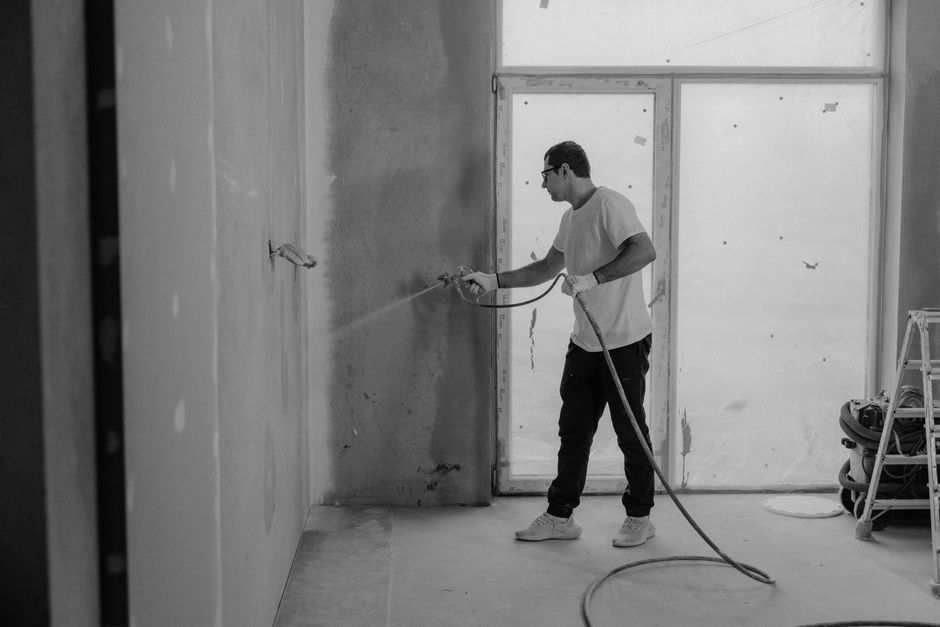
Finally, there is the quality gap that separates professional work from any DIY attempt. Professionals use high-volume, low-pressure spray systems that atomize paint into a fine mist, laying down a glass-smooth coat that self-levels and cures to a hard, factory-like finish. Proper surface preparation, including degreasing, sanding, and priming with adhesion-promoting products, ensures that finish bonds permanently. The result is a kitchen that looks like it was built with those colors, not one that was painted over a weekend.
Professional Cabinet Refinishing vs. Painting vs. Replacement: What’s the Difference?
The terminology can get blurry, so a clear distinction helps you communicate with contractors and get accurate quotes.
Refinishing means stripping or sanding the existing finish down to bare wood and applying a new stain and sealant. This process preserves and enhances the natural wood grain. It is the right choice when you have solid wood cabinets with good structural integrity but a worn, faded, or scratched original finish. Refinishing is more labor-intensive than painting, so expect it to price slightly higher.
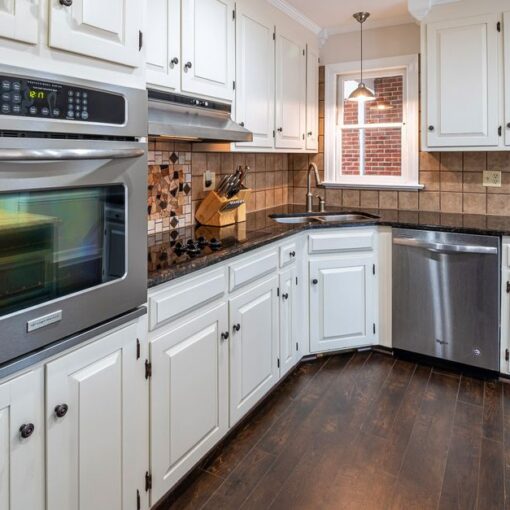
Repainting means cleaning, lightly scuff-sanding, priming, and applying new paint over the existing surface. The wood grain gets covered, and the color changes completely. This is ideal for cabinets in decent condition where the goal is a color transformation: taking oak from honey-toned to crisp white, or updating dark cherry to a soft sage green.
Replacement means full removal and installation of new cabinetry. This is justified when cabinets are structurally unsound, water-damaged beyond repair, or when you want to change the kitchen layout entirely. If the boxes are rotting or the drawer slides are failing, no amount of paint will fix the underlying problem.
A simple decision framework: choose refinishing if you love your wood grain and just want to restore and update the stain tone. Choose repainting if you want a completely new color and your cabinets are structurally sound. Choose replacement only if the cabinets are falling apart or the layout no longer works for how you live.
For quick reference, here are 2026 national average cost ranges:
Refinishing (stain): $3,500 to $7,500
Repainting: $3,000 to $6,000
Replacement (mid-grade): $12,000 to $22,000
These figures assume a typical 10-by-10-foot kitchen with standard door and drawer counts. Your local market and specific material choices will shift the numbers, but the proportional difference remains consistent: painting and refinishing cost dramatically less.
How Much Does Professional Cabinet Refinishing Cost in 2026?
Transparency matters, so let us break down real numbers. Nationally, professional cabinet painting in 2026 runs between $3,000 and $8,000 depending on kitchen size, door count, material type, and finish complexity. A compact kitchen with 15 doors might land near the lower end, while a large kitchen with 30-plus doors, crown molding, and an island can push toward the upper range.
Most professionals quote by linear foot of cabinetry. Expect $30 to $60 per linear foot as a planning baseline. Upper and lower cabinets are measured separately, and features like glass-front doors, detailed crown molding, or specialty glazes can add 10 to 20 percent to the base rate.
Several factors drive the final price. The number of doors and drawers is the biggest variable: more pieces mean more labor for removal, prep, spraying, and reinstallation. Cabinet material matters too. Solid wood accepts paint readily, while MDF and laminate require specialized primers and extra preparation steps that add labor time. Paint quality affects material cost: premium urethane and alkyd paints from brands like Benjamin Moore and Sherwin-Williams cost more per gallon but deliver far better durability and finish quality than big-box acrylics. Finish type plays a role as well. Lacquer dries fast and hard but requires professional spray equipment and ventilation. Two-component urethane finishes are exceptionally durable and chemical-resistant but come at a premium. Finally, painting cabinet interiors adds cost. Most homeowners skip it and paint only the exterior faces and door fronts, which is the standard scope for most quotes.
Ask potential contractors about what is included. Some companies bundle hardware replacement at no extra charge if you reuse the existing hole pattern. Others charge separately for new hardware, hinge adjustments, or disposal of old materials. A company that offers a 3-year workmanship warranty is signaling confidence in their process and materials. That warranty protects you if adhesion fails or the finish develops defects under normal use.
The Professional Cabinet Refinishing Process: What to Expect
Knowing the sequence of events removes anxiety and helps you plan around the project.
The process starts with an in-home consultation and estimate. A professional visits your kitchen, inspects the cabinet condition, discusses color and finish options, and provides a written quote. This is your opportunity to share inspiration photos and ask about color consultation services. Many companies employ color specialists who can guide you toward shades that work with your countertops, flooring, and lighting. The estimate should be free and detailed.
Preparation follows. The crew removes all hardware, doors, and drawer fronts, labeling each piece so everything returns to its original location. Surfaces get cleaned with a degreasing agent to strip away cooking oils that would otherwise prevent paint adhesion. Sanding scuffs the existing finish to create a mechanical bond for the primer.
Priming and sanding are where the foundation for durability gets built. A high-quality, stain-blocking primer seals the wood, prevents tannin bleed-through on oak and cherry, and creates a uniform base color. Between-coat sanding knocks down any raised grain or dust nibs, ensuring the finish coat lays perfectly flat.
The painting or staining step follows one of two paths. On-site spray painting keeps everything in your home, with doors and drawers painted in a contained area. Workshop-based finishing means doors and drawer fronts are transported to a controlled shop environment for spraying and curing. Workshop finishing often produces a harder, more consistent finish because temperature, humidity, and dust are fully controlled. The trade-off is that your doors are off-site for several days.
Reinstallation and touch-up complete the project. Doors and drawers are rehung, hardware is installed, and the crew does a final walkthrough with you to address any concerns and ensure every detail meets expectations.
Choosing the Right Professional Cabinet Refinishing and Painting Company Near You
Vetting a local company thoroughly protects you from costly disappointments. Start by verifying credentials. Ask for proof of liability insurance and workers' compensation coverage. A reputable company provides these documents without hesitation. If a contractor cannot produce insurance certificates, move on. You do not want to be liable if a worker gets injured on your property.
Check reviews and ratings across multiple platforms. Google, Yelp, and Houzz are the primary sources. Look for consistent ratings of 4.5 stars and above, but do not stop at the star count. Read recent reviews for patterns. Do customers mention punctuality, cleanliness, and clear communication? Those soft factors predict your experience better than any portfolio photo.
Request a portfolio of before-and-after work. A company with a strong, documented track record across various cabinet styles and materials demonstrates versatility and experience. Pay attention to details like clean paint lines, even finish coverage, and proper hardware alignment in the after photos.
Obtain at least three estimates. A quote significantly below market average should raise questions. Low bids often reflect cheaper paints, skipped preparation steps, or inexperienced labor. The goal is not the lowest price; it is the best value for a finish that will last a decade or more.
Evaluate communication from the first contact. A company that responds within 24 hours with clear, detailed answers to your questions is demonstrating how they will handle the entire project. Slow, vague, or dismissive responses at the inquiry stage rarely improve once the contract is signed.
Cabinet Materials and Paint Selection: What Works Best?
Not all cabinets take paint equally well, and paint selection directly determines how your kitchen looks and wears over time.
Solid wood species like oak, maple, and cherry are ideal candidates for both painting and staining. Oak has an open grain that will show through paint unless a grain filler is used, which is a design choice some homeowners embrace for texture. Maple and cherry have tighter grains and paint to a smoother finish. MDF and thermofoil cabinets can be painted successfully but require specialized bonding primers and a contractor with proven experience on these surfaces. Laminate cabinets are the trickiest. Paint adhesion is challenging, and without meticulous preparation, peeling is almost guaranteed. Confirm your professional has a specific process for laminate if that is what you have.
For paint type, the top professional choices in 2026 are alkyd-urethane hybrids and two-component urethanes. Alkyd-urethane paints, such as Benjamin Moore Advance and Sherwin-Williams Emerald Urethane, combine the hardness and self-leveling properties of traditional oil-based paints with the low odor and easy water cleanup of acrylics. They cure to a furniture-quality finish that resists chipping and yellowing. Lacquer remains popular for spray-only applications due to its fast dry time and ultra-smooth final surface, though it requires professional ventilation and has higher VOC content.
Sheen selection matters for both appearance and maintenance. Satin and semi-gloss are the standard recommendations for kitchen cabinets. They offer enough sheen to reflect light and wipe clean easily without showing every fingerprint and imperfection the way high-gloss does. Avoid flat or matte finishes on cabinets; they absorb grease, show scuff marks, and resist cleaning.
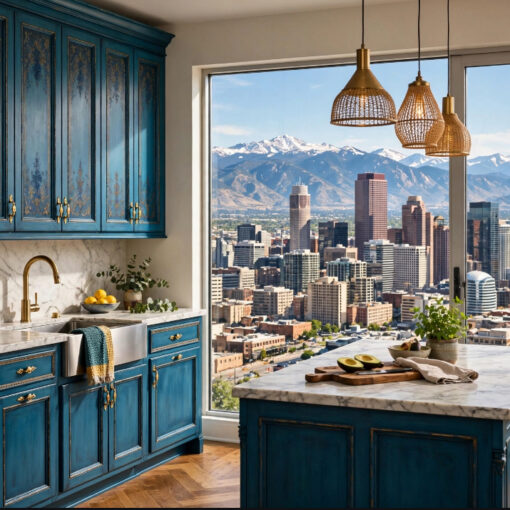
Color trends in 2026 continue to favor warmth and personality. Two-tone kitchens, with darker colors on lower cabinets and lighter shades on uppers, remain popular for adding depth without darkening the room. Warm whites with subtle cream or greige undertones have replaced stark, cool whites. Sage and olive greens are surging, as are deep navy and charcoal blues. Honey oak and the all-white-on-white look with white countertops and white backsplashes are fading as homeowners seek more contrast and character.
Environmental considerations are worth discussing with your contractor. Low-VOC and zero-VOC paint formulations have improved dramatically and now rival conventional products in durability. If you have children, pets, or respiratory sensitivities, ask specifically about low-odor options that allow you to return to your kitchen sooner after the project completes.
DIY vs. Professional: Why Expertise Matters
The DIY route for cabinet painting looks tempting on the surface. Materials cost $200 to $500, and there are countless tutorial videos online. The reality is less forgiving. A DIY cabinet painting project typically consumes 2 to 3 weeks of evenings and weekends. The work is physically demanding, repetitive, and unforgiving of shortcuts. Brush marks, drips, and uneven coverage are the visible hallmarks of most DIY cabinet paint jobs. Less visible but more damaging are the preparation failures: skipping proper degreasing, using inexpensive primer, or rushing through sanding. These errors cause paint to peel, chip, and wear through within months, not years.
Professionals bring three advantages that are nearly impossible to replicate at home. First is spray application equipment that atomizes paint into a fine, even mist, producing a finish with no brush strokes and consistent coverage across every profile and detail. Second is access to industrial-grade paints and catalysts that cure harder and bond more aggressively than consumer products. Third is a controlled process: professionals work in sequence, with adequate drying time between coats, in environments where dust and humidity are managed.
Consider the time-value equation. If your free time is worth anything at all, spending $3,000 to $6,000 for a 7-day professional transformation with a warranty compares favorably to sacrificing three weekends for a result that will likely need redoing within a few years. The professional warranty, typically 1 to 3 years, provides recourse if something goes wrong. A DIY job offers no such protection.
Frequently Asked Questions About Professional Cabinet Refinishing
Should I paint the inside of my cabinets? Most homeowners choose to paint only the exterior faces and door fronts. Cabinet interiors are not visible when doors are closed, and painting them adds significant labor cost. If your interiors are stained, worn, or discolored, discuss the option with your contractor and get a separate line item for that work.
How long will the paint last? With proper preparation and professional-grade paint, expect 10 to 15 years of service before the finish needs refreshing. Cabinets near the stove or sink may show wear sooner due to heat and moisture exposure, but touch-ups are straightforward with professional paints.
Can I use my kitchen during the project? Yes, with some limitations. The cabinet boxes remain accessible, so you can retrieve dishes and cookware. Expect some dust during the on-site sanding phase. If your contractor uses workshop-based door finishing, the cabinet boxes stay put and functional while doors are off-site for 3 to 5 days.
Will you replace my hardware? Many professional companies include free hardware replacement as long as the new hardware uses the same hole pattern. If you want to switch from knobs to pulls, which requires drilling new holes, request a quote for that additional work.
Do you offer color consultation? Most established companies provide color guidance as part of their service. They can bring sample doors, discuss how different sheens and undertones interact with your lighting, and help you avoid expensive color mistakes.
Conclusion and Next Steps
A professional cabinet refinishing and painting company delivers a complete kitchen transformation at 25 to 50 percent of what replacement costs, in about 7 business days, with a durable finish backed by a workmanship warranty. The investment protects your cabinetry from moisture and wear while giving you a kitchen that looks and feels new.
Your next step is to schedule free estimates from two or three local providers. Bring your inspiration photos, ask about their specific process and warranty terms, and compare the quotes against the criteria outlined in this guide. When you search for a "professional cabinet refinishing and painting company near me," you now have the knowledge to evaluate each candidate with confidence. You are not just hiring a painter; you are making a strategic investment in your home's value and your daily quality of life.