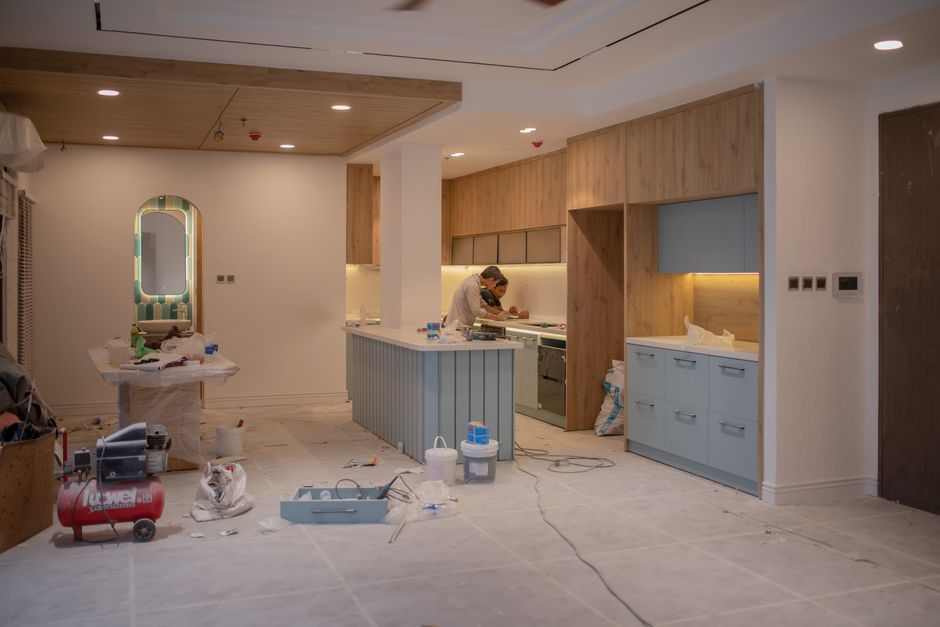
Many Denver homeowners reach a point where their kitchen cabinets simply look tired. Some discover that a previous owner painted the cabinets a color they dislike. Others find paint that is peeling, chipped, or applied so unevenly that the cabinets never looked finished. In these cases, cabinet stripping and repainting is often the practical fix. The process removes the old finish down to a clean surface and then applies a new coat that can last for years.
Cabinet stripping and repainting is not the same as a quick color refresh. It is a more involved process that restores the surface of the wood, removes old finishes, and prepares the cabinets for a smooth, professional refinish. For homeowners planning a 2026 kitchen update, understanding how the work is done and what drives the cost is the first step toward a successful project.
What Is Cabinet Stripping and Repainting?
Cabinet refinishing is defined as stripping off the existing finish of your cabinets and adding a new finish such as stain, paint, or other products. Cabinet stripping and repainting fits within this definition, but it always ends with paint as the final layer. Although the phrase sounds straightforward, the work involves several distinct stages. First, the old finish must be loosened and removed. Second, the bare or cleaned wood must be prepared so the new paint has a surface it can grip. Finally, the new finish is applied and allowed to cure.
This approach is especially useful when cabinets have been painted multiple times. Each new layer can hide the one before it, and over years the buildup becomes uneven. Stripping resets the surface so that the new paint starts fresh instead of sitting on top of old failures.
Signs Your Cabinets Need Stripping Before Repainting
Not every set of cabinets requires a full strip. If the existing finish is sound and tightly bonded, repainting may be possible after thorough cleaning and light sanding. However, cabinet stripping and repainting becomes the better route in several common situations.
- Paint is visibly peeling, bubbling, or chipping in multiple areas.
- The cabinets have been painted several times, creating thick, uneven layers.
- A previous paint job was done poorly and shows brush marks, drips, or rough spots.
- The wood has a glossy varnish or lacquer that new paint will struggle to adhere to.
Homeowners who move into a house with inherited cabinet paint often face this decision. Stories from DIY forums describe people buying a home only to find that the prior owner painted wood cabinets a solid color, or that a few layers of paint were applied carelessly over the years. When the existing work is that compromised, painting over it simply traps the problem underneath the new coat.
The Step-by-Step Cabinet Stripping Process
Stripping paint from cabinets is a hands-on job that rewards patience and careful technique. The most common method uses a chemical stripper that reacts with the old paint and softens it so it can be removed without damaging the wood beneath.
- Remove cabinet doors, drawers, and hardware so each surface is accessible.
- Protect the surrounding floors and countertops from drips and residue.
- Gently pour or brush on the stripper, applying a very generous, thick, and even coat.
- Wait for the paint to bubble up. As soon as it starts to bubble, the stripper has done its work.
- Use a plastic scraper to peel the softened paint away from the wood.
- Allow the surface to dry, then remove any remaining residue and sand the wood smooth.
Successful stripping depends on the stripper staying wet long enough to penetrate every layer. That is why a thick coat matters more than a quick wipe. Detailed cabinet fronts, grooves, and corners also require extra attention, since paint tends to hide in those recessed areas. After the old paint is gone, the cabinet surface is finally ready for a smooth, professional refinish.
Repainting After Stripping: What Creates a Durable Finish
Once the old finish is stripped away, the next decision is how the new paint will be applied. Cabinets see heavy daily use, so the finish needs to resist moisture, grease, fingerprints, and repeated cleaning. Sprayed finishes are a strong choice because they lay down a thin, even film without brush marks. Many Denver homeowners choose a factory-grade sprayed finish using products such as 2K polyurethane or precatalyzed lacquer, both of which cure to a hard surface that resembles what a factory would apply.
Spray application also makes it easier to achieve clean color transitions for two-tone kitchens, where upper cabinets get one color and lower cabinets get another. In kitchens with white oak or golden oak cabinets, specialists may also use grain-filling techniques before painting so the final surface is smooth rather than textured by the wood grain. Preparation work, including careful sanding and dust removal, is equally important. Dustless HEPA-sanded preparation keeps the work area cleaner and helps the new paint bond to the stripped surface without contamination.
Cost Factors for Cabinet Stripping and Repainting in Denver
Pricing for cabinet stripping and repainting in Denver depends on the specific conditions found in each home, so there is no single number that applies to every kitchen. Homeowners should expect an estimate to be based on a hands-on review of the cabinets rather than a flat rate quoted over the phone.
- The number of cabinet doors, drawers, and exposed frames.
- How many layers of old paint or varnish must be removed.
- The condition of the wood after stripping, including any repairs needed.
- The type of finish selected and whether the project includes interior cabinet surfaces.
- Whether the work is done by a specialist cabinet painter or as part of a larger renovation.
Cabinet painting is generally positioned as a cost-conscious alternative to full cabinet replacement, because the existing cabinet boxes stay in place and the labor and materials are limited to refinishing. That said, the exact expense in Denver will vary from project to project. A reputable local cabinet painting company will inspect the kitchen, identify the amount of stripping involved, and provide a written estimate before any work begins. Many Denver-area cabinet painters offer free local estimates, so homeowners can compare options without an upfront investment.
Stripping and Repainting vs. Full Cabinet Replacement
A full cabinet replacement means removing the existing cabinets, purchasing new boxes and doors, and installing everything from scratch. That route can be expensive and disruptive. Cabinet stripping and repainting takes the opposite approach: it keeps the existing structure and changes the surface. For homeowners who like their cabinet layout but dislike the color or condition, repainting is often faster and more affordable than replacement.
There are also situations where replacement is the right call. Cabinets that are structurally damaged, waterlogged, or poorly built may not be worth refinishing. But for cabinets that are solid and simply dated, stripping and repainting restores the look without the cost of ripping out the kitchen. A specialist who works on cabinets every day can help determine which path offers the best long-term value for a particular home.
DIY Cabinet Stripping vs. Hiring a Professional
Cabinet stripping is a project that some homeowners attempt themselves, and the basic technique is easy to describe. Apply a thick coat of stripper, wait for the paint to bubble, and scrape it away. In practice, the job is messy and time-consuming. Large kitchens can have dozens of doors and drawer fronts, and intricate molding means hours of hand scraping. Mistakes made during stripping, such as gouging the wood or leaving stripper residue behind, can ruin the surface before the repainting even starts.
Professional cabinet painters bring specialized equipment and experience to the project. Spray equipment produces a smoother finish than brushes or rollers, and experienced painters know how to prepare stripped wood so the paint adheres evenly. For Denver homeowners who want predictable results, hiring a specialist who does nothing but cabinet painting is often the safer investment. The company handles the stripping, sanding, and spraying, and the homeowner avoids the physical labor and guesswork of a DIY attempt.
Because cabinet stripping and repainting is a specialized service, homeowners benefit from choosing a contractor who understands finish chemistry, wood preparation, and spray technique. General house painters may offer cabinet painting as an add-on, but a dedicated cabinet painting company treats the kitchen as the main event rather than a side project.
Frequently Asked Questions
Here are answers to the questions Denver homeowners ask most often about cabinet stripping and repainting.
Do I need to strip cabinets before repainting?
Stripping is necessary when the existing paint is peeling, bubbling, or heavily layered, or when there is a glossy finish that new paint cannot grip. If the current surface is clean, smooth, and tightly adhered, repainting may work after light sanding and priming. A professional cabinet painter can inspect the cabinets and tell you whether full stripping is required or whether a simpler prep process will be enough.
Can I just paint over already painted cabinets?
Yes, but only when the existing paint is in good condition and properly prepared. Painting over a failing surface traps peeling paint, grease, and rough texture under the new coat, which shortens its life. Light sanding, thorough cleaning, and a quality primer improve adhesion. However, cabinets that have been painted multiple times, or painted poorly, usually look better and last longer when the old finish is stripped first.
Is it cheaper to paint or refinish cabinets?
Painting is generally more affordable than full cabinet replacement, but refinishing is more expensive than a simple paint refresh because it includes the extra labor of stripping the old finish. That cost is often worth it when the existing finish is damaged. Cabinet refinishing keeps your existing cabinet boxes in place, so you avoid the material and installation cost of new cabinets while still getting a durable new surface.
Is it hard to strip paint off cabinets?
Stripping is physically demanding and detail-heavy work. You must apply a generous, thick, and even coat of stripper, wait for the paint to bubble, and then scrape each surface with a plastic scraper without damaging the wood. Cabinet doors with panels, grooves, and corners make the job slower. Many homeowners hire a professional to avoid the mess, the fumes, and the risk of gouging the wood.
Whether you choose a professional or tackle the work yourself, understanding the cabinet stripping and repainting process is the best way to protect your kitchen investment. Denver homeowners who start with a clear picture of the work, the finish options, and the cost factors will be far more prepared to get cabinets that look fresh and hold up to daily use.