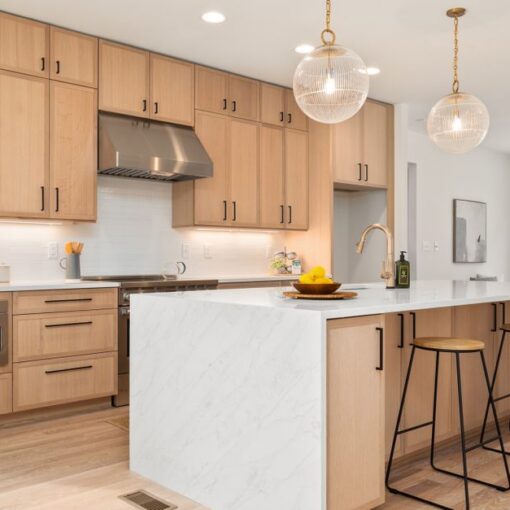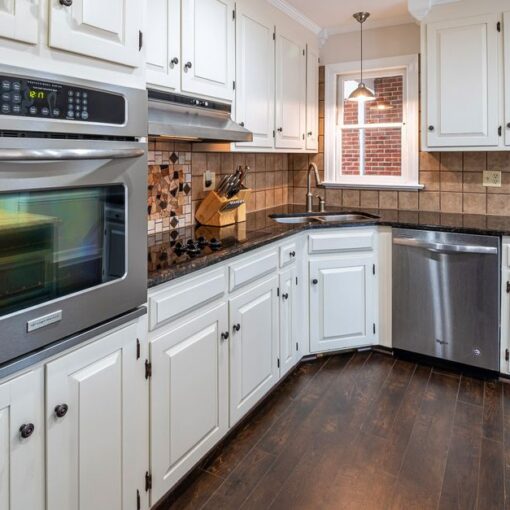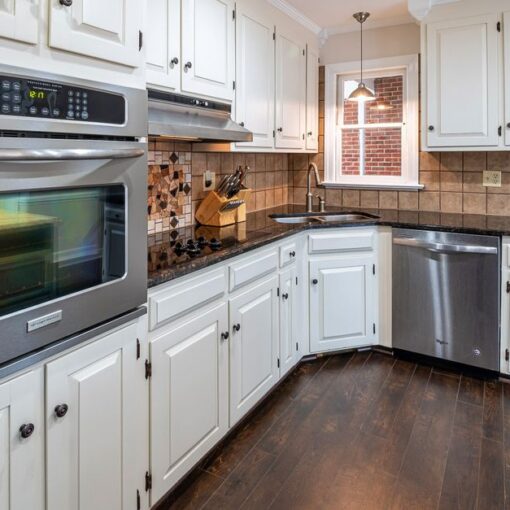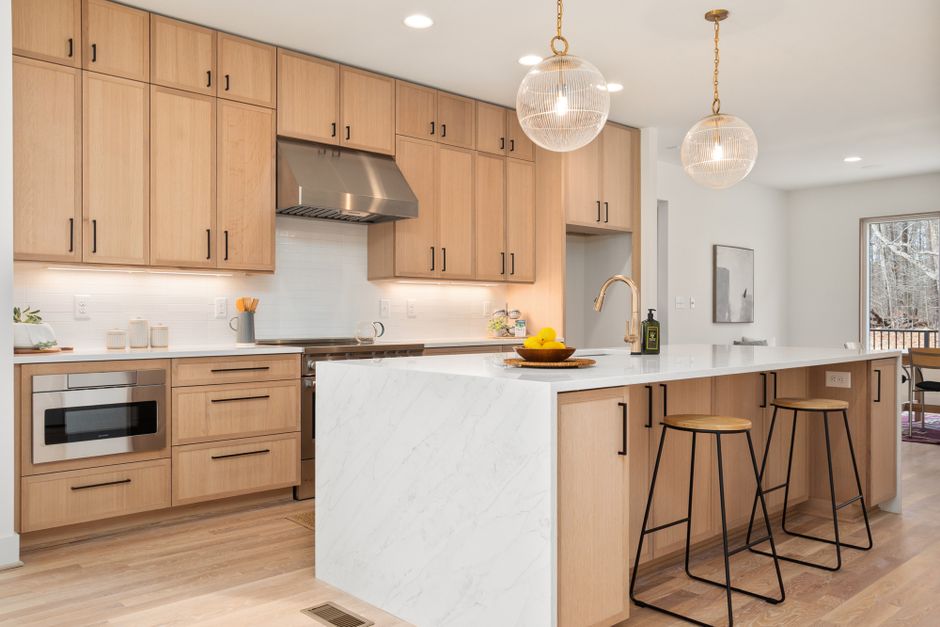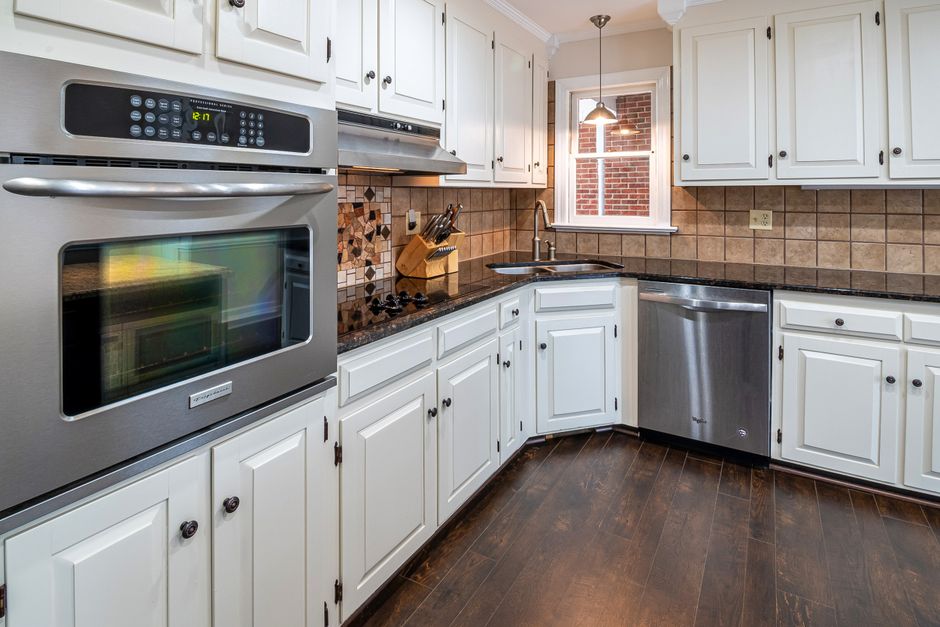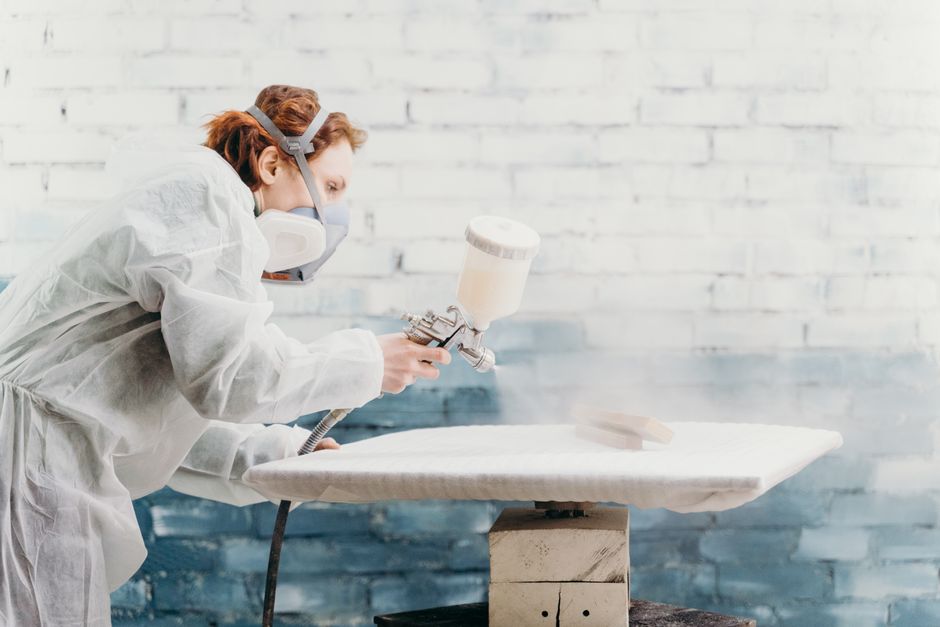
A true factory finish is a sprayed pre-catalyzed lacquer or acrylic satin topcoat applied in a dust-controlled environment, not a brushed or rolled latex coating. Cabinet Painting Colorado has delivered this sprayed finish to Denver kitchens since 1979. Brush-and-roll DIY latex cannot reproduce the cured film hardness, uniform sheen, and smoothness that define a real factory finish.
Table of Contents
- What makes a cabinet finish a true factory finish instead of a DIY paint job?
- Why does spraying beat brushing and rolling on Denver kitchen cabinets?
- How does Cabinet Painting Colorado deliver a factory finish in Denver?
- What does the 5-day dustless prep and spray process actually look like?
- How durable is a factory finish cabinet paint job in Denver's climate?
- How do you clean cabinets with a factory finish without damaging them?
- What does factory finish cabinet painting cost in Denver compared to replacing cabinets?
- Frequently asked questions about factory finish cabinet painting in Denver
- Key Takeaways
- References
What makes a cabinet finish a true factory finish instead of a DIY paint job?
A true factory finish is a sprayed coating, never brushed or rolled, that cures into a hard film resistant to chipping and moisture. The two finish systems used for this result are pre-catalyzed lacquer and acrylic topcoat in satin. Both outperform hardware-store latex because they cure harder and level smoother after atomized application.
Pre-catalyzed lacquer contains a catalyst that triggers cross-linking as the coating dries. That chemical reaction creates a tougher film than standard lacquer or latex. According to Cabinet Painting Denver, the process includes cleaning, degreasing, sanding, and repairing damaged areas before any finish is applied. The prep work matters as much as the coating itself.
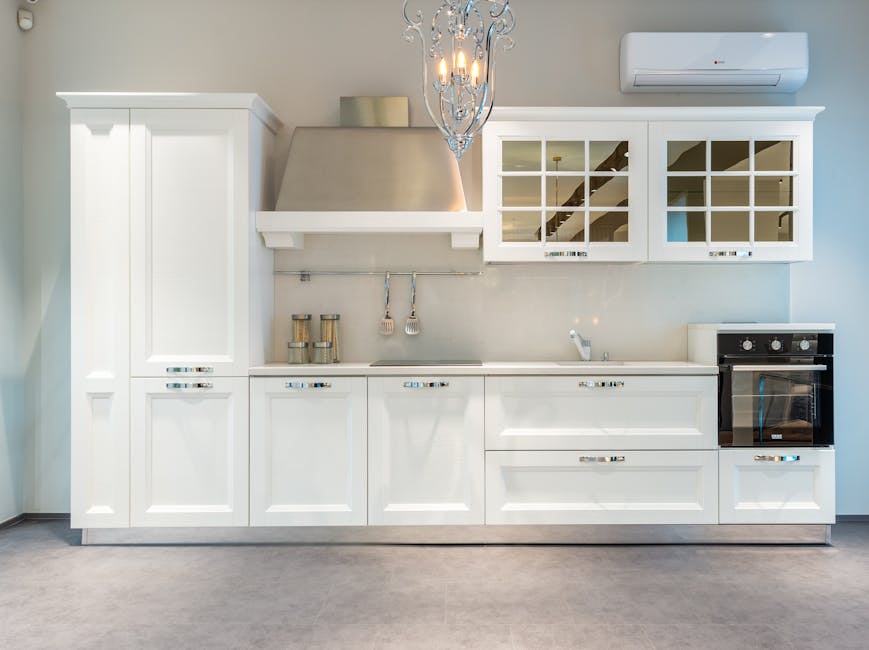
House painters using brushed latex often see chipping within 6 to 12 months, according to cabinetspainting.com. A proper pre-catalyzed lacquer finish holds for 10 or more years. That durability gap comes from film hardness and adhesion, not just application method.
A factory finish is judged by film smoothness, hardness, and uniform sheen across doors, drawers, and cabinet boxes. Mod Paint Works states that spraying all finish coats is the method used to achieve factory-like finishes. Any visible brush mark, lap line, or roller stipple means the finish is not a true factory result.
Why does spraying beat brushing and rolling on Denver kitchen cabinets?
Spraying beats brushing and rolling because atomized coating lands as an even film with no brush marks, lap lines, or roller stipple. The liquid coating breaks into fine droplets and re-levels on the surface. That produces the smooth, continuous film that defines a factory finish.
Doors and drawers are sprayed in a shop booth while cabinet boxes are sprayed on-site. Colorado Cabinet Painting states that cabinet doors are sprayed at its shop while cabinet boxes are brush and rolled in the home. Cabinet Painting Colorado sprays both doors and boxes, with doors and drawers removed to its Denver shop and boxes sprayed on-site.
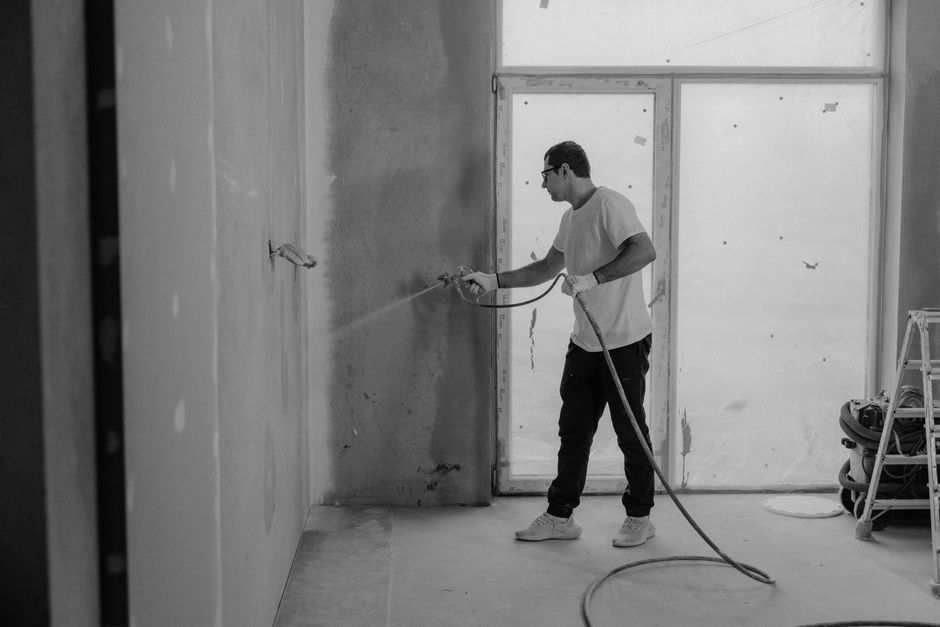
Mod Paint Works states that it sprays all finish coats specifically to reach a factory-like look. Spraying every coat, primer included, keeps the film thickness consistent. Brushing primer and rolling topcoat creates uneven build that shows in raking light.
Satin acrylic and lacquer sheens hide minor surface variation better than flat or high-gloss finishes. Flat finishes mark easily, while high-gloss magnifies every imperfection. Satin sits in the middle and reads as clean and durable in Denver kitchens.
How does Cabinet Painting Colorado deliver a factory finish in Denver?
Cabinet Painting Colorado delivers a factory finish through a 5-day dustless process that protects surrounding surfaces, removes hardware and doors, cleans and degreases, sands and repairs, then sprays the finish. The company uses low-V.O.C. lacquer with no brushes or rollers. Every door, drawer, and cabinet box receives the same sprayed coating system.
The finish systems are pre-catalyzed lacquer and acrylic satin topcoat, backed by a 3-year warranty. That warranty is the publisher's stated durability commitment for Denver homeowners. The low-V.O.C. lacquer keeps indoor air quality reasonable during and after application.
Cabinet Painting Colorado was established in 1979 in Denver, Colorado. The company reports 45+ years of experience and 4,000+ Denver kitchens transformed since 1979. More than 1,000 kitchens have been completed through the current factory finish process.
The company specializes in Golden Oak grain-cover and laminate/MDF work. Those surfaces are common in Denver homes and difficult to paint well with brushed latex. A sprayed lacquer system fills and covers grain texture far better than a roller.
Typical savings run $15,000 to $30,000 versus replacing cabinets, according to cabinetspainting.com. Most Denver kitchens cost $3,500 to $7,500 to spray with factory lacquer, while replacement runs $20,000 to $45,000. The factory finish path preserves existing cabinet boxes and layout.
What does the 5-day dustless prep and spray process actually look like?
The 5-day dustless process starts with door and drawer pickup, then moves to shop spraying with sanding between coats, on-site box spraying, and reinstallation. Colorado Cabinet Painting describes a typical job starting Monday with door pickup and finishing Friday with door installation. That five-day rhythm matches the publisher's stated 3 to 5 day timeline.
Doors typically receive one primer coat and two finish coats, front and back, with sanding between each coat. Colorado Cabinet Painting states that cabinet doors in the shop each get one coat of primer and 2 coats of paint, front and back, with sanding between each coat. Bondo is applied after primer to cover imperfections.
Dustless containment and masking keep Denver homes clean during sanding and spraying. Cabinet Painting Denver states that its process includes protecting surrounding surfaces before work begins. Plastic sheeting, tape, and negative air containment isolate the work zone from living spaces.
Standard projects run 5 to 7 business days, with 7 to 10 business days for complex refinishing, according to Cabinet Painting Denver. The longer window covers repairs, grain-fill work, or additional finish coats. Most straight repaints land inside the shorter range.
On-site box spraying happens while doors and drawers cure in the shop. That parallel workflow is why the total timeline stays short. The homeowner is not living around wet doors for a week.
How durable is a factory finish cabinet paint job in Denver’s climate?
A factory finish is highly durable in Denver's climate because pre-catalyzed lacquer and acrylic satin cure into a hard film that resists chipping, moisture, and grease. The catalyzed cure creates a cross-linked surface that stands up to daily kitchen use. Brushed latex never reaches that hardness.
Brushed latex can chip in 6 to 12 months, while a proper lacquer finish lasts 10 or more years, according to cabinetspainting.com. That durability gap widens in Denver because dry air and indoor heating stress cabinet finishes. Low humidity pulls moisture out of coatings faster, which can cause latex to cure brittle.
Denver's high-altitude sun and dry winters make cure quality matter more than in humid markets. A coating that cures too fast can lose adhesion. A controlled shop environment for doors and drawers, plus careful on-site box spraying, keeps the cure rate consistent.
The 3-year warranty from Cabinet Painting Colorado is the publisher's durability commitment. It covers the sprayed factory finish against premature failure. The warranty exists because the lacquer system is predictable when applied correctly.
Mod Paint Works describes its finish packages by durability and resistance to stains, cleaning agents, and scratching. Benjamin Moore Advance is rated moderately durable, while Fine Paints of Europe Hollandlac, an oil-based system, offers higher resistance. The finish chemistry directly determines how long the job looks new.
How do you clean cabinets with a factory finish without damaging them?
Clean factory finish cabinets with a soft cloth, mild dish soap, and warm water. Avoid abrasive pads, ammonia cleaners, and solvent-heavy degreasers. A cured satin acrylic or lacquer film stands up to routine wiping far better than brushed latex, but harsh chemicals can dull the sheen over time.
Spot-clean grease near handles and range areas weekly in busy Denver kitchens. Cooking oil and steam settle on cabinet faces quickly. A weekly wipe prevents buildup that later requires aggressive scrubbing.
Do not use ammonia-based glass cleaners on lacquer or acrylic finishes. Ammonia can soften and cloud the topcoat. Mild dish soap diluted in warm water is enough for most kitchen grime.
Mod Paint Works rates its finish packages by resistance to cleaning agents and staining. That rating exists because homeowners need to know what the cured film tolerates. A factory finish tolerates normal cleaning products, but no finish is indestructible.
Dry the surface after cleaning to prevent water spots, especially on satin sheen. Denver's dry air helps here, but hard water minerals can still leave marks. A dry microfiber cloth restores the uniform sheen.
What does factory finish cabinet painting cost in Denver compared to replacing cabinets?
Most Denver kitchens cost $3,500 to $7,500 to spray with factory lacquer, versus $20,000 to $45,000 to replace, according to cabinetspainting.com. That places factory finish painting at roughly 15 to 35 percent of replacement cost. The savings range is $15,000 to $30,000 for a typical kitchen.
Mod Paint Works states that cabinet painting can provide a return on investment of up to 80 percent. That ROI figure reflects the value added to the home relative to the project cost. Replacement rarely returns that percentage because the upfront cost is far higher.
Cost varies by cabinet count, door style, finish type, and whether grain-cover or laminate work is needed. Golden Oak grain-cover requires extra filling and sanding. Laminate and MDF require specialty primers and adhesion steps.
Cheap factory finish quotes usually mean brushed latex, which fails faster and costs more over time. A low quote that uses brushes and rollers will not produce a factory finish. The homeowner pays again in 6 to 12 months when chipping appears.
Cabinet Painting Denver lists service areas including Denver, Aurora, Lakewood, Wheat Ridge, Littleton, Broomfield, Arvada, Centennial, Westminster, Thornton, and Brighton. Pricing reflects local labor and material costs across the Denver metro.
Frequently asked questions about factory finish cabinet painting in Denver
Is factory finish cabinet painting worth it compared to refacing or replacing? Yes, for most Denver kitchens. Painting preserves existing cabinet boxes and layout while delivering a sprayed finish at a fraction of replacement cost. Cabinet Painting Colorado reports savings of $15,000 to $30,000 versus replacing cabinets.
How long does the finish last, and what does the 3-year warranty cover? A pre-catalyzed lacquer finish lasts 10 or more years, according to cabinetspainting.com. The 3-year warranty from Cabinet Painting Colorado covers the sprayed factory finish against premature failure under normal use.
Can you paint laminate, MDF, and Golden Oak cabinets in Denver? Yes. Cabinet Painting Colorado specializes in Golden Oak grain-cover and laminate/MDF. Those surfaces require specialty primers and grain-fill steps that brushed latex cannot handle.
How soon can cabinets be used after the final coat? Doors and drawers cure in the shop before reinstallation, so the kitchen is usable the same day doors go back on. Full chemical cure continues for days, but normal use can resume immediately after reinstallation.
Does Home Depot offer cabinet painting? No source in the research pack states whether Home Depot offers cabinet painting. The providers cited are local Denver specialists, not big-box retailers.
Key Takeaways
- A true factory finish means sprayed pre-catalyzed lacquer or acrylic satin, never brushed or rolled latex.
- Cabinet Painting Colorado has served Denver since 1979, with 45+ years of experience and 4,000+ kitchens transformed.
- The 5-day dustless process sprays doors and drawers in the shop and cabinet boxes on-site.
- Pre-catalyzed lacquer lasts 10+ years, while brushed latex can chip in 6-12 months.
- Most Denver kitchens cost $3,500-$7,500 to spray versus $20,000-$45,000 to replace.
- Cabinet Painting Colorado backs its work with a 3-year warranty and low-V.O.C. lacquer.
- Free Denver estimates are available by emailing factoryfinishcabinet@gmail.com or visiting cabinetspainting.com.
References
- Cabinet Painting Denver – Factory Finish — date unknown
- Colorado Cabinet Painting | Denver, CO — date unknown
- Cabinet Painting Denver | Factory Finish Specialists — date unknown
- Kitchen Cabinet Painters In Denver & Centennial — date unknown