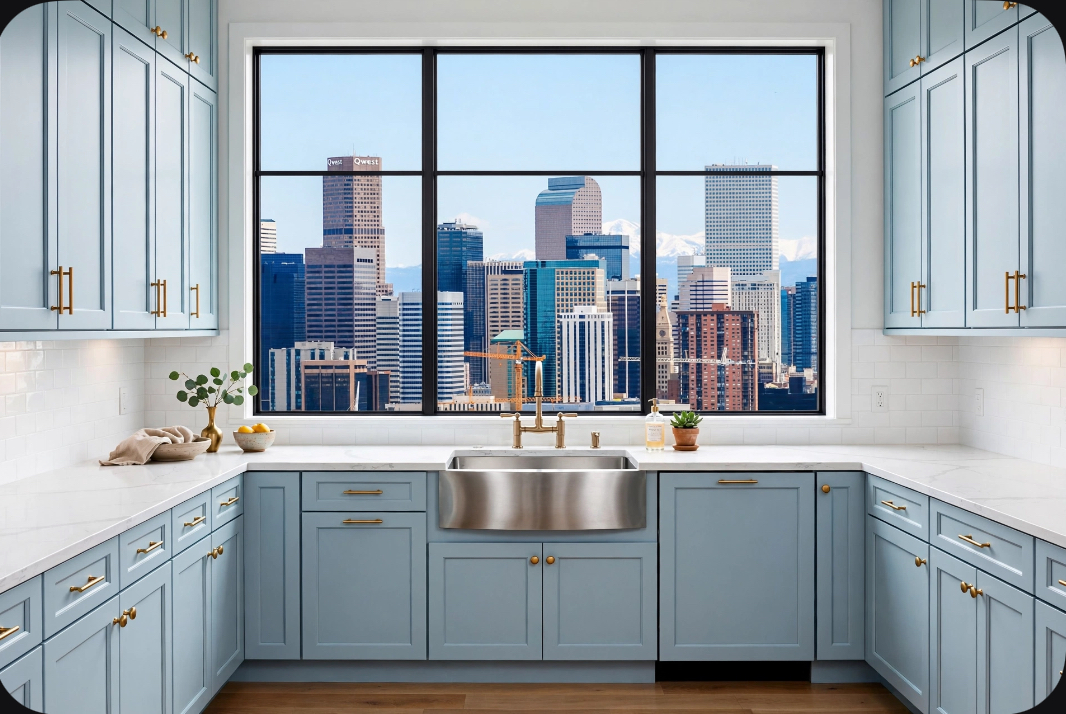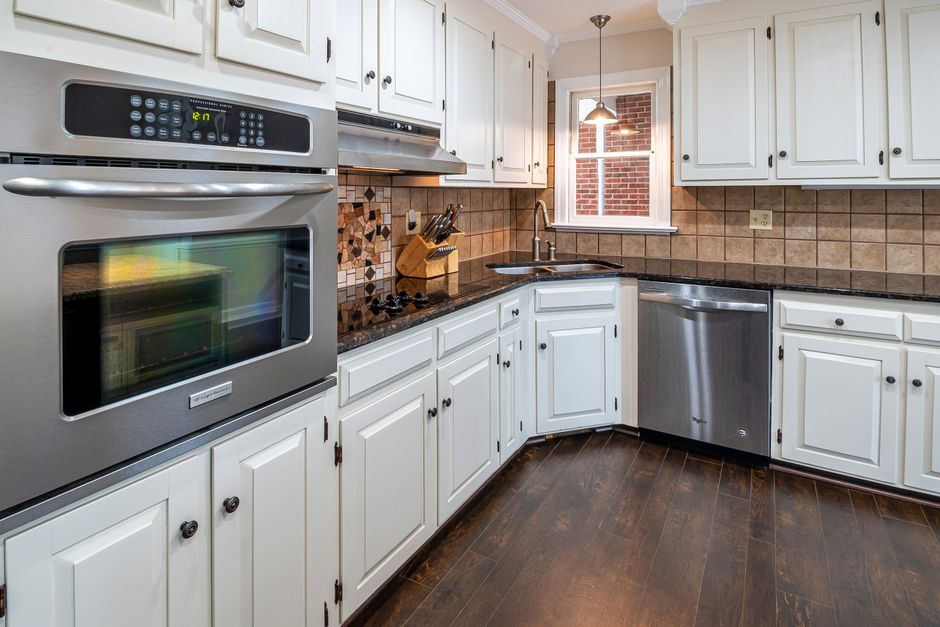
Finding the best cabinet painting company in Denver means looking past marketing photos and examining the actual application process. Plenty of homeowners with dated Golden Oak cabinets want a modern update without the expense and demolition of a full tear-out. But the market is flooded with general house painters offering cheap brush jobs that fail within months. We’ve operated as Denver’s original cabinet refinishing shop since 1979, running a dedicated off-site spray facility the whole time, and we know exactly what separates a durable refinish from a temporary cosmetic cover-up. You need a partner who understands industrial coatings and respects your timeline, not a crew that treats your kitchen like just another wall to roll.
Why a Factory Finish Matters More Than the Paint Brand
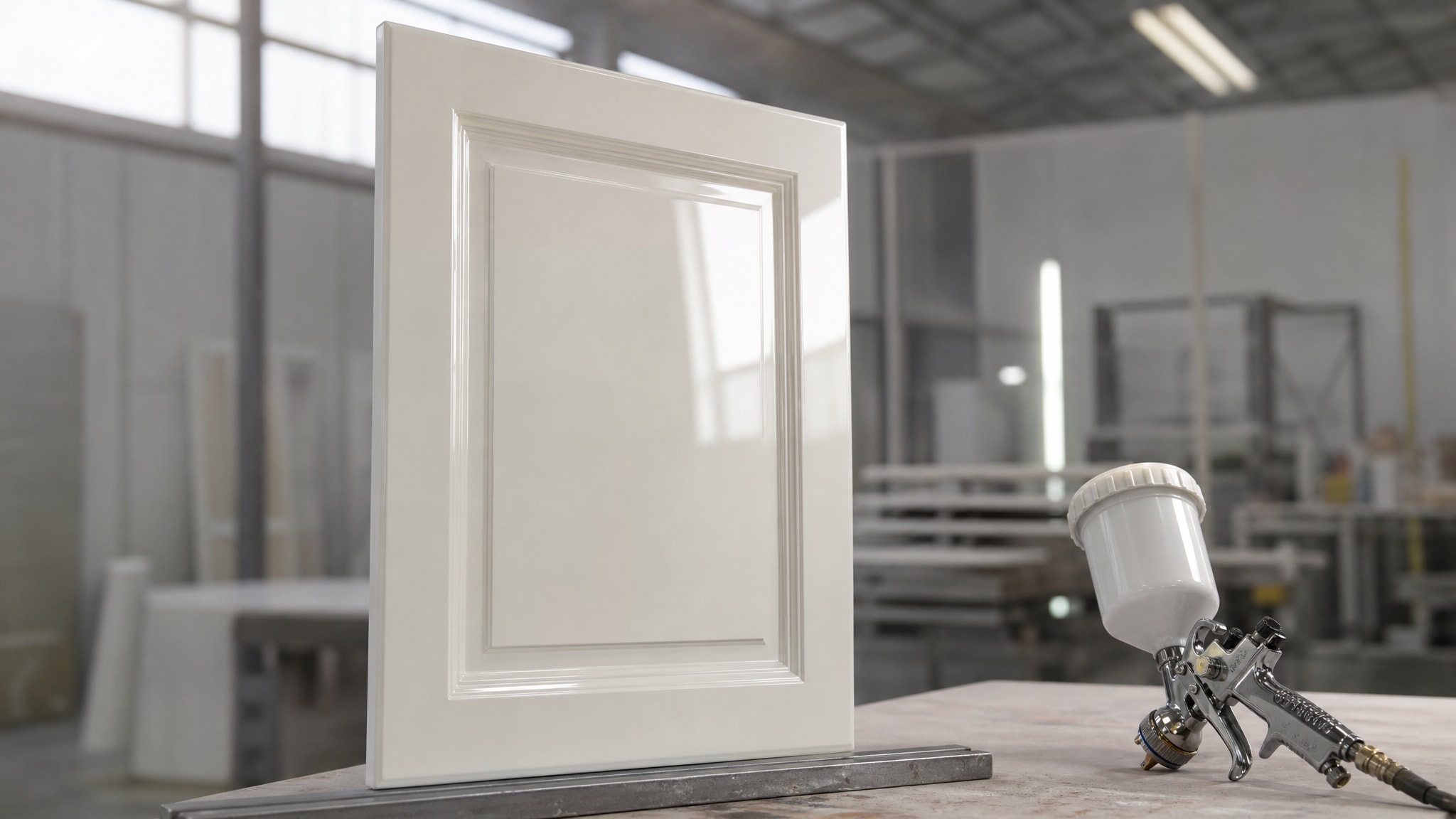
The brand name on the can matters far less than how the paint gets applied to your woodwork. A true factory finish means removing doors and drawers and taking them to a controlled spray shop. You can’t get a glass-smooth surface in-home, not with airborne dust, pet dander and cooking grease floating around. Precatalyzed lacquer applied with spray equipment holds up better than brushed latex or acrylic enamels, which stay soft and tacky for weeks after application.
Spray Lacquer vs. Brush and Roller Application
Brush marks are the permanent signature of an amateur cabinet job. Roll or brush paint onto cabinetry and you leave ridges and texture that catch light and highlight every flaw in the wood grain. Sprayed lacquer atomizes into microscopic droplets that flow together into a seamless film. That coating bonds chemically to the substrate and cures hard enough to take daily abuse. Standard wall paint just sits on top and chips at the slightest impact.
The Role of Off-Site Door Spraying
Your cabinet boxes stay in place while we mask and spray them on-site, but the doors and drawers leave your home to get a proper finish. Bringing those pieces to our dedicated spray booth keeps dust nibs out of the wet paint and lets us control temperature and humidity, the two variables that decide how the lacquer flows and levels. You cannot get professional results in a residential kitchen, where the HVAC cycles dust and family activity keeps the air moving.
Evaluating Cabinet Painting Warranties in Denver
A warranty is only as good as the business standing behind it. We offer a 3-year warranty that specifically covers adhesion failure and peeling caused by improper preparation or product defects, which gives you real protection against the most common refinishing disasters. Never accept a guarantee that excludes high-traffic areas or won’t define what counts as a covered defect versus normal wear.
What a 3-Year Warranty Actually Covers
Legitimate coverage addresses structural failures of the finish system itself. If the lacquer delaminates from the wood or chips under normal use because the primer didn’t bond correctly, that’s a warranty claim we honor without argument or prorated deductions. We can make that promise because we trust our prep protocol and our industrial materials to perform for years, not just until the final invoice clears.
Red Flags in Painter Guarantees
Verbal promises vanish the moment the crew drives away. Watch for contractors who exclude sink bases, dishwasher surrounds, or other moisture-prone zones from their written warranty. Those exclusions void coverage exactly where failures happen most. A guarantee that only covers color fading ignores the adhesion problems that actually ruin refinished cabinets, and you’re left with no recourse when the finish starts peeling off in sheets.
Cabinet Refinishing Cost vs. Replacement in 2026
Budget drives most refinishing decisions, but false economies cost more down the line. Professional spray refinishing typically runs about a third of what full cabinet replacement costs, with comparable results, which makes it the better math for boxes that are structurally sound but look outdated. You keep your existing layout and skip the secondary costs of countertop removal, plumbing reconnection and drywall repair that come with new installations.
Price Breakdown for Spray Shop Services
Our pricing reflects the labor in proper preparation and the cost of industrial-grade materials, not markup on commodity products. For current numbers, review our 2026 spray shop pricing breakdown to see exactly where your money goes. That transparency helps you tell a legitimate refinishing quote from a suspiciously low bid from a painter who skips prep steps or uses substandard coatings.
Hidden Costs of Refacing and New Cabinets
Refacing companies often quote prices close to new cabinets while leaving your old, worn box interiors completely untouched. New cabinet installs carry hidden costs beyond the sticker price: demolition, disposal fees, flooring patches, and weeks of kitchen downtime that disrupt your household. Refinishing skips that whole cascade of extra costs because it works within your existing footprint. Your budget stays intact, and so does your sanity.
Vetting Denver Cabinet Painters: Experience Over Reviews
Online reviews can be manipulated. Operational history can’t be faked. We’ve run Denver’s original cabinet refinishing shop since 1979, with a dedicated off-site spray facility the entire time, and that kind of track record shows a process stability new market entrants simply can’t match. You want a specialist who refined their technique over decades of cabinet-only work, not a generalist who picked up a sprayer last year to chase a renovation trend.
Checking for Dedicated Spray Facilities
Ask every contractor you’re considering whether they keep a separate, climate-controlled spray booth for cabinet components. If they admit to spraying doors in your garage, basement or living room, walk away. A true factory finish requires taking doors and drawers to a controlled spray shop, not painting them in your home. That one question filters out most unqualified bidders, who simply don’t have the infrastructure to deliver professional results.
Verifying Years in Business and Specialization
Longevity in this niche means survived mistakes and perfected systems. Check whether the company specializes exclusively in cabinetry, rather than treating it as a side service to house painting, because furniture-grade finishing takes different skills than rolling walls. Learn more about why local specialists outperform general painters when you’re comparing candidates for your project.
Project Timeline: What to Expect During a 3-5 Day Refinish
Speed here comes from parallel processing, not cut corners. A full kitchen refinish typically takes 3 to 5 days because we prep and spray the boxes on-site while the doors cure at the same time in our off-site shop. You can’t compress that schedule further without cutting into the cure time that makes precatalyzed lacquer durable enough for kitchen use.
Day one is thorough cleaning, degreasing, masking and on-site box prep. Days two through four: doors get sprayed and cured off-site while we finish the boxes in your home. Day five brings reinstallation, hardware adjustment and cleanup, and your kitchen is back in full function in under a week. Review our factory finish standards for 2026 for the technical benchmarks we hit during that window.
This turnaround works because we removed the bottleneck of waiting for paint to dry on-site between coats. Your kitchen stays usable through most of the process, which is the whole point. Traditional remodels stretch into months of inconvenience; this doesn’t.
Material Safety and Finish Durability
Modern chemistry solved the odor problem that plagued older lacquers. Today’s low-VOC precatalyzed formulations cure hard without lingering fumes, which makes them safe for occupied homes while giving you moisture and heat resistance that water-based wall paint can’t touch. These coatings are built for cabinetry specifically, not repurposed from architectural paint lines meant for vertical walls.
Low-VOC Lacquers and Indoor Air Quality
You don’t need to leave your house during refinishing. Our spray systems and ventilation protocols contain overspray and manage airflow, so odors clear quickly once curing finishes. The resulting finish holds up against steam, grease and cleaning chemicals far better than latex, so your updated kitchen survives real cooking without the finish breaking down early.
Common Questions About Professional Cabinet Painting
Homeowners deserve straight answers about limitations and expectations.
Existing oak grain can be filled and smoothed quite a bit with specialized grain-filling steps, though deep natural texture may still show faintly under certain light, depending on the wood species and the sheen you choose. After installation, wait twenty-four hours before light use and seven days before heavy cleaning or setting objects against freshly finished surfaces, to let the finish fully cure.
Refinishing doesn’t fix broken cabinet boxes or a bad layout. If your kitchen has structural damage, poor ergonomics or not enough storage, paint won’t solve any of that, and you should look at replacement instead. We’re good at transforming cabinets that are sound but ugly. We don’t resurrect failed construction.
When you’re ready to work with a team that meets these standards, get an instant quote for your kitchen and let’s start the conversation.
Frequently Asked Questions
How much does it cost to pay someone to paint kitchen cabinets?
Professional spray refinishing in Denver typically costs around one-third of full cabinet replacement, with exact pricing depending on linear footage, door count, and finish complexity. Beware of bids significantly below market rate, as they usually indicate brushed application or skipped preparation steps that lead to premature failure. Request itemized quotes that specify off-site spraying and industrial lacquer to ensure comparable scope.
How long does professional cabinet paint last?
Properly applied precatalyzed lacquer lasts ten to fifteen years or more under normal kitchen use when backed by adequate preparation and controlled application. Brushed latex paints typically fail within two to five years due to poor adhesion and soft cure characteristics unsuited for horizontal surfaces. Longevity depends entirely on the coating chemistry and application method, not the paint brand name.
Who sells the best cabinet paint?
No retail store sells true precatalyzed lacquer to consumers, as these industrial coatings require professional spray equipment and chemical conversion catalysts unavailable at big-box retailers. The best cabinet finish comes from specialized refinishing shops that source commercial-grade materials directly from industrial suppliers. Consumer-grade enamel paints marketed as cabinet paint lack the hardness and chemical resistance needed for durable kitchen service.
Can I use my kitchen while cabinets are being painted?
Yes, you retain partial kitchen access throughout most of the three-to-five-day refinishing process because doors cure off-site while boxes are finished in place. Avoid cooking heavy-grease meals during active spray days and wait twenty-four hours after reinstallation before resuming normal use. Full chemical cure takes seven days, so gentle handling during that first week protects the fresh finish.