Spend an hour reading about cabinet finishes and two names keep surfacing at the top of the durability conversation: conversion varnish and 2K polyurethane. Both are catalyzed. Both are sprayed rather than brushed. Both sit far above the thin factory lacquer that came on most oak cabinets built in the 1980s and 1990s. The differences that actually matter to a homeowner show up in three places: how hard the cured film is, how easy it is to repair a damaged spot, and what the finish puts into the air of your house while it dries.
The Short Version
Conversion varnish has a long-standing reputation as the most durable finish you can put on wood. Finishing references describe varnish, which includes polyurethane and conversion varnish, as the most durable class of finish, protecting well against heat, solvents, and acids. Solvent-borne conversion varnish earns that reputation in commercial cabinet shops, and it also carries a set of drawbacks that matter in an occupied home.
2K polyurethane is a two-component catalyzed finish that working finishers now describe as matching or beating solvent conversion varnish on scratch tests, while being easier to repair. That combination is the reason it has become the default choice for premium cabinet repainting. For a Denver kitchen project in 2026, the practical answer is usually 2K polyurethane, and the reasoning behind that choice is worth understanding before you sign anything.
What Conversion Varnish Really Is
Varnish is an umbrella term. It covers both polyurethane and conversion varnish, and both are among the toughest finishes available. A conversion varnish is a catalyzed version: a catalyst is mixed into the product shortly before spraying, and that chemical reaction is what cross-links the film into something far harder than an air-dry lacquer.
That reaction runs on a clock. One published manufacturer spec for a water-based 2K conversion varnish lists a pot life of 6 to 8 hours once catalyzed, a re-coat window of 1 to 2 hours, and an NCO catalyst dosed at 13 ounces per gallon. Miss the window and the mixed product becomes waste. Solvent-based conversion varnish and lacquer also contain formaldehyde, and finishers on woodworking forums report fumes that can linger for up to two months after application in some situations.
Repairability is the other friction point. Conversion varnish delivers an extremely hard, closed film, which is precisely why a chip or a deep scratch is difficult to blend invisibly later. Across finishing forums, it is consistently described as one of the hardest common finishes to repair.
What 2K Polyurethane Really Is
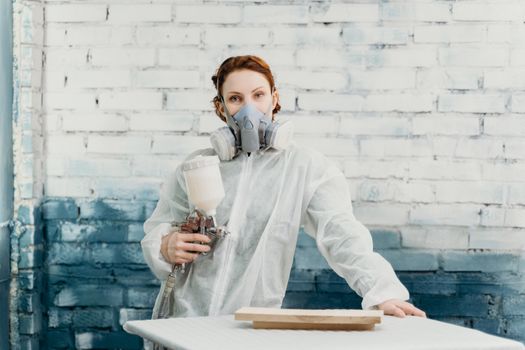
2K means two components. A resin and a hardener are combined at the spray gun, and once they react, the finish cures into a hard, chemically resistant film. The cured result behaves less like a coating sitting on top of the wood and more like a shell bonded to it.
The category is broader than most homeowners expect. Water-based 2K polyurethane products are sold in five-gallon pails, often around 45 pounds, and manufacturers blend the language freely. One product line is literally named “Conversion Varnish 2K Polyurethane, Satin,” which is a useful reminder that the label on the can does not tell you the whole story. Two finishes advertised under different names can be chemically closer than the marketing suggests. What you want to know is the actual chemistry, the catalyst ratio, and the recoat window, not the word printed on the front.
The reason painters moved toward 2K polyurethane is that it holds the hardness advantage of a catalyzed finish while giving up less on serviceability. When a cabinet door takes a hit years later, a 2K film is more forgiving to touch up than a fully cross-linked solvent conversion varnish.
Durability: Where the Two Finishes Land
Both finishes sit in the top tier. Varnish, the family that includes both polyurethane and conversion varnish, protects wood well against heat, solvents, and acids, and it is widely described as the most durable finish category available. Conversion varnish has traditionally held the top spot for pure hardness.
The ground has shifted. In finishing forums where professionals compare the two directly, the consensus is that 2K polyurethane performance is equal to or better than solvent conversion varnish when tested on scratch resistance. That is a meaningful shift for cabinet work, because cabinet doors and drawer fronts take constant abrasion from fingernails, rings, and the edges of dishes.
What neither finish does is make a cabinet indestructible. Heat damage from a slow cooker placed directly against a door, a knife dropped on a drawer front, or a hot pan set on a finished surface can mark either film. The difference is what happens next, and that comes down to repair.
Repairability Is Where the Two Finishes Split
This is the most practical difference between the two, and it is the one most homeowners never hear about until something goes wrong.
Conversion varnish cures hard and stays hard. That is excellent for abrasion resistance and terrible for touch-ups. A repair on a conversion varnish film tends to show, because the new material does not blend into the old cross-linked surface the way a softer finish would. Finishing forums consistently rank it as harder to repair than the alternatives.
2K polyurethane is described as easier to repair than conversion varnish, while still delivering equal or better scratch performance. For a kitchen that will be used every day for the next fifteen years, that combination is the whole argument. A finish you can actually maintain is worth more than a finish that wins a lab test but cannot be blended after the first accident.
Pot Life, Recoat Windows, and Shop Logistics
Catalyzed finishes are unforgiving of sloppy scheduling. Here is how the two compare on the handling details that determine whether a project runs on time.
| Handling factor | Conversion varnish | 2K polyurethane |
|---|---|---|
| Catalyst required | Yes, typically an NCO catalyst | Yes, part A plus part B |
| Pot life once mixed | 6 to 8 hours on a published 2K water-based spec | Varies by product; verify with the manufacturer data sheet |
| Re-coat window | About 1 to 2 hours on that same published spec | Varies by product; verify with the manufacturer data sheet |
| Repairability of cured film | Difficult to blend invisibly | Easier to repair |
| Scratch performance | Historically the benchmark | Equal to or better in professional scratch testing |
| Fume profile (solvent versions) | Contains formaldehyde; forum reports of fumes lasting up to two months | Water-based 2K options exist with a lighter solvent load |
Anyone spraying either product in your home needs a plan for the catalyst, the mix schedule, and the ventilation. Ask about all three before work starts. Note that pot life and recoat figures vary widely between brands and between solvent-borne and water-borne versions, so the specific numbers on your project should come from the data sheet for the exact product being sprayed, not from a general rule.
Fumes, Formaldehyde, and the Catalyst Question
This is where the conversation gets less technical and more personal. Solvent-based conversion varnish and lacquer contain formaldehyde. Forum reports from finishers describe off-gassing that can continue for up to two months after application. In a cabinet shop with a spray booth and exhaust, that is manageable. In an occupied Denver home with a family living in it, it is a different calculation.
Water-based 2K systems reduce that load, and the industry has been moving toward them steadily. The tradeoff is that water-based products behave differently: different open time, different sanding characteristics, different humidity sensitivity. A finisher who has only sprayed solvent coatings is learning a new product, not swapping a can.
The NCO catalyst used with 2K conversion varnish systems is also a handling consideration, not a decorative one. Isocyanates require proper respiratory protection and controlled spray conditions. That is a professional’s problem to solve, but the quality of the answer tells you something about who you hired.
Why Denver Cabinets Put Extra Weight on Finish Choice
Denver’s climate is hard on wood. Indoor air dries out through the heating season and swings back the other way in summer, and cabinet doors and frames move with those changes. A finish has to hold up to seasonal wood movement on one side and daily kitchen abuse on the other.
That argues for a film that is hard enough to resist scratching but not so brittle that it fails at the joints when the wood moves. It also argues for a finish that can be repaired later without refinishing an entire kitchen. A catalyzed 2K polyurethane film, sprayed evenly and cured properly, addresses both.
None of this matters if the preparation is wrong. The best catalyzed finish in the world will fail on a greasy, glossy, or poorly sanded surface. Degreasing, sanding, and a bonding primer are what let the topcoat do its job.

What This Means for a Denver Cabinet Painting Project
For homeowners in Denver, Aurora, Lakewood, Littleton, Arvada, Boulder, and the surrounding suburbs, the finish decision usually comes down to a sprayed catalyzed topcoat rather than which brand name wins an argument. A professional cabinet painting process uses a factory-grade sprayed finish, typically 2K polyurethane or precatalyzed lacquer, applied in a controlled sequence.
The details that separate a good job from a mediocre one are unglamorous. Dustless HEPA sanding keeps airborne dust out of the wet film. Doors and drawer fronts come off and get sprayed flat, which is the only way to get an even coat without runs or brush marks. Reassembly happens only after the film has cured enough to handle.
A typical project runs five to seven days from prep to reassembly. That timeline is a function of catalyst chemistry and recoat windows, not of rushing. Compressing it means spraying over a film that has not finished reacting, which is how finishes end up soft, tacky, or prone to peeling later.
Questions Worth Asking Any Cabinet Finisher
- Which specific topcoat are you spraying, and is it solvent-borne or water-borne?
- What catalyst does it use, and what is the pot life once it is mixed?
- What is the recoat window, and how do you schedule around it?
- How do you handle touch-ups on a catalyzed film if something gets damaged?
- What does your preparation sequence include before the first coat goes on?
- How do you ventilate and protect the rest of the house during spraying?
- What warranty covers the finish, and what does it exclude?
If the answers are vague, that is the answer. A finisher who cannot name the product, the catalyst, and the recoat window has not thought hard enough about the part of the job you will live with for the next decade.
Frequently Asked Questions
Is conversion varnish better than 2K polyurethane?
Not clearly, and not anymore. Conversion varnish has historically been the hardest, most chemical-resistant finish available, and it still holds that reputation in commercial shops. However, professional finishers report that 2K polyurethane now matches or exceeds solvent conversion varnish in scratch testing while being significantly easier to repair. For residential cabinets, the repairability advantage usually outweighs the marginal hardness difference.
Does 2K polyurethane contain formaldehyde?
Water-based 2K systems carry a much lighter solvent load than solvent-borne products. Solvent-based conversion varnish and lacquer are the ones documented as containing formaldehyde, with finishers reporting fumes that can last up to two months after application. If avoiding formaldehyde is a priority, ask your finisher specifically which product they plan to spray and request the manufacturer safety data sheet before work begins.
How long do cabinets need before they can be used again?
It depends on the specific product’s recoat and cure schedule, which varies by brand and by whether the finish is water-borne or solvent-borne. A catalyzed film continues reacting after it feels dry to the touch. Your finisher should give you a clear timeline for light use and full cure based on the data sheet for the exact product being sprayed.
Can a damaged conversion varnish cabinet door be touched up?
It can be repaired, but blending invisibly is difficult because the cured film is so hard and fully cross-linked. That is the tradeoff that comes with its durability. A 2K polyurethane film is easier to repair, which is one of the main reasons it has become the preferred topcoat for kitchen and bathroom cabinet repainting in occupied homes.
Why does preparation matter as much as the finish?
A catalyzed topcoat bonds to what is underneath it, not to the wood directly. Grease, glossy factory lacquer, and insufficient sanding will cause even a premium finish to fail prematurely. Dustless HEPA sanding, degreasing, and a proper bonding primer are what allow a 2K polyurethane or precatalyzed lacquer topcoat to perform the way it was designed to.