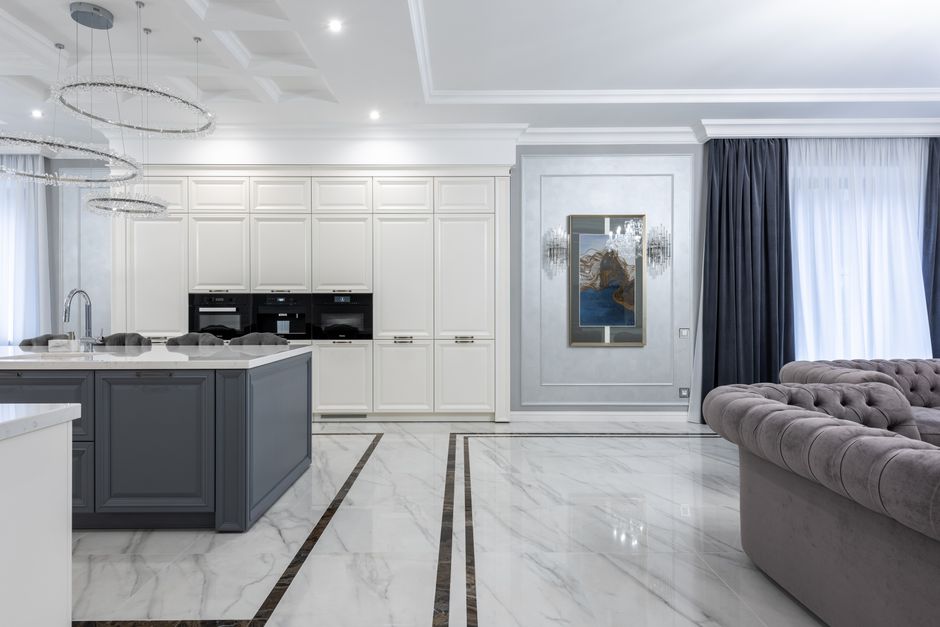
Oak cabinets were the default choice in American kitchens for roughly two decades. Homes built or remodeled from the 1970s through the early 1990s almost always ended up with them, and plenty of Denver-area kitchens are still living with that orange-toned wood today. Painting them white is one of the most reliable ways to brighten a dark kitchen without paying for a full cabinet replacement.
The catch is that white oak has an open, pronounced grain. A quick coat of white paint over that surface telegraphs every pore and every swirl, and it looks nothing like a smooth, factory-finished door. The difference between a professional result and a regretful one comes down to preparation, grain filling, and how the finish is applied.
Why So Many Denver Kitchens Still Have Oak Cabinets
Oak ruled cabinet design from the 1970s into the early 1990s, until cherry made an appearance and started taking over. Any home built in that window, or renovated during it, likely has oak boxes and doors. That covers a large share of the housing stock across Denver, Aurora, Lakewood, Littleton, Arvada, Boulder, and the surrounding suburbs.
Two things are usually true about these kitchens. First, the cabinetry itself is often solid and well built, which is why homeowners hear from parents and in-laws that painting over good oak would be sacrilege. Second, the color and finish make the room feel dark, because oak absorbs light rather than reflecting it. Those are two separate issues. Good construction and an outdated finish can live in the same kitchen, and repainting solves the second problem without touching the first.
The One Step Nobody Should Skip: Grain Filling
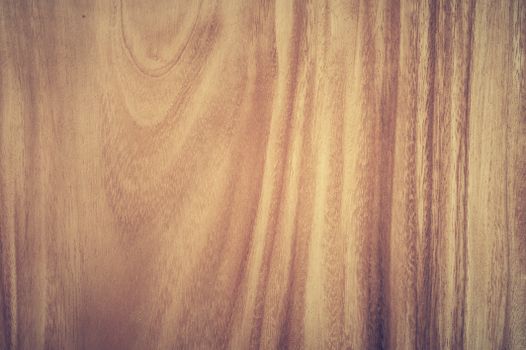
Oak has an open grain. Up close it looks like a field of tiny trenches, and those trenches are exactly where thin coats of paint sink in and dry unevenly. Homeowners who have tackled grainy oak cabinets report that the only route to a genuinely smooth finish is filling the grain before priming and painting, using a product made for the job, such as a white cabinet grain filler worked into the surface and sanded back until it feels flat.
Skipping that step does not ruin the paint. It simply means the finished doors keep their wood texture under the white. Some people like that effect. Most people paying for a white kitchen do not.
The Step-by-Step Process
The sequence below is the same whether you do the work yourself or hand it to a cabinet painting crew. Each stage exists because skipping it causes a specific problem later.
| Step | What happens | Why it matters |
|---|---|---|
| 1. Assess and label | Remove doors, drawers, and hardware, and label every piece by location | Prevents mismatched doors at reassembly |
| 2. Clean and degrease | Remove grease, oil, and cooking residue from all surfaces | Finish will not bond to a greasy surface |
| 3. Scuff sand | Dull the existing finish so it has something to grip | Creates mechanical adhesion for the primer |
| 4. Fill the grain | Work grain filler into the pores and sand smooth | Removes open-pore texture from the finished door |
| 5. Prime | Apply a primer suited to the surface being coated | Gives the topcoat an even, consistent base |
| 6. Spray the topcoat | Apply the finish in thin, even passes | Produces a level, factory-like surface |
| 7. Reassemble and cure | Rehang doors, reinstall hardware, allow full cure | Protects the new finish while it hardens |
Cleaning and Sanding
Kitchen cabinets carry a film of cooking grease that is invisible on a dark oak door and very visible as peeling paint later. Every surface needs cleaning first, including the frames, the inside edges, and the undersides of the upper cabinets. Sanding is not about stripping the old finish. It is about giving the new coating a surface it can hold onto.
Filling the Grain
Grain filler is spread across the wood, pushed into the pores, then sanded back so only the pores stay filled. This is the most time-consuming part of a white oak project and the part most often rushed. A proper job leaves the door feeling like a smooth panel rather than a piece of lumber.
Priming
Primer is what makes the white topcoat look uniform instead of blotchy. On oak, one coat is rarely enough over grain filler and bare spots. The goal is a sealed, consistent surface so the color does not shift from door to door once the white goes on.
Spraying the Topcoat
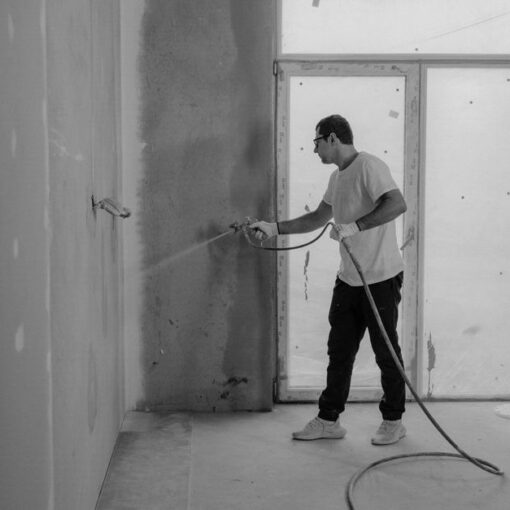
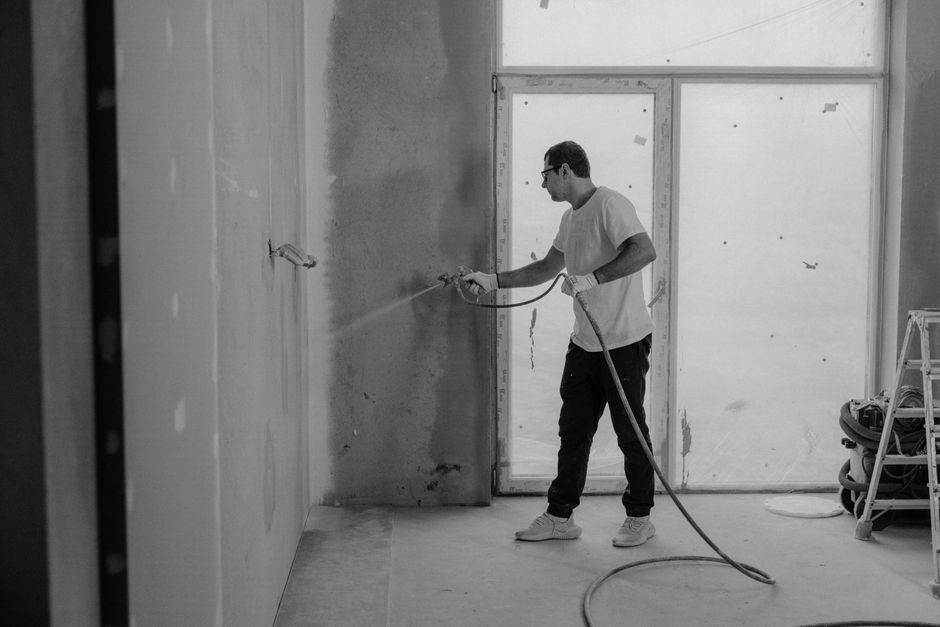
This is where a sprayed finish separates itself from a brushed one. Spraying lays down an even film with no brush marks and no roller stipple, and it reaches recessed panel edges and inside corners that a brush struggles with. Cabinet specialists typically use either a 2K polyurethane or a precatalyzed lacquer, both of which are designed to cure harder than standard wall paint.
Reassembly and Cure Time
Doors should only go back up once the finish has had time to set. The coating keeps hardening after it feels dry to the touch, so the first week or two is when the kitchen needs gentle handling. Scrubbing a fresh door with an abrasive pad during that window is a fast way to dull the finish.
Choosing the Right Paint for White Oak Cabinets
Paint finish matters on cabinets far more than it does on walls. A high-quality water-based paint, such as Benjamin Moore Advance, is one commonly recommended option for homeowners who plan to brush or roll the finish themselves. Water-based products clean up easily and hold up reasonably well when applied correctly.
Factory-grade sprayed finishes go a step further. Two-part polyurethane and precatalyzed lacquer are mixed and applied by a spray technician and cure to a harder, smoother film than typical consumer paint. The right choice depends on how the finish will be applied, how much abuse the kitchen sees, and whether the grain is being filled. The manufacturer’s product data sheet is the place to confirm that a specific product is rated for cabinetry.
DIY Versus a Denver Cabinet Painting Specialist
Painting oak cabinets white is doable as a DIY project, and plenty of homeowners get a decent result with patience, grain filler, and a great deal of sanding. The realistic trade-off is time and equipment. Grain filling a dozen doors, sanding between coats, and finding a space to spray without dust settling into the finish takes far longer than most people expect, and a brush or roller will never lay the film down as flat as a spray gun.
A specialist brings spray equipment, dustless HEPA-sanded preparation, and a controlled process to the job, usually completing a kitchen in about five to seven days. Cabinet painting contractors around Denver typically offer free local estimates and back the work with a workmanship warranty, in this case a three-year one, which is worth confirming in writing before the first door comes off its hinges. Ask specifically whether grain filling is included, because that line item decides whether the finished doors read as painted wood or as factory panels.
Common Mistakes That Show Up Later
- Skipping degreasing on upper cabinets near the range, which leads to adhesion failures.
- Using a brush or roller on oak and hoping three coats will hide the grain. They will not.
- Filling the grain unevenly, which shows up as patchy texture once the white topcoat is on.
- Spraying in a dusty garage and finding that dust cured into the finish.
- Treating the kitchen normally on day two, while the coating is still hardening.

What to Decide Before Anyone Touches the Cabinets
Three decisions shape the whole project: whether the grain gets filled, whether the finish is sprayed or brushed, and who does the work. Settle those first and the rest of the process falls into place. Samples on your own doors are the only reliable way to judge how a given white behaves in your kitchen’s light, so test before committing to a full set.
Frequently Asked Questions
Is it a mistake to paint good quality oak cabinets?
Quality and color are separate issues. If the boxes and doors are solid, painting does not undo that. What painting changes is the finish and the amount of light in the room. The common objection that covering the wood is a loss comes down to personal taste. If you like the oak, keep it. If you want a brighter kitchen, painting is the lower-cost path.
What is the best paint for white oak kitchen cabinets?
There is no single answer. A high-quality water-based paint works reasonably well for brush-and-roll projects, while sprayed cabinet finishes use products such as 2K polyurethane or precatalyzed lacquer for a harder, smoother film. What matters most is that the product is rated for cabinetry and applied over proper preparation. Check the manufacturer’s data sheet before buying.
Do oak cabinets need grain filler before painting white?
Yes, if you want a smooth, solid-white door. Oak has open pores, and paint alone sinks into them and leaves visible texture. Grain filler is worked into the pores and sanded back before priming. Skipping it does not cause failure, but it leaves the wood texture showing through the white, which is not the look most homeowners are after.
How long does it take to paint white oak cabinets white?
A specialist crew typically completes a kitchen in about five to seven days, including preparation, grain filling, priming, spraying, and reassembly. DIY timelines run far longer because of drying time between coats and the sanding that grain filling requires. Add a cure period after the doors go back up, during which the kitchen should be handled gently.