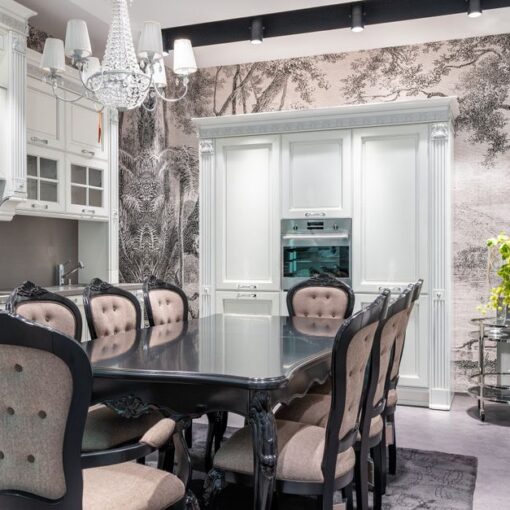
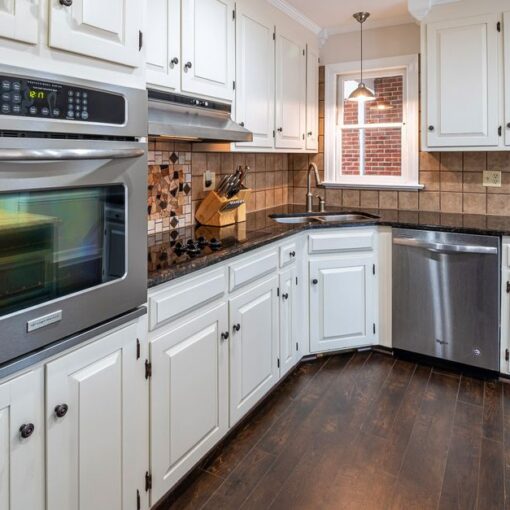
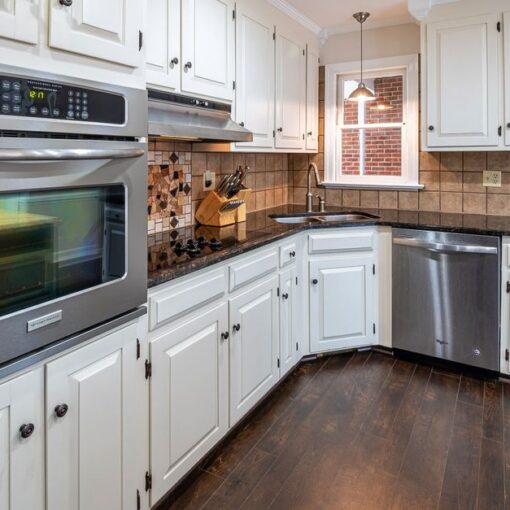
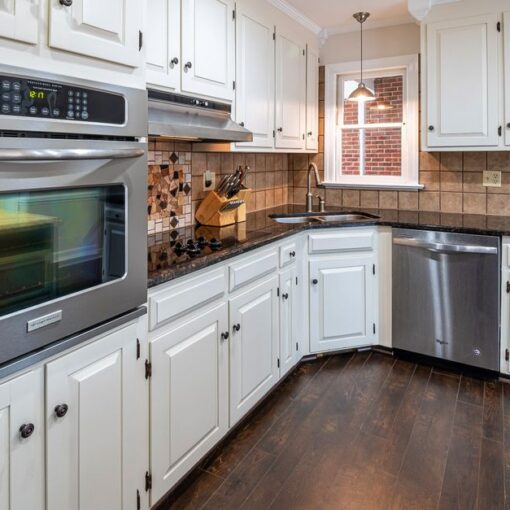
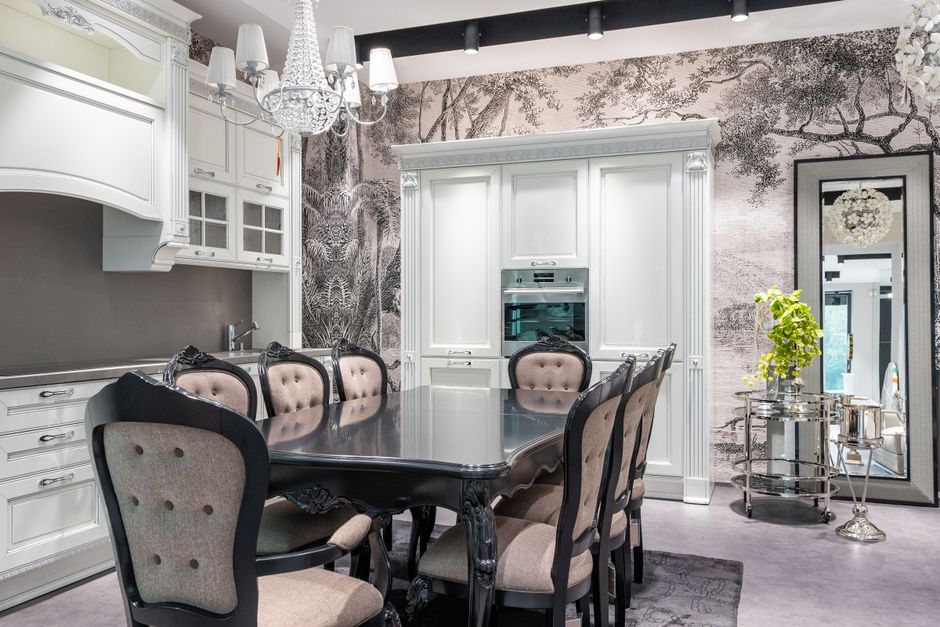
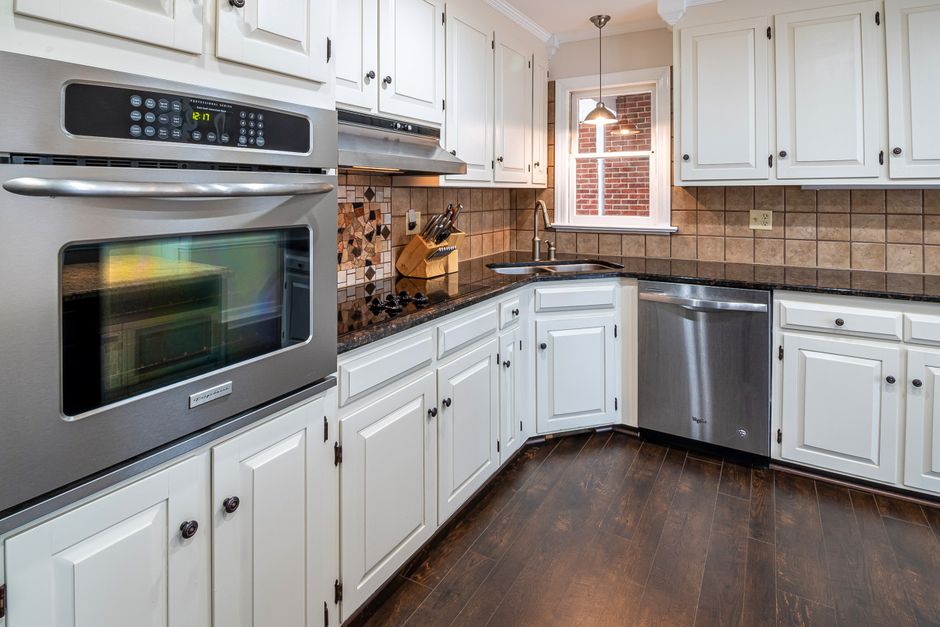
Kitchens built in the 1990s and early 2000s came with a lot of stained oak. Builder-grade oak cabinets were everywhere, and for years they read as warm, solid, and normal. Then the palette shifted, and those same cabinets started reading as dated. Homeowners across the Denver metro are now standing in front of the same boxes asking one question: paint them or replace them?
Painting oak cabinets white has become the default answer for a lot of households, and the before-and-after photos explain why. The room gets brighter, the wood tone that anchored the whole kitchen disappears, and the cabinet boxes stay exactly where they are. What the photos do not always show is the part that separates a finish that looks sprayed and factory-made from one that looks like a weekend project with visible brush marks and a grain pattern poking through the paint.
Why Oak Cabinets Read as Dated in 2026
There is nothing structurally wrong with most of the oak cabinets sitting in Denver-area kitchens. That is exactly why the conversation gets emotional. Homeowners regularly report being told by parents and in-laws that the cabinets are good quality and that painting over them would be sacrilege. In many cases that is true on the quality point. Oak is a hard, durable wood, and a lot of these cabinets were built better than what is sold at entry-level price points today.
What changed is the look. The 1990s and early 2000s saw an influx of builder-grade, stained oak cabinets, and as design moved forward those finishes fell out of style. A commenter on Houzz put it bluntly years ago: oak is very dated. The same thread recommended sanding first, then priming, and pointed to a quality furniture and cabinet paint line from Benjamin Moore.
The other half of the story is budget. Buying new cabinets is not in everyone’s budget, and replacing them means dealing with boxes, doors, drawers, countertops, and the labor that touches all of it. Painting keeps the existing footprint and changes only the surface. One DIY blogger documented transforming her oak kitchen with paint and put the material cost under $200, which is a big part of why the idea keeps spreading.
What Actually Changes in a Before and After
The transformation is not just a color swap. Two specific things drive how dramatic the before and after looks.
Light comes back into the room
An older stained oak finish pulls warm amber tones across the entire kitchen, and those tones bounce off floors, backsplashes, and countertops. Once the cabinets go white, the same room reads larger and cleaner without a single wall being moved. This is the change homeowners notice first in photos, and it is the reason white remains the most requested cabinet color heading into 2026.
The grain is still there unless you deal with it
Oak has an open, pronounced grain. Paint sits on top of that grain rather than hiding it, which means a painted oak door can still show every cathedral pattern and pore line under the new color. Grain filling is its own sub-topic in the painting world, with entire tutorials built around filling oak grain for a smooth finish and running debates about which filler product actually works. This step is the single biggest difference between a finish that looks like a factory cabinet door and one that looks like painted oak.
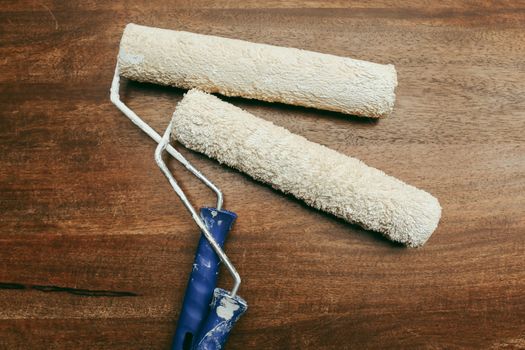
The Prep and Product Choices Homeowner Tutorials Keep Coming Back To
Most of the detailed DIY write-ups on oak cabinets converge on the same sequence: clean and scuff the surface, prime, fill the grain if you want smooth, then apply a hard-drying topcoat. The products vary more than the method does.
| Product mentioned | What the source says about it |
|---|---|
| Zinsser BIN Shellac primer | Recommended for oak that has already been finished with stain and a topcoat; apply 2 to 3 coats with a 4 inch mini foam roller and a brush. |
| DecoArt Satin Enamels | Formulated to adhere well, so not every cabinet needs a separate primer step when this product is used. |
| Rust-Oleum Cabinet Coating Kit | Used by one creator in a light faux wood approach, with Alabaster as the base and Potter’s Wheel mixed in. |
The primer question trips people up more than anything else. Oak that has been stained and sealed is a slick, non-porous surface, and paint needs something to bite into. That is why shellac-based primers show up so often in tutorials aimed at stained oak doors. The alternative approach is a coating formulated to grip without a separate primer, which is what the no-sanding tutorials lean on.
Then there is the topcoat. A cabinet door gets touched, bumped, wiped, and splattered far more than a wall does. Paint that performs fine on drywall can stay soft on a cabinet door, which is when homeowners start seeing fingerprints that will not wipe off and edges that chip near the hinges.
Why Sprayed Finishes Look Different From Brushed Paint
Rolling and brushing a cabinet door is achievable. Doing it across an entire kitchen without leaving texture, lap marks, or drips in the corners is where DIY projects often stall. Sprayed application lays down a level, even film with no brush direction and no roller stipple, which is why a sprayed door reads closer to a manufactured cabinet front than a hand-painted one.
In Denver, that sprayed approach is what a cabinet painting specialist does. The work is limited to cabinets only, rather than being one more item on a general house painter’s list. The typical process uses dustless HEPA-sanded preparation to keep the kitchen livable during the work, a factory-grade finish in either 2K polyurethane or precatalyzed lacquer, and grain-filling techniques built specifically for golden oak and white oak doors that will not hide their texture otherwise.
Two-tone designs, where the upper cabinets go one color and the lowers another, are also part of the mix for homeowners who want more than flat white. The timeline for a full kitchen runs about five to seven days, and the work is backed by a three-year workmanship warranty, with free local estimates. Service covers Denver and the surrounding suburbs, including Aurora, Lakewood, Littleton, Arvada, and Boulder.

The Skeptics Have a Point Worth Listening To
The “do not paint good oak” argument is not just nostalgia. Solid oak boxes and doors are durable, and once a finish is sprayed on, going back to natural wood is a much bigger job than the paint was. If the cabinet doors are warped, the drawers do not close, or the layout itself is the problem, paint will not fix any of that. Painting is a surface upgrade, and the boxes have to be worth upgrading.
Where the skeptics go wrong is treating stained oak as untouchable when the finish itself is the thing dating the kitchen. Keeping solid oak construction while changing the color is often the most sensible outcome, and it costs far less than tearing out working cabinets.
What to Check Before Booking Anyone in Denver
Ask what finish is being sprayed and how it is applied. A specialist should be able to tell you plainly whether the product is a 2K polyurethane or a precatalyzed lacquer, and whether the doors are sprayed off-site or in place. Ask specifically how grain will be handled, because the answer separates a smooth result from painted oak texture. Ask about prep, since dust control in an occupied kitchen matters, and ask what the workmanship warranty actually covers.
Ask to see before and after photos of oak projects in particular. White paint over a maple or MDF door is a different job than white paint over open-grain oak, and the difference shows up the moment you look at the finished door under kitchen lighting.
Frequently Asked Questions
Is it worth painting oak cabinets instead of replacing them?
For most Denver homeowners with solid oak boxes that are still square and functional, yes. The cabinets themselves are usually the durable part, and the dated stained finish is the real problem. Painting keeps the construction you already paid for while changing the color, and it avoids the cost and disruption of a full replacement.
Can you paint oak cabinets without sanding?
Some coatings are formulated to adhere well without a separate primer, and tutorials built around those products skip heavy sanding. Stained and sealed oak still needs a clean, scuffed, degreased surface so the new finish can bond. Skipping surface preparation entirely is where peeling and chipping usually start.
What primer works best on stained oak cabinets?
Tutorials aimed specifically at stained oak doors repeatedly recommend a shellac-based primer, applied in two to three coats with a small foam roller and a brush. The reason is adhesion: oak that has been stained and topcoated is sealed, so standard paint struggles to grip. A bonding primer solves that before the color coats go on.
How do you get rid of the oak grain before painting?
You fill it. Grain filling is a separate step between priming and topcoating, and it is what produces a smooth, factory-looking door surface instead of a paint film following every pore and cathedral pattern. There is real debate among painters about which filler holds up best, so ask your contractor what they use and expect it to be included.
How long does professional cabinet painting take?
A full kitchen typically takes about five to seven days from start to finish, including dustless HEPA-sanded preparation, priming, grain filling where needed, spraying, and reassembly. The timeline depends on the number of doors and drawers and on how much grain work the layout requires, so confirm the schedule during your estimate.