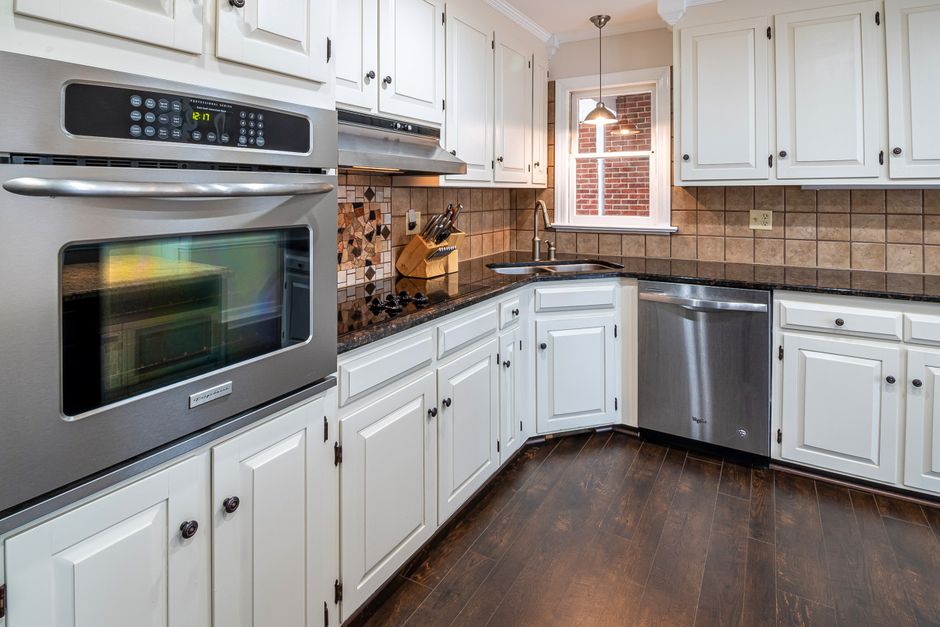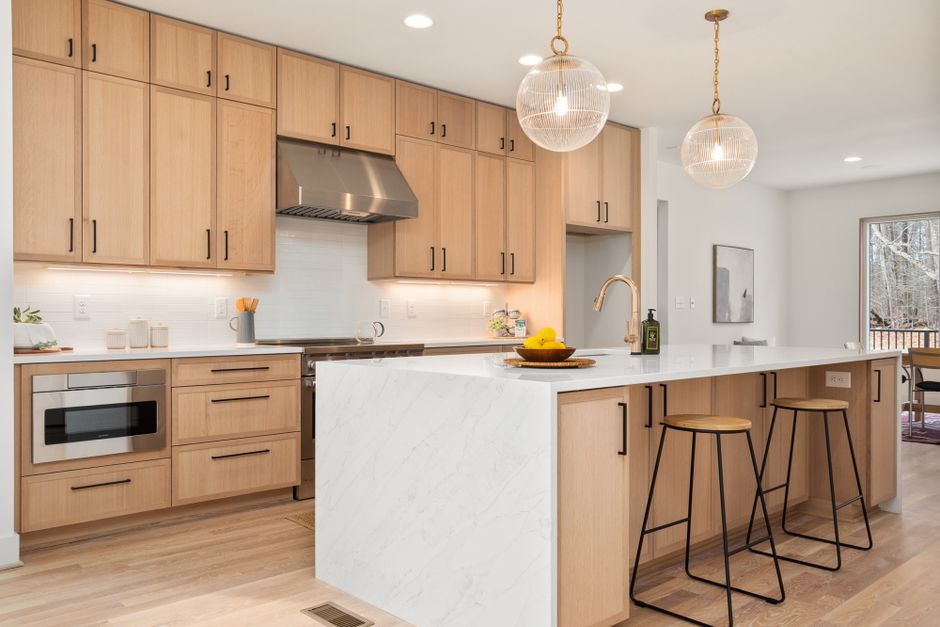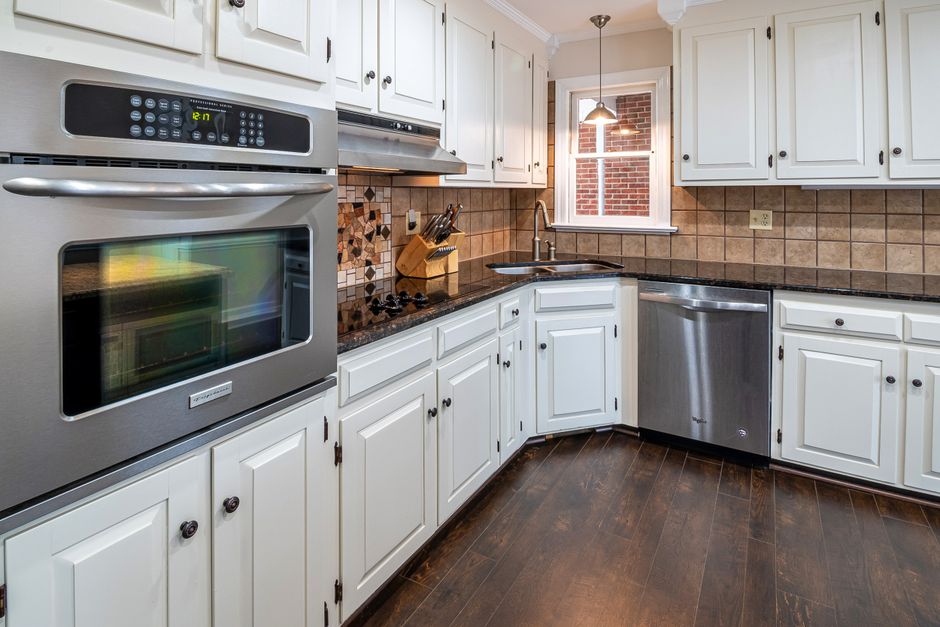
Cabinet painting is the least expensive way to change how a kitchen looks. Replacement is the most expensive. The distance between those two numbers is wide enough that most Denver homeowners comparing paint kitchen cabinets vs replace cost find the decision mostly makes itself, as long as the cabinet boxes are still sound.
Published estimates put professional cabinet painting somewhere between $1,500 and $5,000 for a typical kitchen. New cabinetry starts around $8,000 and climbs past $20,000. Cabinet refacing lands in between. This comparison lays out the real ranges, explains why two quotes for the same kitchen can differ by thousands, and shows the situations where replacement is genuinely the better buy.
The Short Answer: Painting Runs 60 to 70 Percent Less
Across the cost guides and contractor write-ups published on this topic, painting is almost always the cheaper option, and it is not close. Painting comes in 60 to 70 percent less than new cabinetry as a rule. You reuse the existing cabinet boxes, skip demolition, and avoid paying for new materials, which is where most of the money in a replacement project sits.
Replacement starts to make financial sense in three specific cases: the cabinets are structurally failing, the kitchen layout needs to change, or the project is a full kitchen overhaul where new boxes are part of a larger plan. Outside those scenarios, paying replacement prices for a color change is hard to justify.
What Cabinet Painting Costs in 2026
Quoted ranges for cabinet painting vary because kitchen size and labor requirements vary. Published figures include:
- $1,500 to $5,000 for painting, depending on kitchen size and the labor involved
- $1,500 to $4,000 total for cabinet painting, or roughly $75 to $200 per linear foot
- $5,000 to $9,000 for painting an average kitchen in one side-by-side comparison
- Under $1,000 in limited-scope situations where the project is small
The spread looks confusing until you realize each source is describing a different kitchen. A small galley with twenty doors and no grain filling is a different job from a large kitchen with a full run of oak cabinets that need sanding, priming, and grain fill before a sprayed finish goes on.
| Published estimate | Painting range | What it reflects |
|---|---|---|
| Cabinet painting, 2026 | $1,500 to $4,000 | About $75 to $200 per linear foot |
| General painting range | $1,500 to $5,000 | Varies with kitchen size and labor |
| Painting vs replacement | $5,000 to $9,000 | Figure cited for an average kitchen |
| Low-end, limited scope | Under $1,000 | Small project, minimal prep |
What Full Cabinet Replacement Costs in Denver
Replacement is where the budget jumps. Published comparisons put new cabinetry at $8,000 to $20,000 or more. The upper end is not unusual once you account for a full kitchen’s worth of boxes, doors, drawer fronts, and hardware, plus the labor to remove what is already there.
That is the number painting is measured against, and it explains the 60 to 70 percent savings figure. A homeowner spending $4,000 on a professional paint job is not comparing it to a $3,000 alternative. They are comparing it to a five-figure line item.
Cabinet Refacing Sits in the Middle
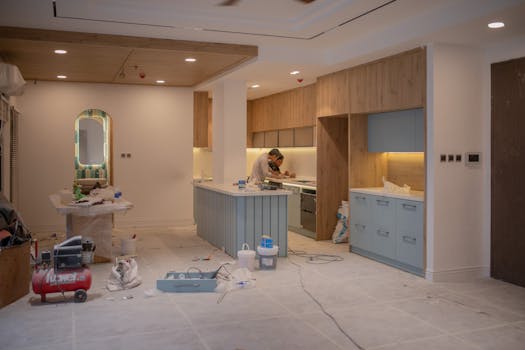
Refacing replaces the visible parts of the cabinetry, meaning the doors, drawer fronts, and hardware, while the existing frames and cabinet boxes stay in place. It costs more than painting and less than a full replacement in most cases.
- $4,000 to $9,000 on average for cabinet refacing, per one 2026 comparison
- $4,000 to $12,000 for a standard-sized kitchen, per a 2024 refacing versus painting breakdown
- Roughly $15,000 for an average refacing project including materials and installation, based on 27 linear feet, per a national retailer’s cost guide
Refacing makes sense when the boxes are solid but the door style is the problem. If the door profile is fine and only the color is dated, painting handles that for less.
Paint, Reface, or Replace Side by Side
| Option | Typical published cost | What changes | Best suited for |
|---|---|---|---|
| Paint | $1,500 to $5,000 | Color and finish on existing doors and boxes | Sound cabinets with a dated finish |
| Reface | $4,000 to $15,000 | New doors, drawer fronts, and hardware on existing boxes | Solid boxes, unwanted door style |
| Replace | $8,000 to $20,000 or more | All new cabinetry | Failing cabinets or a layout change |
Why Two Quotes for the Same Kitchen Can Differ by Thousands
The per-linear-foot figure of $75 to $200 is the key to understanding quote gaps. A kitchen with 27 linear feet of cabinetry can swing wildly depending on how many doors and drawers that footage contains, how much prep is required, and what finish is specified.
Preparation is the part homeowners underestimate. Sanding, cleaning, repairing, priming, and filling open grain on oak all take time, and time is the bulk of a painting quote. A crew that skips prep can bid lower and still deliver a finish that fails within a couple of years. Denver homeowners comparing estimates should ask what prep is included, whether the work is sprayed or brushed, and what warranty backs the finished result. A written estimate with a defined scope is far more useful than a verbal number.
When Replacement Is the Smarter Call
Replacement wins in a few clear situations. If the cabinet boxes are structurally failing, no finish will solve that. If the goal is to change the kitchen layout, painting cannot move a wall, remove a peninsula, or add storage that is not there. And if the project is already a full kitchen renovation, new cabinetry is part of the plan rather than an upgrade you are choosing on its own.
Those are the conditions that make the higher price tag defensible. Without them, you are paying five figures to change a color.
What Cabinet Painting Cannot Fix
Painting changes the color and the finish of the cabinetry in front of you. It does not change the footprint, the storage capacity, or the condition of the boxes. Warped doors, swollen particle board, drawers that no longer track, and a layout that wastes space are all problems a paint job will still have on the day it is finished.
That is why a reputable cabinet painting specialist will look at the boxes before quoting. If the structure is sound, painting is a legitimate long-term solution. If it is not, you are buying a fresh coat on a failing product.
Finish Quality: Sprayed Lacquer Versus Brushed Paint
Not all cabinet painting is the same product. Specialist shops spray factory-grade finishes, typically a 2K polyurethane or a precatalyzed lacquer, rather than brushing or rolling alkyd or acrylic paint onto doors. A sprayed finish lays down smoother and cures harder, which matters on cabinet doors that get opened and wiped down daily.
Preparation is equally important. Dustless HEPA-sanded prep keeps the workspace clean and creates a surface the coating can actually bond to. For white oak and golden oak cabinets, grain filling before finishing removes the open pore texture that otherwise telegraphs through a light color. Two-tone designs, where uppers and lowers get different colors, are handled in the same sprayed process.
This is also where relying on a general house painter tends to go wrong. Kitchen cabinets are an assembly of many small surfaces that see more wear than a wall ever will.

Timing and Disruption
A specialist cabinet painting process runs about five to seven days from prep through cure. The cabinets stay in place, the boxes are not removed, and the kitchen disruption is limited to the work area rather than the whole room.
Replacement takes considerably longer. New cabinetry has to be ordered and manufactured, the existing cabinets removed, and new boxes installed and leveled. That timeline is measured against the days a paint project takes, and it is a real cost even though it does not appear on a quote.
Denver Cabinets in 2026
Denver metro housing stock is a big part of why cabinet painting stays busy here. Plenty of homes in the area were built or updated with basic builder materials, and a decade later those kitchens still have perfectly solid oak cabinets with a finish nobody wants anymore. That is the exact profile where painting outperforms replacement on every measure except the door style itself.
Specialist cabinet painters serving Denver, Aurora, Lakewood, Littleton, Arvada, Boulder, and the surrounding suburbs typically offer free local estimates. Ask about workmanship warranty coverage as part of the quote. A three-year workmanship warranty on the finished cabinets is a reasonable benchmark to compare bids against, and the companies offering one are usually the ones who did the prep properly.
Frequently Asked Questions
Is it cheaper to paint kitchen cabinets or replace the doors and drawer fronts?
Painting the existing doors and drawer fronts is generally the cheapest route. Replacing doors and drawer fronts, which is essentially refacing, typically runs $4,000 to $9,000 or more, while professional painting often lands between $1,500 and $5,000. The exception is a kitchen with damaged or warped doors, where new fronts solve a problem paint cannot.
How much does it cost to paint an average kitchen’s cabinets?
Published estimates cluster between $1,500 and $5,000 for professional cabinet painting, with some sources citing $1,500 to $4,000 and roughly $75 to $200 per linear foot. Larger kitchens, heavy preparation, and oak grain filling push quotes toward the higher end. Denver pricing depends on cabinet count and condition, so a written local estimate beats any national average.
Is professional cabinet painting worth it?
For kitchens with sound cabinets, yes. Painting costs 60 to 70 percent less than new cabinetry, takes days instead of weeks, and avoids demolition. The cabinets worth painting are structurally solid with working hinges and drawers. If the boxes are failing or the layout needs to change, painting will not fix that.
How long does cabinet painting take compared to replacement?
A specialist cabinet painting process typically runs about five to seven days from prep through cure, with the cabinet boxes staying in place throughout. Replacement takes longer because new cabinetry has to be ordered, the old cabinets removed, and new boxes installed. Many homeowners end up without a fully functional kitchen for a longer stretch.
When should I choose replacement over painting?
Choose replacement when the cabinet boxes are structurally failing, when you want to change the kitchen layout, or when you are doing a full remodel anyway. Those are the situations where new cabinetry earns its cost. If the boxes are solid and only the color or finish is dated, painting delivers the visual change for far less money.