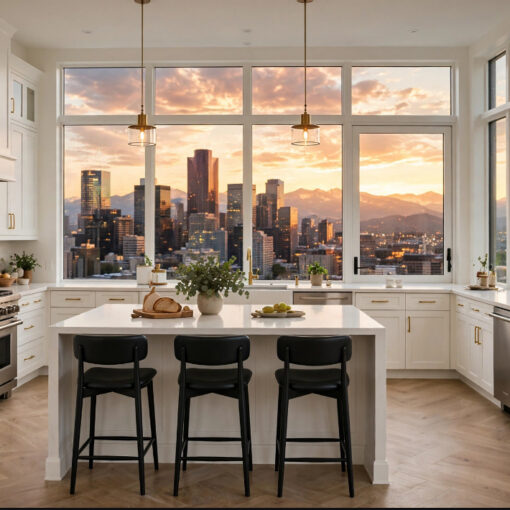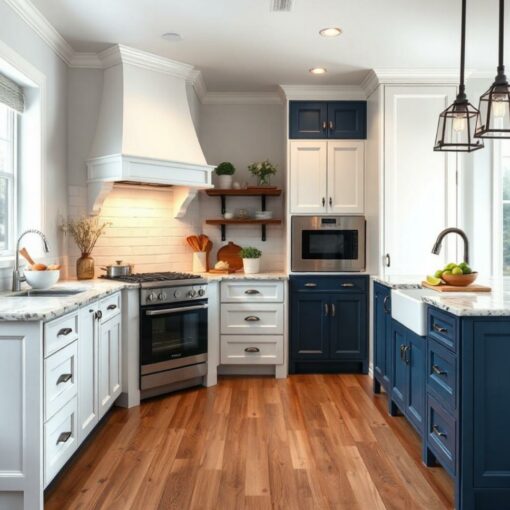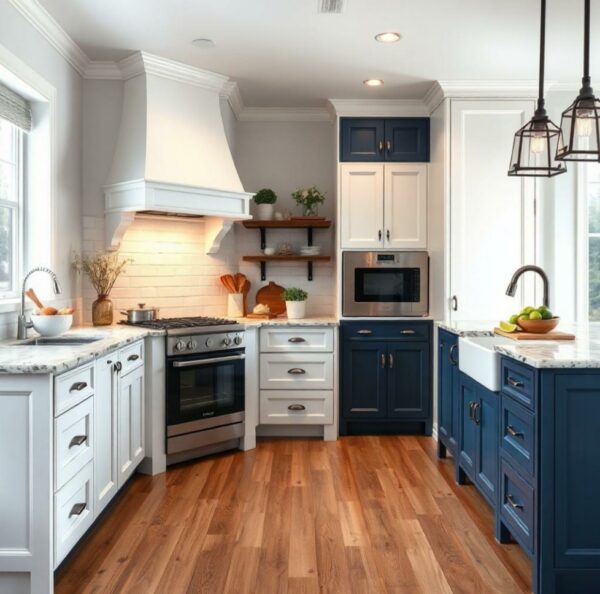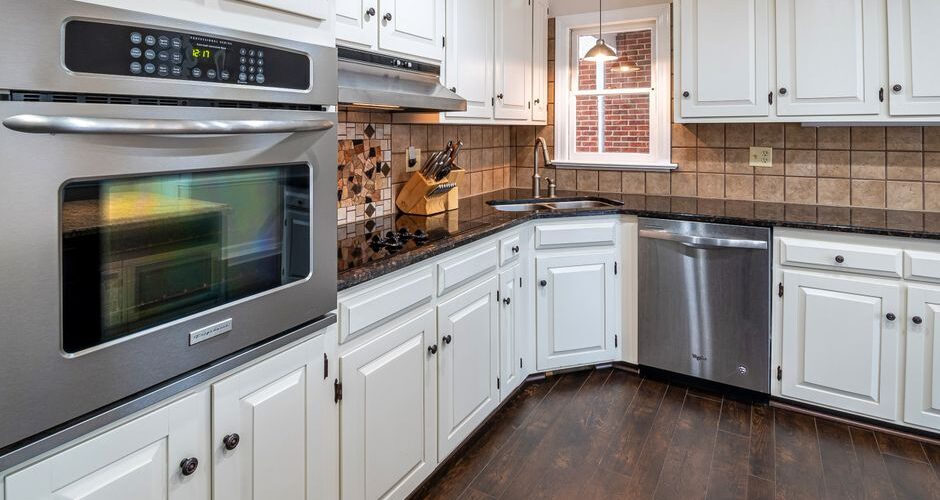
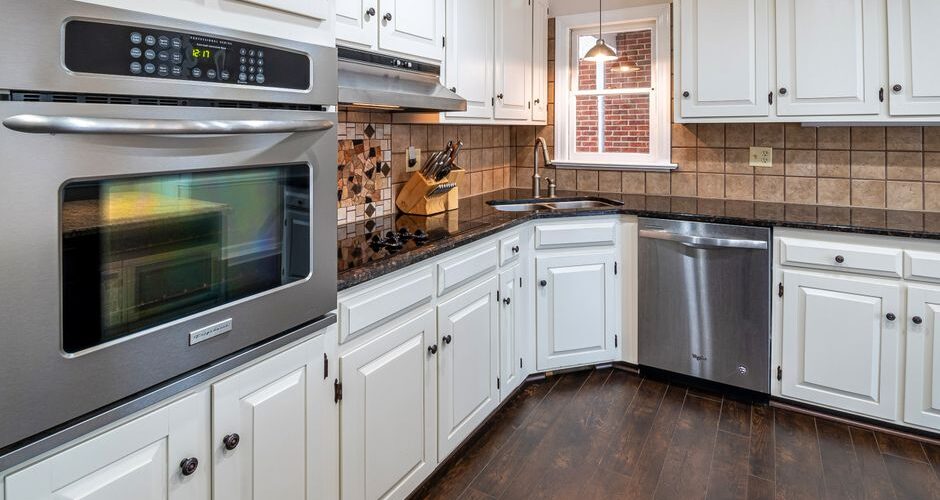
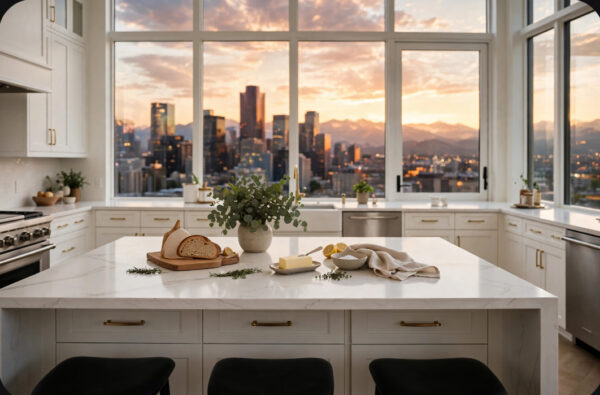
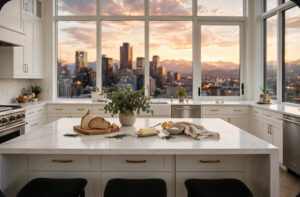
Homeowners across Colorado are turning to high-end cabinet refinishing services for luxury kitchens to achieve a showroom-quality look without the full remodel price tag. This is not about a quick coat of paint from the local hardware store. It is about artisan craftsmanship, commercial-grade materials, and a finish so flawless it rivals the finest custom cabinetry. If you own a luxury home and want to preserve the integrity of your solid wood cabinets while completely transforming their aesthetic, this guide covers everything you need to know: the cost-value equation, the meticulous process, material distinctions, 2026 design trends, and how to identify a true professional in this specialized field.
Table of Contents
-
High-End Refinishing vs. Refacing vs. Replacement: A Cost and Value Comparison
-
DIY vs. Professional High-End Refinishing: When to Hire a Pro
-
How to Choose a High-End Cabinet Refinishing Service in Colorado
-
Frequently Asked Questions About High-End Cabinet Refinishing
Why Luxury Homeowners Choose Refinishing Over Replacement
The decision to refinish rather than replace often begins with a simple realization: the cabinet boxes in a luxury kitchen are frequently made of solid wood, dovetailed and built to last a lifetime. Tearing them out is not just expensive; it is wasteful. High-end cabinet refinishing services for luxury kitchens preserve that foundational quality while delivering a custom, furniture-grade finish that can match or exceed the look of new high-end cabinetry.
Cost is a significant factor, even for homeowners with substantial budgets. Refinishing typically saves 50 to 70 percent compared to full cabinet replacement. In practical terms, refinishing can cost roughly one-fifth the price of brand-new custom cabinets. That frees up tens of thousands of dollars for other upgrades: premium natural stone countertops, a handcrafted tile backsplash, professional-grade appliances, or custom hardware. Instead of your entire budget being consumed by cabinetry, you can distribute it across the elements that create a truly cohesive luxury kitchen.
Timeline is another compelling advantage. A professional refinishing crew can complete a project in three to seven days, depending on kitchen size and finish complexity. A full tear-out and custom cabinet installation, by contrast, can stretch into weeks or even months. During that time, the kitchen is largely unusable. Refinishing keeps disruption to a minimum: no demolition dust coating every surface of your home, no parade of subcontractors, and in many cases, the kitchen remains partially functional throughout the process.
The High-End Refinishing Process: What Sets It Apart
Surface Preparation and Artisan Stripping
What separates high-end cabinet refinishing services for luxury kitchens from a standard repaint is the preparation. In a premium refinish, the process does not begin with a scuff-sand and a quick wipe-down. It begins with hand-stripping or chemical removal of the existing finish down to the raw wood. This step is critical for adhesion and for revealing the true condition of the substrate. Any imperfections, dents, or open grain are filled with high-build primers, then block-sanded to create a glass-smooth, furniture-grade surface. All doors and drawer fronts are removed, labeled, and transported to a controlled workshop environment where temperature, humidity, and dust are managed. The cabinet boxes are prepped on-site with the same level of care, including masking off surrounding surfaces and setting up containment to protect your home.
My Review of Graco FFLP Tips for Spraying Cabinets
Material Quality: Urethanes, Lacquers, and Conversion Varnishes
The coatings used in a luxury refinish bear no resemblance to the latex wall paint or chalk paints found in DIY projects. Professionals working in the high-end space rely on catalyzed urethanes, conversion varnishes, and two-component acrylics. Catalyzed urethanes are the gold standard for kitchens that see heavy daily use. They cure to an exceptionally hard, chemical-resistant finish that stands up to moisture, grease, and frequent cleaning without chalking or yellowing over time. Conversion varnishes offer a different aesthetic: a deep, hand-rubbed luster reminiscent of fine antique furniture. They build to a rich depth that catches light beautifully.
These materials are also available in low-VOC and ultra-low-VOC formulations, meeting strict air quality standards and making them safe for occupied homes. A true high-end refinisher will specify the brand and product line they use: names like Renner, Milesi, and Sherwin-Williams Pro Industrial are common in professional spray shops. The application method matters equally. These coatings are applied with HVLP or air-assisted airless spray systems in a dust-free booth, producing a finish that is physically smooth and optically clear, with no brush marks, roller stipple, or orange peel texture.
Custom Color Matching and Specialty Finishes
The color palette available through professional refinishing is effectively unlimited. If you can imagine it, a skilled finisher can mix it. Custom color matching to a fabric swatch, a tile sample, or a specific paint deck is standard practice. Beyond solid colors, high-end refinishing services offer specialty techniques that elevate cabinetry to an art form. Glazes settle into recessed profiles and corners, adding depth and an Old World feel. Ceruse finishes, where a contrasting pigment is worked into open wood grain, create a dramatic, textural look that is particularly striking on oak.
Our Sites:
Painting Kitchen Cabinet |
Cabinet Refinishing Info |
Cabinets Painting
Hand-distressing and multi-step tonal layering replicate the patina of pieces collected over generations.
High-End Refinishing vs. Refacing vs. Replacement: A Cost and Value Comparison
Understanding the distinctions between refinishing, refacing, and full replacement is essential for making the right investment. Refinishing restores and transforms the existing cabinet doors, drawer fronts, and boxes. It is the ideal choice when you love your current layout and the cabinet boxes are in good structural condition. The cost is typically one-fifth that of new custom cabinets, and the process preserves the solid wood construction that is increasingly rare in new cabinetry at any price point.
Refacing replaces the doors and drawer fronts entirely and applies a matching veneer to the cabinet boxes. The average cost range for refacing runs from roughly $4,100 to $11,450, depending on kitchen size and material selections. Refacing makes sense when the door style is dated and you want a completely different profile, but the layout and box integrity are sound. It is more expensive than refinishing but still significantly less than full replacement.
Full replacement is necessary only in specific circumstances: when you want to change the kitchen layout, when the cabinet boxes are made of particleboard that has swollen or crumbled, when there is extensive water damage, or when the boxes have structural failures. In a luxury kitchen, full custom replacement can easily exceed $30,000, and that figure climbs quickly with premium wood species, specialty finishes, and custom organizational features.
One value-add upgrade worth noting is hidden hinge conversion. Many older luxury kitchens have exposed barrel hinges. During a refinish, those can be converted to concealed, soft-close hinges, modernizing the cabinet function without altering the face-frame aesthetic. This is a detail rarely offered by standard painting contractors and signals a refinisher who understands cabinetry at a structural level.
2026 Color and Finish Trends for Luxury Kitchen Cabinets
The luxury kitchen in 2026 is moving away from stark, all-white environments toward spaces with more depth, warmth, and personality. Deep navy and charcoal remain dominant as sophisticated neutral alternatives to black. These saturated hues create a dramatic backdrop for brass or matte black hardware and pair beautifully with white marble or quartzite countertops.
Warm greige and mushroom tones are replacing the cooler grays of the past decade. These colors read as soft and inviting while still feeling tailored and current. They work especially well in kitchens with natural stone that carries warm undertones. Two-tone kitchens continue to gain traction, with a darker accent color on the island, such as forest green, slate blue, or deep aubergine, and a lighter cream or warm white on the perimeter cabinetry. This approach defines zones within an open floor plan and adds architectural interest.
Texture is playing a larger role in finish selection. Cerused and wire-brushed finishes add a tactile dimension that catches light differently throughout the day, creating a collected-over-time look that feels authentic rather than manufactured. In terms of sheen, matte finishes are trending for modern luxury, offering a velvety, soft appearance. Satin remains the most practical choice for high-use kitchens, as it is easier to wipe clean and more forgiving of fingerprints and daily wear.
Environmental and Sustainability Benefits of Refinishing
Choosing to refinish rather than replace is one of the most environmentally responsible decisions a homeowner can make during a kitchen update. Cabinet refinishing keeps thousands of pounds of wood, MDF, and hardware out of landfills. In Colorado, where environmental consciousness runs high, this waste reduction is a meaningful contribution to local sustainability goals.
The carbon footprint of refinishing is dramatically lower than manufacturing, packaging, and shipping an entire kitchen’s worth of new cabinets. There is no raw material extraction, no factory energy consumption, and no freight emissions. The existing materials are simply renewed in place. Modern catalyzed urethanes and conversion varnishes are formulated to meet stringent VOC regulations, meaning the air quality inside your home remains safe during and after the project. When hardware upgrades are part of the scope, selecting recycled metal or FSC-certified wood accessories further reduces environmental impact.
DIY vs. Professional High-End Refinishing: When to Hire a Pro
The internet is full of DIY cabinet painting tutorials, and for a small powder room vanity or a piece of furniture, a careful homeowner with patience can achieve decent results. A luxury kitchen is a different proposition entirely. The risks of a DIY approach on high-end cabinetry include an uneven finish, visible brush marks, poor adhesion that leads to peeling within months, and an overall result that diminishes the value of the home rather than enhancing it.
Professional high-end refinishers bring spray equipment, climate-controlled spray booths, commercial-grade coatings, and years of technique to every project. They understand how different wood species react to primers and how to achieve a consistent sheen across large surfaces. Most offer warranties of five years or longer against peeling and chipping, a guarantee you cannot get from a weekend project. The cost of fixing a failed DIY job often exceeds the price of hiring a professional from the start, because the botched finish must be stripped completely before the work can be redone correctly.
A practical decision checklist includes the size of the kitchen, the desired finish quality, your timeline, your budget, and your tolerance for living in a construction zone. For a luxury kitchen where the cabinetry is a focal point, the professional route is almost always the right call.
How to Choose a High-End Cabinet Refinishing Service in Colorado
Selecting the right professional for high-end cabinet refinishing services for luxury kitchens requires looking beyond the lowest bid. Start by asking about artisan credentials and process specifics. A qualified refinisher will describe their approach to hand-stripping, their spray booth setup, and the brand of coatings they use. If they mention products like Renner, Milesi, or Sherwin-Williams Pro Industrial, that is a positive signal.
Request a detailed scope of work in writing. It should specify cleaning, sanding or stripping, priming, a minimum of three finish coats, and hardware removal and reinstallation. Ask directly about hidden hinge conversion and custom color matching capabilities. Not every refinisher offers these services, and their availability separates the high-end specialist from the general painter.
Review before-and-after portfolios with a critical eye. Look specifically for luxury kitchens with complex finishes, not just rows of standard white paint jobs. Pay attention to the quality of the photography and the consistency of the finish across different lighting conditions. Get a timeline in writing. Three to seven days is standard for a professional crew on a typical luxury kitchen. Anything significantly longer may indicate inefficiency or overbooking. Finally, verify insurance and warranty coverage. A high-end service should carry liability insurance and offer a minimum five-year warranty against peeling or chipping.
Frequently Asked Questions About High-End Cabinet Refinishing
How much does it cost to professionally refinish luxury kitchen cabinets? For a professional high-end refinish, expect to invest between $3,000 and $8,000, depending on kitchen size, number of doors and drawers, and finish complexity. Custom color matching, specialty glazes, and ceruse finishes add to the total. This represents a savings of 50 to 70 percent compared to full custom replacement.
What colors make a kitchen look expensive in 2026? Deep navy, charcoal, warm mushroom, and thoughtfully executed two-tone combinations read as luxurious and current. The finish sheen matters as much as the color. Matte and satin finishes with subtle texture, such as a light ceruse or wire-brushed effect, elevate the overall impression and signal custom work.
What is the difference between resurfacing and refinishing cabinets? The term “resurfacing” is sometimes used interchangeably with “refacing,” which involves replacing doors and drawer fronts and applying veneer to the boxes. “Refinishing” means restoring and recoating the existing surfaces to a like-new or entirely custom finish. Always clarify terminology with your contractor to ensure you are comparing equivalent scopes of work.
Is $30,000 enough for a kitchen remodel? Yes, but that budget is quickly consumed by new cabinetry alone in a luxury kitchen. By choosing high-end refinishing, you can allocate $15,000 to $20,000 of that budget toward premium countertops, a custom backsplash, professional-grade appliances, and upgraded lighting, achieving a far more transformative result for the same total investment.
Conclusion and Next Steps
High-end cabinet refinishing delivers a custom, durable, and beautiful finish that honors the quality of your existing cabinetry while completely transforming the look and feel of your kitchen. It costs a fraction of full replacement, completes in days rather than months, and keeps your home free of demolition chaos. The result is a kitchen that looks bespoke, feels current, and functions beautifully for another decade or more.
If you are considering a luxury kitchen update in Colorado, the next step is a personalized consultation. A professional assessment will evaluate your cabinet construction, discuss color and finish options, and provide a detailed proposal tailored to your home. Contact Cabinet Painting Colorado today to discuss your luxury kitchen refinishing project and take the first step toward the kitchen you have been envisioning.