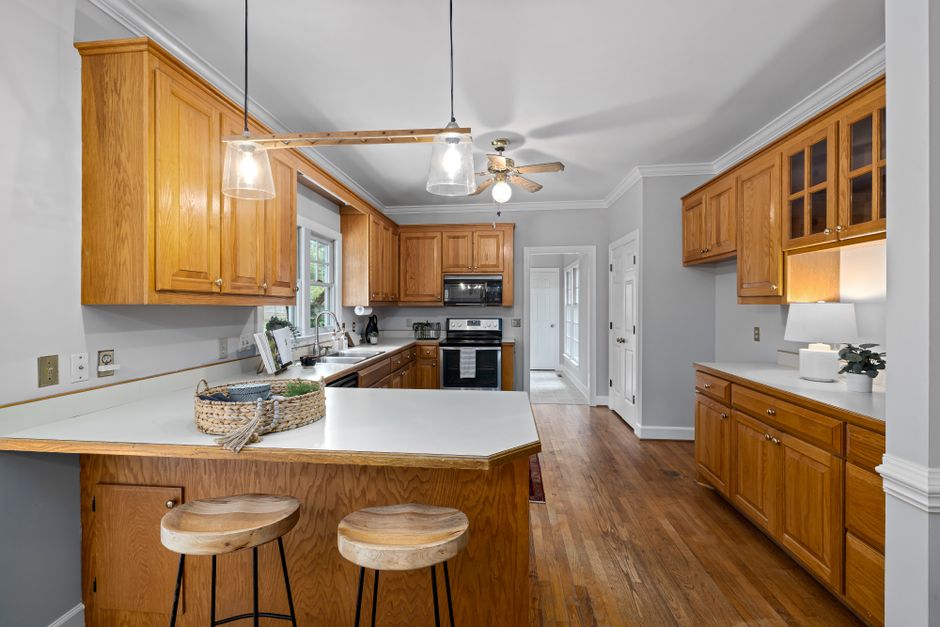
Rift sawn white oak has moved from a niche millwork spec to one of the most requested looks in Denver kitchens. The straight, uniform grain and slightly cooler tone give it a calm, architectural feel that suits slim shaker doors, full-height slab fronts, and the clean lines that dominate 2026 kitchen design. What sits on top of that wood, the stain, the clear coat, the paint, or the grain filler, decides whether the room reads warm and organic or crisp and modern. This guide covers how rift sawn oak is cut, how it behaves under different finishes, and what Denver homeowners should sort out before any spraying begins.
What Makes Rift Sawn White Oak Different
Rift cut white oak is milled by cutting boards at roughly 30 to 60 degrees to the growth rings. That specific angle avoids the medullary ray, the part of the oak that produces the wide, arching cathedral patterns in plain sawn lumber. The result is a long, straight, uniform grain that runs vertically up a door front with very little variation from one board to the next. It is one of the reasons designers and homeowners keep returning to the material: it brings natural warmth without visual noise.
White oak itself is valued in cabinetry and fine furniture for its tight grain and dimensional stability. Those properties matter on cabinet doors and drawer fronts that open and close hundreds of times a year, because a stable board holds its lines instead of cupping or twisting. Rift sawn white oak also carries a slightly cooler, grey color tone compared with other cuts of the same species, which is why it pairs so easily with cool greys, soft whites, and muted stone surfaces.
The Staves Are Part of the Look
Rift white oak comes narrow because of the way it is cut. The individual bands glued together to make a door are called staves, and those stave lines stay visible whether the door has an MDF core or a solid wood construction. This catches some homeowners off guard during a remodel, but visible staves are not a defect or a sign of cheap material. They are a direct result of the sawing method, and on a tall pantry door or a wide drawer front they read as a deliberate vertical rhythm.
Quartersawn Grain Can Appear Too
Rift cut white oak can include quartersawn grain with visible medullary rays and flecking, so a shipment is not always perfectly uniform in character. If a perfectly clean face with zero fleck matters to you, ask your cabinet supplier to show physical samples of the actual material before you commit. Screens and small swatches hide a lot.
Rift Sawn, Quartersawn, and the Design Direction Each One Sets
The cut of the wood steers the design language of the whole kitchen, so it is worth comparing the two most common premium cuts side by side.
| Cut | Grain Character | Design Direction |
|---|---|---|
| Rift sawn white oak | Long, straight, uniform grain; slightly cooler grey tone; narrow staves | Modern, minimalist kitchens with slim shaker or slab fronts |
| Quartersawn white oak | Visible medullary rays and flecking; more pronounced figure | Classic, timeless interiors that want visible wood character |
Rift white oak tends to favor modern, minimalist designs, while quartersawn white oak brings a classic, timeless charm. If your kitchen leans contemporary, rift sawn is the cleaner canvas. If you are restoring a period home or want the wood itself to be the focal point, quartersawn may serve you better. Some rift cut material blurs the line by including quartersawn grain, which is another reason to inspect the actual boards.
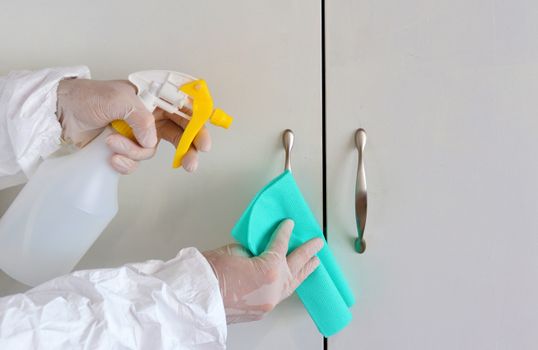
Finishes That Highlight Rift Sawn White Oak in 2026
Finishing is where a rift sawn kitchen either sings or falls flat. Because the grain is so even, the finish does almost all of the color work, and there is nowhere for a sloppy application to hide. Manufacturers who build with this material typically curate a small, deliberate finish lineup, with some offering as many as eight distinctive finishes chosen specifically to highlight the characteristic grain of rift cut white oak.
Clear Coats and Natural Tones
A clear or near-clear finish leaves the wood closest to its raw state. You get the cool grey undertone, the straight grain, and the stave lines exactly as the mill produced them. This works best in kitchens with strong natural light, since the low-contrast finish depends on daylight to show its depth.
Warm Neutrals and Light Browns
Light warm stains add a honey or sand tone without burying the grain. They soften the coolness of rift sawn oak and help it sit comfortably next to warm flooring, brass hardware, and travertine or quartzite counters. This is the middle ground for homeowners who find raw oak too pale but do not want to lose the grain.
Whites, Soft Greys, and Painted Finishes
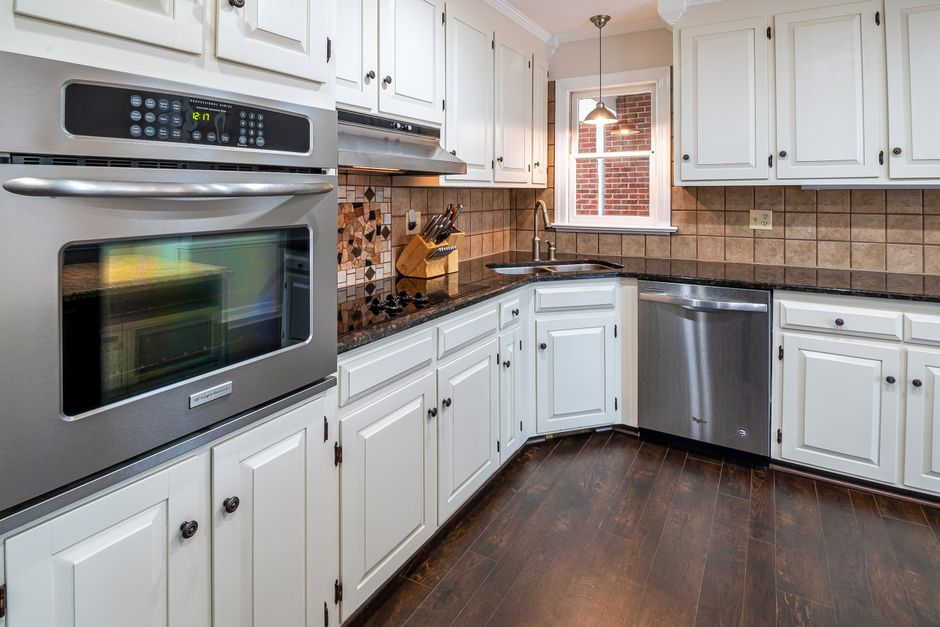
Painted finishes are the biggest visual departure, because paint covers color completely and asks a single question: do you want to see grain or not? Left unfilled, paint sinks into the open pores and the grain telegraphs through the film. Filled first, the surface goes smooth and the door reads almost like a factory panel. Both are legitimate looks, and both need a sprayed application to come out even.
Cooler and Deeper Tones
Cool greys, greige blends, and deeper charcoal or espresso tones push the kitchen in a more dramatic direction. On a rift sawn door these darker finishes show every bit of application quality, because any uneven film, drip, or lap mark catches the light across a flat, straight grain face. This is not a finish to attempt with a brush and a roller.
Two-Tone Kitchens
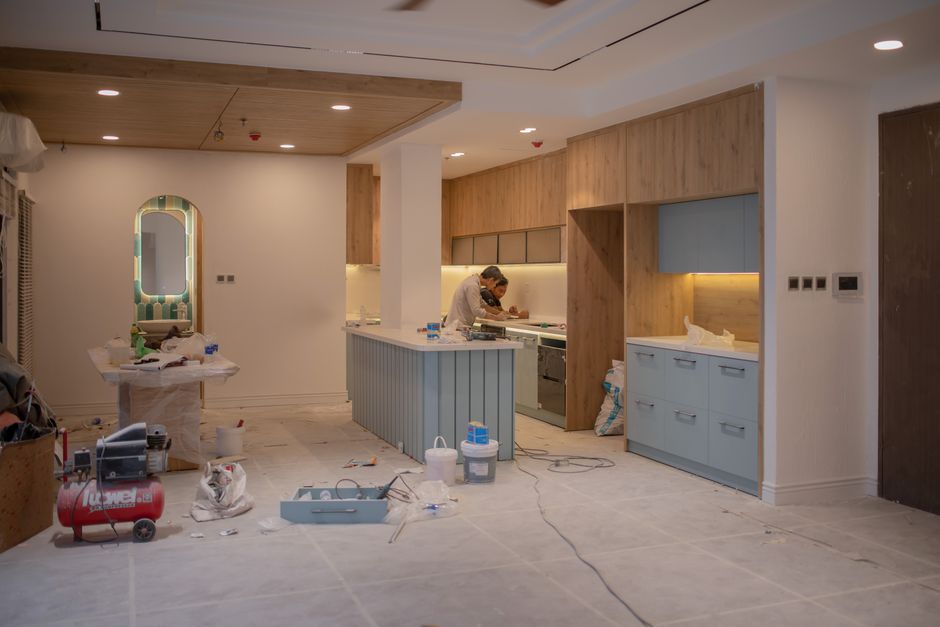
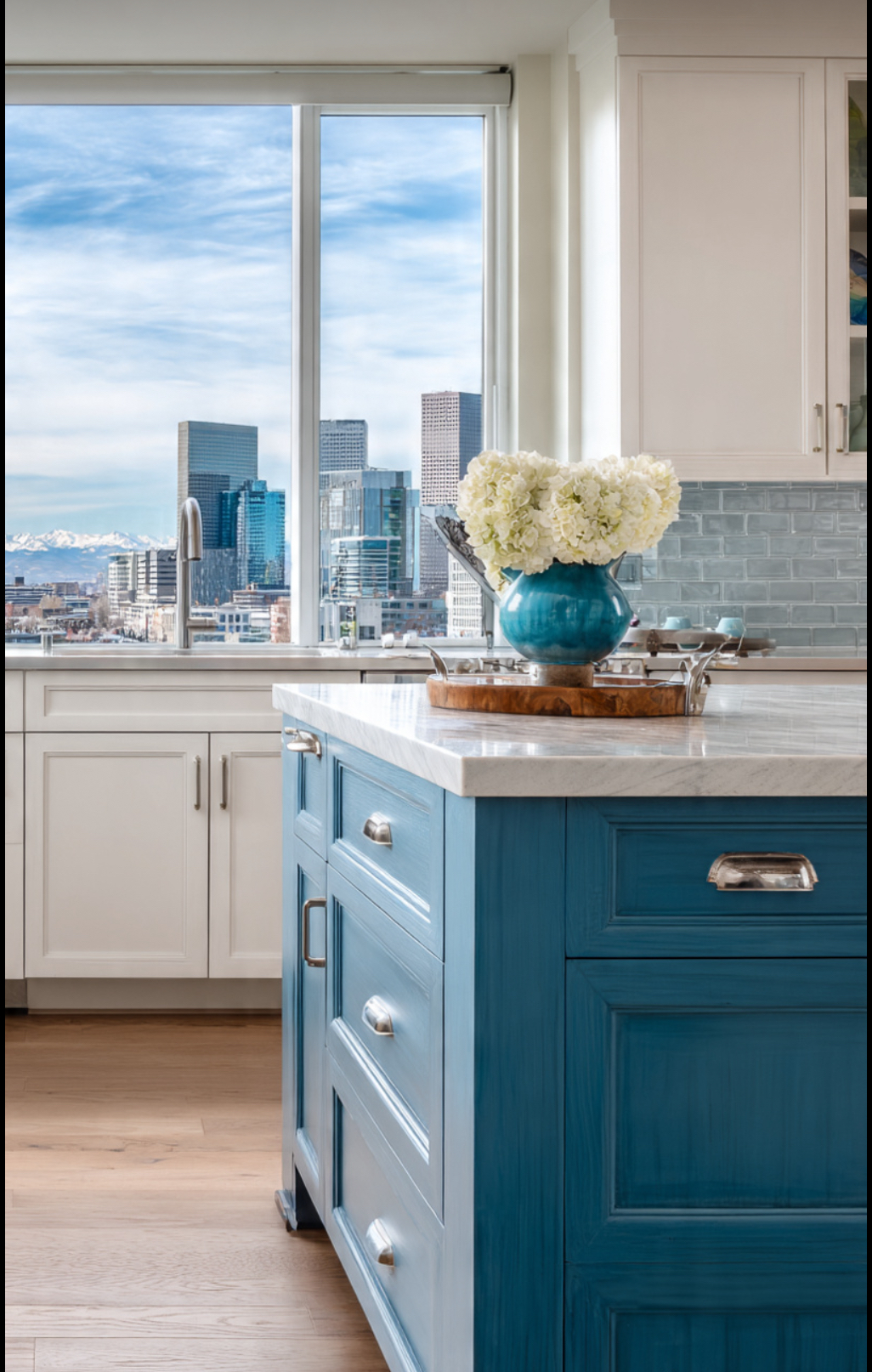
Two-tone layouts pair beautifully with rift sawn oak. A common approach keeps the perimeter in a soft neutral or natural clear coat and puts a deeper or contrasting color on the island, or reverses the relationship between upper and lower cabinets. Because the grain runs consistently across the doors, the two colors read as intentional rather than mismatched.
The Grain Filling Decision
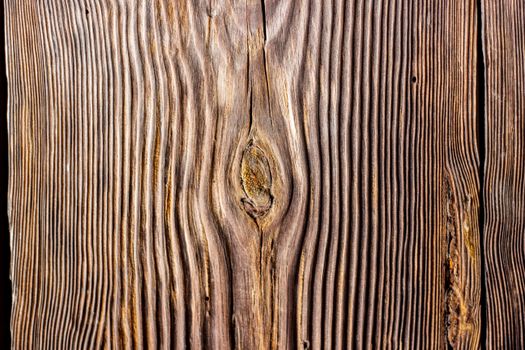
Grain filling is the single choice that changes a painted rift sawn kitchen the most. White oak is an open-pored wood, and even a tight, straight-grained rift cut has pores that will show through a sprayed paint film if nothing is done about them. Filling those pores before paint creates a flat, smooth surface where the color reads as one solid tone.
Skip the filler and you get the opposite effect: a painted door where the grain still shows as texture beneath the color, sometimes called a cerused or washed look. Neither approach is more correct. Filling is the right call when you want a clean, factory-style appearance. Skipping it is the right call when the whole point of choosing rift sawn oak was the wood itself and you want that character to survive the color change.
Why a Sprayed Finish Beats Brushed Paint on Oak
Rift sawn oak is a flat, straight-grained surface, which is exactly the surface that exposes brush marks. A brushed or rolled finish leaves lap lines, stipple, and uneven film thickness that become obvious the moment light rakes across a cabinet door. A sprayed finish lays down an even film with no brush texture, which is what allows a straight-grain door to look smooth and factory-made.
A proper cabinet refinishing process uses a sprayed factory-grade lacquer, either a 2K polyurethane or a precatalyzed lacquer, over cabinet surfaces that have been fully prepared. Preparation includes dustless HEPA sanding, which keeps the fine dust out of your kitchen instead of settling into the finish. For a Denver metro home, that work usually takes five to seven days from start to finish, which is a fraction of the disruption of a full cabinet replacement and typically costs less than tearing out and rebuilding the kitchen.
Specialists who work exclusively in cabinet refinishing handle white oak and golden oak regularly, including the grain-filling techniques oak requires, along with two-tone color layouts. Free local estimates and a three-year workmanship warranty are standard with that kind of work, and both are worth confirming in writing before the sprayer arrives.
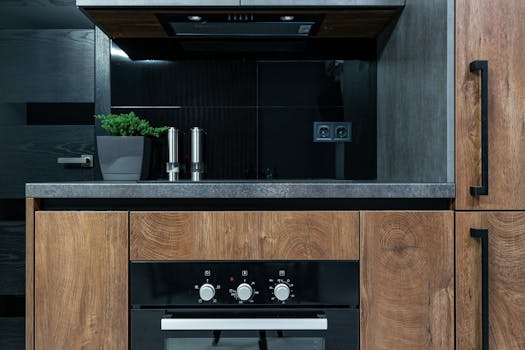
Planning a 2026 Rift Sawn Kitchen Update in Denver
A few decisions early in the process save a lot of second-guessing later.
- Get physical samples of the actual rift cut material, not a photo, and check for stave lines and any flecking.
- Decide on grain filling before anyone quotes the job, because it changes the prep time and the final look.
- Pull your countertop, flooring, and hardware selections before locking the cabinet color so the tones work together in your home’s light.
- Confirm the finish system in writing, including whether the topcoat is 2K polyurethane or precatalyzed lacquer.
- Ask about the prep method, since dustless sanding protects the rest of your home during the project.
Denver metro homeowners in Aurora, Lakewood, Littleton, Arvada, Boulder, and the surrounding suburbs have access to local cabinet refinishing specialists who can assess existing oak cabinets in person and recommend whether a clear coat, a warm stain, or a grain-filled paint is the better fit for the room.
Frequently Asked Questions
Is rift sawn white oak more expensive than other white oak?
Material pricing varies by supplier, thickness, grade, and the specific door profile you order, so there is no single answer that applies everywhere. Rift sawn lumber comes narrow because of the way it is cut, and narrower staves mean more milling and gluing to build a door front. Get written quotes from your cabinet supplier based on your actual layout rather than estimating from photos online.
What is the difference between white oak and rift sawn white oak?
White oak is the species. Rift sawn describes how the log was cut. Boards are milled at approximately 30 to 60 degrees to the growth rings, which avoids the medullary ray and produces a long, straight, uniform grain with a slightly cooler grey tone. Same tree, different sawing method, noticeably different look on a cabinet door.
Are white oak cabinets still in style?
Rift sawn white oak remains one of the most sought-after materials in current kitchen design. Its balance of natural warmth with a clean, minimalist aesthetic keeps it relevant across styles, and the straight grain does not date the way stronger figure or heavy glazing can. It is a versatile choice that holds up over time.
Do rift sawn white oak cabinets have to be stained?
No. The material can be left under a clear coat, stained to a warmer or deeper tone, or painted outright. The only decision that changes the outcome dramatically is grain filling. Fill the pores and a painted finish looks smooth and solid. Leave them open and the grain stays visible beneath the color as texture.
How long does a sprayed cabinet finish take?
For a typical Denver metro kitchen, the process runs about five to seven days from prep through final coat. That window includes dustless HEPA sanding, masking, priming where needed, and the sprayed topcoat. It is far shorter than a full cabinet replacement, and you keep your existing boxes and layout throughout.