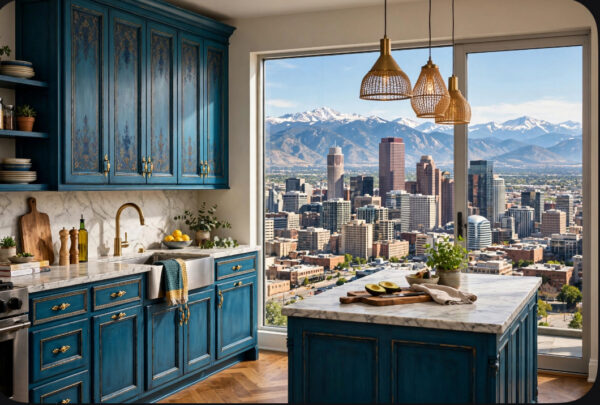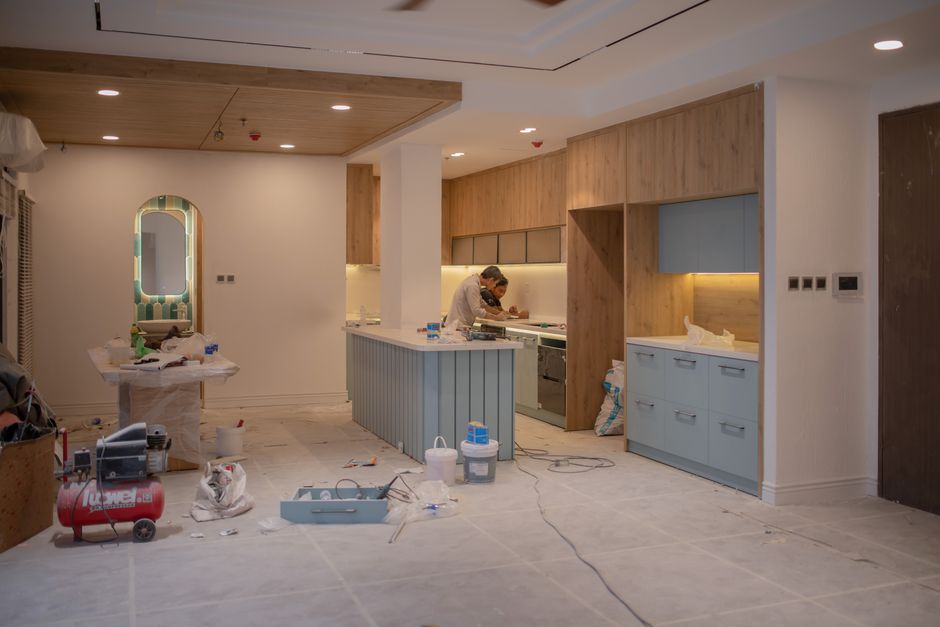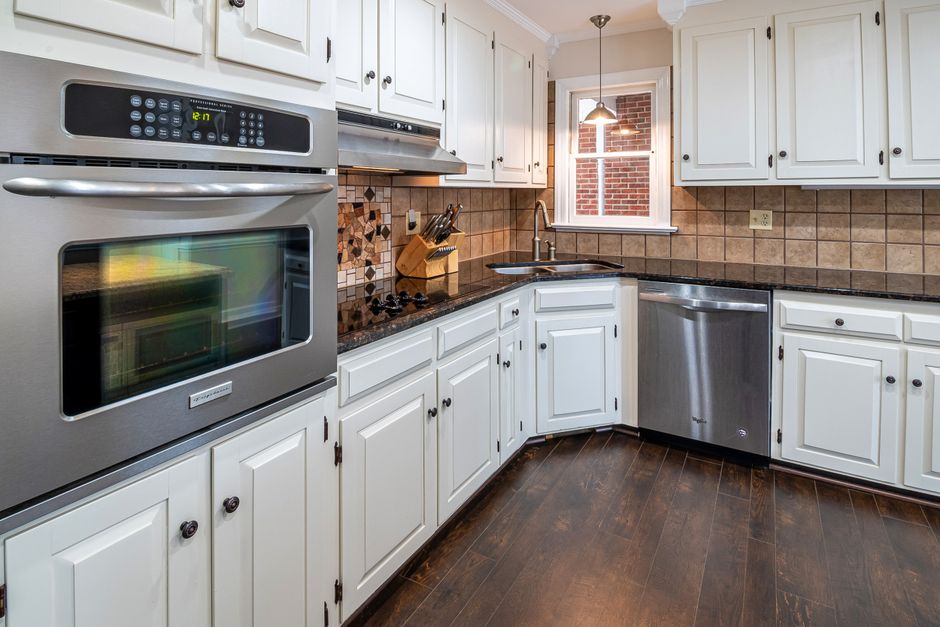
Picking a cabinet color gets all the attention, but the sheen you choose decides how those cabinets look and feel two years from now. A matte finish can make a tired oak kitchen look like custom millwork, while too much shine can turn every smear of butter into a design feature. In Denver, where older homes with golden oak and white oak cabinets are still the norm, the finish question comes up in almost every estimate.
This guide breaks down matte, satin, semi-gloss, and gloss so you can pick the right level of shine for your kitchen before anyone opens a sprayer.
Why Cabinet Sheen Matters as Much as Color
The sheen of a paint is a measure of how much light the dried film reflects back at you. Low-sheen finishes absorb light and soften the surface. High-sheen finishes bounce light and amplify every detail, which cuts both ways: they are easier to wipe clean, but they also highlight dents, drips, sanding scratches, and the natural texture of wood grain.
That tradeoff sits at the center of every finish decision. Paint review sources consistently point to the same tension between durability, cleaning convenience, and appearance balance, and the honest answer is that no single sheen wins on all three. The goal is matching the sheen to how your kitchen actually gets used.
Matte, Satin, Semi-Gloss, and Gloss Side by Side
Here is how the four common cabinet sheens compare on the qualities that matter most in a kitchen. Sheen labels are not standardized across brands, so treat this as a general guide and confirm the actual sheen level on a sample.
| Finish | Shine level | Durability and cleaning | Hides imperfections | Typical use |
|---|---|---|---|---|
| Matte | Very low, almost no reflection | Moderate; grease and fingerprints can linger on the surface | Best at hiding grain texture, brush marks, and small dents | Modern and moody kitchens, two-tone designs |
| Satin | Soft, gently reflective | Strong and easy to wipe down | Good at concealing minor flaws | Most kitchens, including repainted oak cabinets |
| Semi-gloss | Clearly shiny | Very strong, the easiest to clean | Shows texture, drips, and surface flaws | High-traffic kitchens and utility areas |
| Gloss | Highly reflective | Very strong, wipes clean quickly | Least forgiving of any imperfection | Accent areas, slab doors, trim details |
Semi-gloss is often ranked as the optimal kitchen cabinet finish because it balances durability, cleaning convenience, and appearance, while satin is regularly recommended for softer, more contemporary aesthetics. Gloss pushes durability to the top of the scale at the expense of forgiveness.
Matte Finish for Kitchen Cabinets
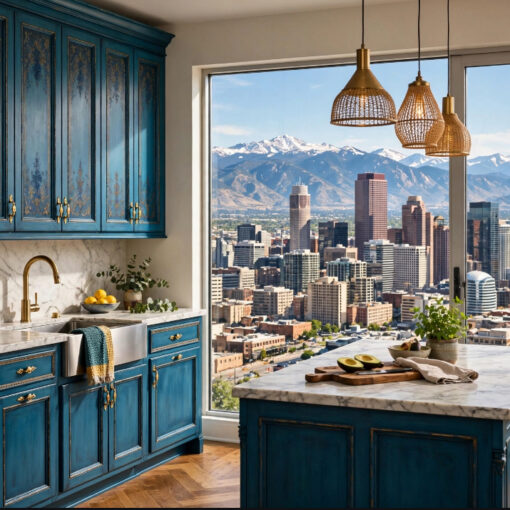
Matte is the finish that shows up most often in inspiration photos right now. It reads as flat and velvety rather than plastic, which makes painted cabinets feel more like furniture and less like a laminate box. For a Denver kitchen full of golden oak doors with heavy grain, matte or a low-sheen satin does more to modernize the room than color alone.
Where Matte Works Best
Matte suits kitchens that lean on texture and color for interest, such as deep greens, charcoals, warm whites, and two-tone layouts with a darker island. It also performs well on cabinet doors with visible grain when the goal is a subtle, organic look rather than a glass-smooth panel.
Where Matte Needs Extra Care
The downside is that flat surfaces hold onto oils and fingerprints longer. A matte finish on lower cabinets near the stove and dishwasher will show more handling marks than a satin or semi-gloss film. If you cook heavily and want the least maintenance, matte is usually better reserved for upper cabinets or a kitchen that is cleaned often.
Satin Finish: The Balanced Choice for Most Kitchens
Satin sits in the middle and that is exactly why it works. It picks up a soft glow under cabinet lighting without turning into a mirror, and the slightly tighter surface means grease wipes off with less effort than matte. Cabinet painters who spray finishes usually steer most homeowners toward satin when they want a modern look that still survives daily cooking.
Why Satin Handles Daily Kitchen Life
Steam, splatter, and hand contact are the three things that age a cabinet finish fastest. Satin handles all three reasonably well because its surface is smooth enough to release grime but not so reflective that every streaky wipe shows. It is the sheen that most often earns the “best of both worlds” label in cabinet paint reviews.
Satin Over Golden Oak and White Oak Cabinets
Oak cabinets deserve special mention. Golden oak has pronounced grain and often a yellow-orange tone that fights with cool colors. White oak has a more subtle, linear grain. Both can be painted, and when grain filling is part of the prep, the surface becomes smooth enough that sheen level matters less. Without grain filling, a lower sheen usually looks better because it disguises the texture.
Semi-Gloss and Gloss: Durability First
Higher sheens earn their place in kitchens that get worked hard. The film is smoother, so dirt and grease have fewer places to settle, and cleaning is faster. The cost is visual: shine magnifies whatever is underneath it, including the quality of the prep.
The Case for Semi-Gloss in Busy Kitchens
Semi-gloss is frequently described as the optimal cabinet finish because it combines durability, cleaning ease, and an appearance that still reads as a proper kitchen cabinet. Households with kids, frequent frying, or cabinets that get wiped down daily often prefer it. It also holds up well on the inside of cabinet doors and drawers, where appearance matters less than toughness.
Where High Gloss Belongs
Full gloss is a statement. It works on flat slab doors in contemporary kitchens, on accent cabinets, and on trim, but it demands near-perfect surface preparation. Any sanding scratch, dried drip, or uneven spray pass will be visible in the reflection. In a sprayed application, gloss is achievable, but it leaves no room for shortcuts.

What Denver Homeowners Are Choosing in 2026
Across the Denver metro, including Aurora, Lakewood, Littleton, Arvada, and Boulder, the finish conversation usually lands in one of two places. Homeowners chasing a high-end modern look choose matte or satin for the main run of cabinets. Homeowners prioritizing easy cleaning, especially in households that cook daily, choose satin or semi-gloss.
Two-tone kitchens have made this easier. A matte or satin finish on the perimeter cabinets with a slightly higher sheen on the island or lower cabinets lets you get both looks in one room. It is one of the more practical ways to satisfy two people with different opinions about shine.
Sprayed Finishes Change How Sheen Looks
Application method affects the final appearance as much as the sheen level does. A sprayed factory-grade finish lays down an even film with no brush marks, so the sheen reads as smooth and consistent across every door and drawer front. Brushed or rolled paint leaves texture, and that texture becomes more obvious as the sheen goes up.
This is why a sprayed 2K polyurethane or precatalyzed lacquer finish can hold a satin or semi-gloss sheen without looking cheap. The sheen is uniform because the application is uniform. A specialist cabinet painting process that includes dustless HEPA-sanded preparation and a controlled spray environment is what makes the higher sheens viable, and it is also why a fast 5 to 7 day turnaround is realistic for a dedicated cabinet crew.
Paint Brands and Their Sheen Levels
The product you buy matters too, because “satin” from one manufacturer is not the same as “satin” from another. Several cabinet paints come up repeatedly in independent reviews as reliable options with a factory-smooth result.
Benjamin Moore Advance Waterborne Alkyd
Advance is frequently named a top pick because it dries to a factory-smooth finish with minimal brush marks and holds up durably. It is a waterborne alkyd, which gives it the leveling behavior of an oil-based enamel with easier cleanup.
Sherwin Williams Emerald Urethane Trim Enamel
Emerald Urethane Trim Enamel is regularly described as the best overall cabinet paint in side-by-side homeowner tests, and it is often called the best kitchen cabinet paint by professionals. It is a quality water-based product with a hard, cleanable film.
ProClassic Alkyd Interior Enamel
Sherwin Williams ProClassic Alkyd Interior Enamel has been called the prettiest finish in at least one brand comparison. It is an oil-based enamel, which means a longer dry time and a different feel during application, but a very smooth result.
How to Decide on a Finish
Before committing, run through these questions in order. The answers usually point to one sheen on their own.
- How often does someone wipe down the cabinet faces? Daily wiping favors satin or semi-gloss.
- Do you cook with oil and high heat frequently? More grease means a smoother, more cleanable film.
- Are the cabinets oak with visible grain? Lower sheen forgives texture; higher sheen makes it stand out unless grain filling is part of the job.
- Do you have kids or pets touching the lower doors? Higher sheen resists showing every mark.
- Is the kitchen bright or dim? Bright rooms can carry matte; dim rooms benefit from the light a satin sheen bounces back.
- Are you painting cabinets or replacing them? Painting is the lower-cost route and lets you change the finish instead of the boxes.
Get a physical sample sprayed on one of your own doors if you can. Sheen is the one thing that never translates accurately through a phone screen, and a finish that looks perfect on a swatch can read completely differently under your kitchen lighting. Because sheen standards vary between brands, confirm the exact level on the product you plan to use before the whole kitchen is sprayed.
Frequently Asked Questions
What is the best cabinet paint finish for a kitchen?
Semi-gloss is often ranked as the optimal choice because it balances durability, cleaning convenience, and appearance. Satin is the most popular middle ground for a softer, more modern look. Matte is the most design-forward option but shows oils and fingerprints more readily, so it suits upper cabinets or kitchens that are cleaned often.
Is matte or satin better for kitchen cabinets?
It depends on how the kitchen is used. Satin wipes clean more easily and hides fewer marks, which makes it the safer pick for busy households. Matte looks flatter and more furniture-like, and it hides grain and small flaws better, but lower cabinets near the stove will show handling marks sooner.
Do professionals use satin or semi-gloss on cabinets?
Professionals use both, and the choice usually follows the homeowner’s cleaning habits and design goals. Satin is common for modern kitchens where a soft sheen is wanted. Semi-gloss is common where durability and easy cleaning come first. What matters most is an even sprayed film, since brush marks become more visible as sheen increases.
Does a sprayed finish make a difference to sheen?
Yes, significantly. Spraying lays down an even film with no brush or roller texture, so the sheen looks uniform across every door and drawer front. Brushed paint leaves texture that becomes more obvious as the sheen goes up. A sprayed finish is what makes a satin or semi-gloss result look factory-grade rather than hand-painted.
Can I change the sheen without replacing my cabinets?
Yes. Repainting existing cabinet boxes and doors lets you change both the color and the sheen at a fraction of the cost of full replacement. The preparation step matters most, especially on oak, where grain filling determines how smooth and consistent the final finish looks under your chosen level of shine.